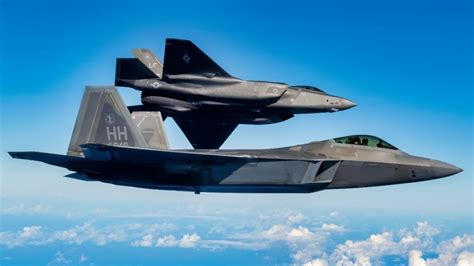
In the latest strategic maneuver aimed at strengthening American military influence in the Middle East, the United States Air Force has begun a rapid deployment of its most advanced stealth fighter jets—the F-22 Raptor and F-35A Lightning II—to bolster deterrence and air superiority capabilities in the region. This high-stakes move comes in direct response to escalating hostilities between Israel and Iran, following a series of missile exchanges and the rising threat of regional destabilization.
The decision to send elite airpower assets into the U.S. Central Command (CENTCOM) Area of Responsibility (AOR) was greenlit by U.S. Secretary of Defense Pete Hegseth, marking one of the most significant force postures in the region since the height of anti-ISIS operations. The deployment is backed by a significant aerial logistics campaign, with dozens of tanker aircraft ferrying the stealth fighters and ensuring their seamless transatlantic journey.
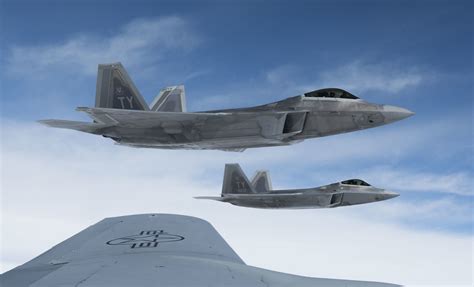
Strategic Deterrence in Motion: The Role of the F-22 and F-35A
The inclusion of the F-22 Raptor, an air dominance platform renowned for its supercruise capabilities, advanced radar evasion, and dogfighting supremacy, signals a shift toward projecting overwhelming air superiority. The Raptors, departing from Langley Air Force Base in Virginia, belong to the 1st and 192nd Fighter Wings—elite units historically tasked with rapid deployment and combat-ready missions.
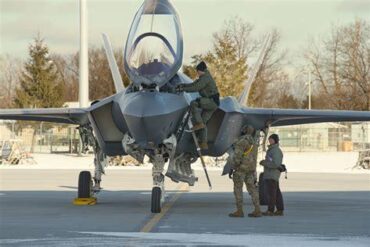
Meanwhile, the F-35A Lightning II, America’s fifth-generation multi-role strike fighter, adds another layer of flexibility and stealth to the U.S. arsenal. According to OSINT (Open-Source Intelligence) sources, the aircraft are most likely deploying from the 48th Fighter Wing at RAF Lakenheath, United Kingdom, rather than the Vermont Air National Guard. Lakenheath’s geographical proximity allows for faster response times and more direct flight paths to staging bases in the Middle East.
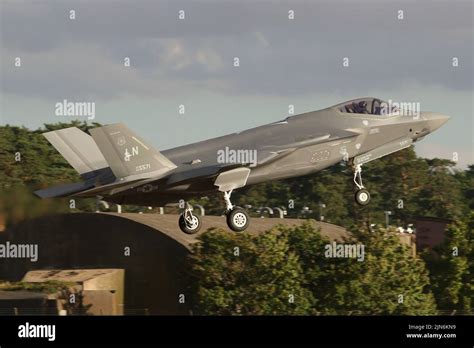
Together, the dual deployment of Raptors and Lightning IIs underscores a deliberate message: the U.S. intends to preserve both air superiority and multi-domain operational reach in any potential escalation across the volatile region.
The Aerial Highway: Tanker Logistics and the GOLD Callsign
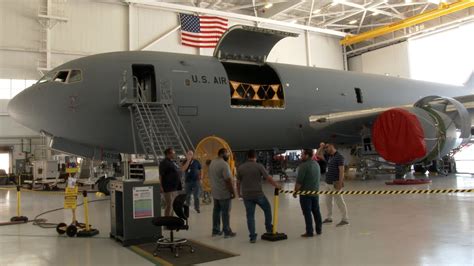
A modern combat deployment of this scale cannot succeed without robust aerial refueling support. The recent movements of refueling aircraft operating under the callsign GOLD have drawn attention among aviation watchers. These tankers, often KC-135 Stratotankers and KC-46 Pegasus aircraft, are tasked with conducting Coronet missions—long-range transits that support fighter movements over oceanic expanses.
Aircraft from the GOLD formation were tracked by military enthusiasts and defense analysts using open-source radar monitoring platforms. These tankers departed U.S. airbases and made stops across Europe’s key military hubs, including Germany, Spain, Italy, the United Kingdom, and Greece, where they temporarily staged before linking up with fighter formations.
This infrastructure demonstrates the immense logistical coordination behind stealth fighter deployments, allowing groups of four F-35As or four F-22s to traverse continents with uninterrupted fuel support. At least 30 aerial refuelers have reportedly been rerouted or deployed to support the operation—a figure that reflects the scale and urgency of the mobilization.
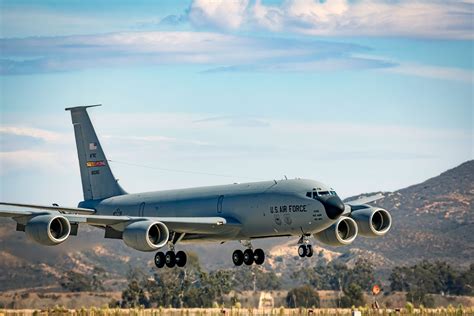
Tensions Across Airspace: Israel, Iran, and CENTCOM’s Calculated Response
The backdrop to this extensive military maneuver lies in the volatile standoff between Israel and Iran, which has grown increasingly confrontational in recent weeks. Missile exchanges, drone incursions, and long-range threats have shifted from proxy operations to open state-level hostilities. The U.S., while publicly asserting a non-interventionist stance, has signaled through its military movements that it will not allow regional allies—or its own assets—to be left vulnerable.
Although the Trump administration has not officially declared direct engagement in the conflict, anonymous Pentagon officials have indicated that rules of engagement for U.S. forces in CENTCOM AOR remain active and responsive, especially if American troops or facilities are targeted.
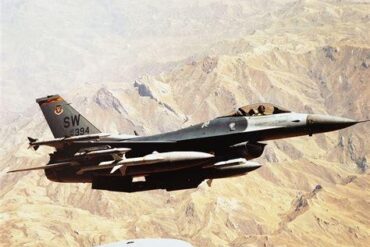
In a move interpreted as pre-emptive deterrence, the U.S. Air Force has also reactivated F-16 Fighting Falcons based at Aviano Air Base in northeastern Italy. These fourth-generation fighters were reportedly placed on standby, with some units possibly heading toward Middle Eastern airbases. Although their final destination remains undisclosed, analysts believe their deployment is closely tied to CENTCOM’s layered air defense strategy.
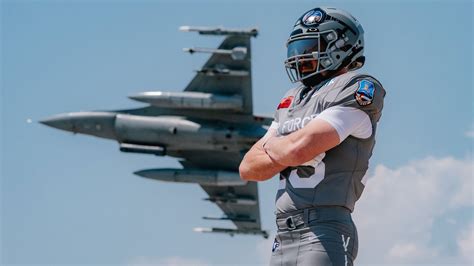
A Complex Deployment Theater: Europe as the Forward Platform
The involvement of European staging grounds has added another dimension to the deployment strategy. U.S. refueling aircraft have landed at several NATO-aligned bases, solidifying America’s network of forward operating locations and enabling rapid air dominance anywhere in the eastern Mediterranean, Persian Gulf, or beyond.
This reflects a broader force projection doctrine, where the U.S. leverages European infrastructure to facilitate Middle Eastern interventions without stationing permanent large-scale combat units in the region. It also signals to both adversaries and allies that the U.S. maintains interoperable, agile, and scalable military logistics across hemispheres.
The KC-46 Pegasus, which only recently reached full operational capability, has played a crucial role in this strategy. With boom and drogue refueling capability, extended range, and modern cockpit systems, the Pegasus gives CENTCOM the reach it needs to sustain prolonged operations—whether defensive or offensive—in contested airspace.
Combat-Ready, But Measured: The White House’s Ambiguous Position
Despite the massive airlift and stealth fighter movements, official statements from the White House and the Department of Defense remain notably reserved. While Secretary Hegseth’s order authorized the deployment of additional assets, there has been no public commitment to combat operations against Iran, nor explicit promises of joining Israeli offensive sorties.
What has been unequivocal, however, is the U.S. commitment to defending its own forces and protecting Israel’s airspace from missile and drone attacks. American personnel stationed at key bases across the Gulf—such as Al Udeid Air Base in Qatar and Al Dhafra Air Base in the UAE—remain under constant surveillance and fortified alert status.
Analysts argue that this posture of readiness without provocation provides the U.S. government with the flexibility to escalate or de-escalate depending on how Tehran proceeds. If Iranian retaliation or preemptive strikes cross red lines, the deployed stealth jets could launch precision strikes within hours, with minimal exposure to enemy detection systems.
The Bigger Picture: Strategic Implications and Regional Signaling
The movement of America’s fifth-generation stealth fleet into CENTCOM territory is more than just a tactical response—it’s a geopolitical signal. It shows regional adversaries that air superiority is non-negotiable and that the U.S. has the capability and willpower to respond swiftly to emergent threats. It also reassures allies in Gulf Cooperation Council (GCC) nations and in Israel that American deterrence is not merely diplomatic, but kinetic and present.
Moreover, this deployment serves as a test case for operational coordination, showcasing how various wings, commands, and logistical networks can rapidly mobilize across continents. It validates decades of investment in stealth technology, tanker modernization, and air base infrastructure that enable such decisive movements.
While the world watches Israel and Iran edge toward the precipice of war, the United States’ F-22s and F-35As now fly as silent guardians above the chaos—visible proof of unmatched aerospace power waiting just beyond radar range.