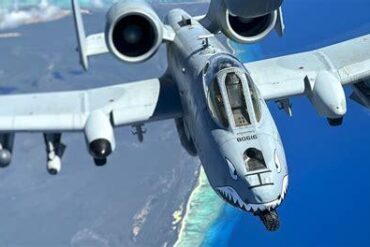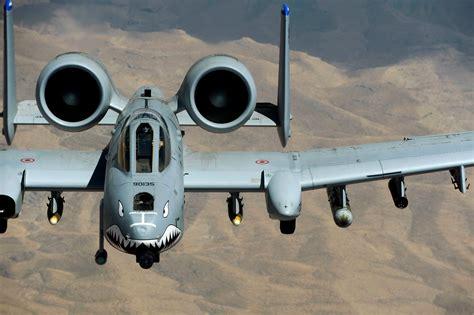
The A-10 Thunderbolt II, better known worldwide as the Warthog, has survived retirement rumors for decades. Despite repeated efforts to phase out the iconic close-air-support aircraft, the U.S. Air Force has once again extended its operational life, pushing retirement plans into the 2030s. For military aviation enthusiasts and battlefield commanders alike, the decision reflects one undeniable reality: there is still nothing quite like the A-10.
First introduced in 1976, the A-10 was engineered during the Cold War with a brutally simple mission — destroy enemy armor while protecting ground troops under heavy fire. Unlike sleek stealth fighters designed for speed and air superiority, the Warthog embraced durability, low-altitude attack capability, and devastating firepower. Nearly fifty years later, those same characteristics continue to make it relevant in modern warfare.
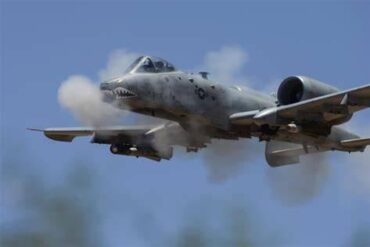
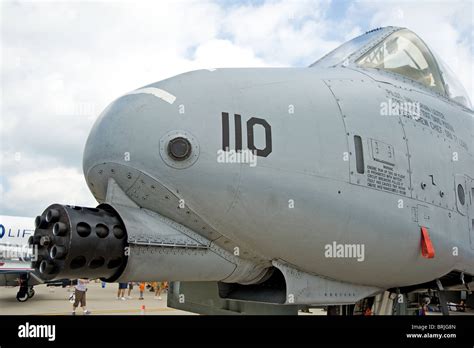
The aircraft’s unmistakable identity comes from its legendary GAU-8/A Avenger cannon, the massive 30mm seven-barrel rotary gun mounted beneath the cockpit. The cannon is so enormous that engineers effectively designed the aircraft around it. When fired, the weapon produces the famous “Brrrt” sound that has become legendary among soldiers and aviation fans alike. The gun can shred armored vehicles, defensive positions, and hardened targets with frightening efficiency.
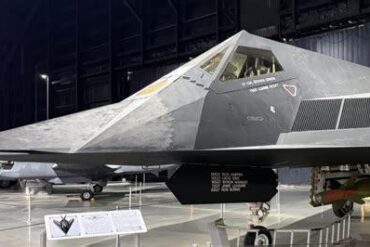
The Air Force had hoped that newer platforms such as the F-35 Lightning II and F-15EX Eagle II would fully replace the Warthog’s battlefield role. However, military planners increasingly recognize that advanced stealth fighters do not perfectly replicate the A-10’s unique strengths. The Warthog excels in close-air-support operations where pilots must fly low, identify threats visually, and remain over combat zones for extended periods.
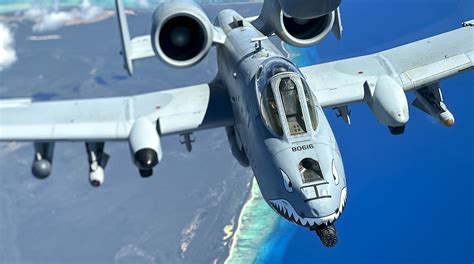
One major reason for the aircraft’s longevity is survivability. The A-10 was built to absorb punishment that would cripple many modern jets. Its cockpit is surrounded by the famous Titanium Bathtub, an armored shell designed to shield pilots from heavy ground fire. The aircraft’s redundant flight systems, protected fuel tanks, and rugged construction allow it to continue flying even after sustaining severe damage.
This resilience proved invaluable during conflicts such as Operation Desert Storm. In that campaign, A-10 pilots devastated Iraqi armored formations, destroying tanks, artillery systems, and military vehicles at astonishing rates. Two pilots famously eliminated 23 enemy tanks in a single day. Across its operational history, the aircraft has destroyed more than 900 tanks and thousands of additional targets, reinforcing its reputation as one of the deadliest ground-attack platforms ever built.
The decision to extend the aircraft’s service life also highlights ongoing debate inside the Pentagon over the future of warfare. Modern military doctrine increasingly focuses on stealth technology, autonomous drones, networked combat systems, and long-range precision strikes. Programs such as the Collaborative Combat Aircraft (CCA) initiative envision crewed fighters operating alongside semi-autonomous drone wingmen capable of reconnaissance, electronic warfare, and attack missions.
While those technologies represent the future, many defense experts argue that no replacement currently offers the same battlefield presence as the A-10. The F-35, although highly advanced, is optimized for multirole missions rather than persistent low-altitude close support. Commanders on the ground often value the Warthog because pilots can remain visible overhead, react rapidly to changing conditions, and deliver highly precise fire support in dangerous environments.
Another factor behind the extension is cost efficiency. The A-10 fleet has already undergone modernization upgrades involving avionics, targeting systems, and wing replacements. Maintaining existing aircraft can sometimes prove more practical than accelerating expensive transition programs before replacement systems are fully ready. In an era of tightening defense budgets and rising geopolitical tensions, extending proven platforms offers strategic flexibility.
The aircraft’s emotional connection with troops should not be underestimated either. Ground forces have long trusted the Warthog because of its reliability during combat operations. Its intimidating appearance, thunderous cannon fire, and willingness to operate in dangerous low-level environments earned deep respect from soldiers deployed in Iraq, Afghanistan, and earlier conflicts.
Despite its extension, the A-10’s future remains limited. The Air Force continues moving toward a next-generation force structure centered around stealth aircraft, advanced sensors, and integrated drone operations. Eventually, aging airframes and evolving battlefield threats will make retirement unavoidable. Yet the repeated delays reveal how difficult it is to replace a platform specifically designed for one mission and exceptionally good at performing it.
For now, the beloved Warthog remains exactly where many believe it belongs — flying over battlefields, protecting troops below, and delivering the unmistakable roar that turned the A-10 into an enduring military aviation icon.