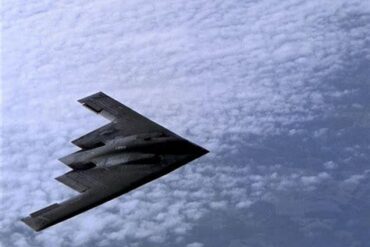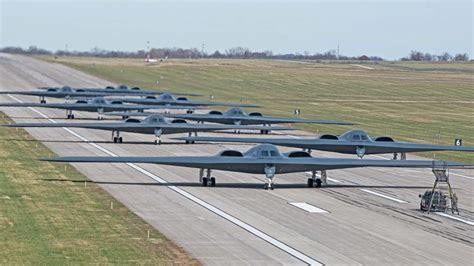
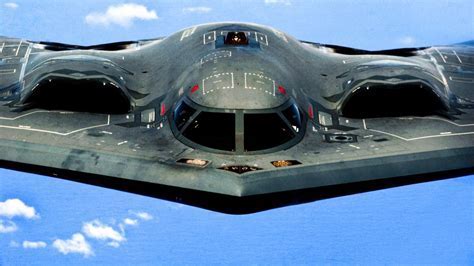
The B-2 Spirit, the world’s only long-range, stealth heavy bomber currently in operational service, continues to stand as a potent symbol of American airpower. Even after nearly three decades in service, the US Air Force remains determined to ensure that this $2 billion marvel stays at the forefront of global strike capability through ambitious, costly, and technically complex upgrades.
Conceived during the height of the Cold War, the B-2 Spirit was designed to slip past sophisticated enemy radar systems and strike deep into contested territory. Built by Northrop Grumman, the Spirit entered service in 1997 and was a source of controversy due to its immense development costs. Yet, its operational history has repeatedly demonstrated its value—from the NATO-led bombing campaign in Kosovo to recent high-stakes missions over the Middle East.
The Strategic Relevance of the B-2 Spirit
Despite being nearly three decades old, the B-2 remains one of the most critical platforms in the US military’s arsenal. Its ability to deliver both conventional and nuclear payloads makes it an integral element of the American nuclear triad, which also includes intercontinental ballistic missiles (ICBMs) and submarine-launched ballistic missiles (SLBMs).
The Spirit’s recent deployment to strike nuclear facilities in Fordow, Natanz, and Isfahan, Iran, underscored its strategic role. In that operation, seven B-2s delivered 14 GBU-57 Massive Ordnance Penetrator bombs, each weighing over 15 tons and capable of destroying deeply buried, hardened targets. Such missions reinforce why maintaining the B-2’s readiness and survivability is non-negotiable.
Reducing Downtime: Maintenance Overhaul and Sustainment Contracts
A combat aircraft’s lethality is meaningless if it remains grounded. Historically, the B-2’s advanced stealth materials and complex systems have made maintenance laborious and time-consuming. To address this, the Air Force initiated comprehensive reforms aimed at minimizing downtime and extending mission readiness.
The cornerstone of this effort is the Program Depot Maintenance (PDM)—an exhaustive inspection, overhaul, and repair process conducted every nine years. In the past, PDM could take upwards of 470 days, an unacceptable period for an asset in such high demand.
However, recent innovations have cut that timeline significantly. In October 2024, one B-2 completed its PDM cycle in just 379 days, thanks to process efficiencies like early fuel system inspections and pre-emptive issue identification. These changes reduce costly surprises on the maintenance line.
“As any aircraft ages, the number of repair requirements only increases,” explained Col. Francis Marino, the B-2 system program manager. “Pre-inspections allow us to get ahead of the problems, preserving readiness.”
Moreover, Northrop Grumman was awarded a $7 billion sustainment contract in May 2024, covering ongoing maintenance and strategic upgrades, signaling the Air Force’s long-term commitment to keeping the Spirit operational.
Enhancing Stealth for Modern Battlefields
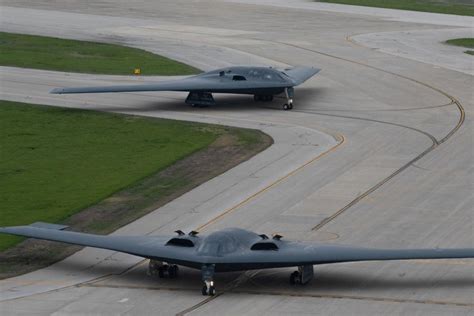
Central to the B-2’s survivability is its unparalleled stealth, allowing it to bypass enemy air defenses. But as adversaries invest in next-generation radar and detection technologies, maintaining this stealth advantage is paramount.
The Air Force has embarked on a systematic upgrade of the B-2’s low-observable (LO) materials and structural coatings, further reducing its already minimal radar cross-section. Its distinctive flying wing design, precise edge alignment, and radar-absorbent materials make it difficult for enemy radars to track or engage.
“Enhancing the B-2’s stealth profile ensures we stay ahead of evolving threats,” emphasized Lt. Col. Benjamin Elton, material leader for the B-2 Integrated Capabilities Branch. “Our upgrades encompass avionics, sensors, and structural materials to maintain its status as the world’s most survivable bomber.”
These improvements are critical in an age where near-peer competitors like China and Russia are rapidly advancing integrated air defense networks and over-the-horizon radar capabilities.
Revolutionizing Communications: Beyond-Line-of-Sight Upgrades
Stealth isn’t the B-2’s only advantage. The Air Force is concurrently revolutionizing its communications architecture to meet modern command-and-control demands.
A significant development is the integration of beyond-line-of-sight satellite communications (SATCOM), vastly improving the aircraft’s ability to receive and transmit real-time mission data. This eliminates traditional vulnerabilities where bombers had to break radio silence or expose themselves to enemy detection for communication.
“This new system dramatically enhances mission flexibility,” said Lt. Col. Robert Allen, materiel leader for the B-2 Advanced Programs Branch. “Operators can now maintain encrypted voice and data links simultaneously without compromising stealth.”
This communications overhaul ensures that the B-2 remains deeply integrated into joint and allied operations, capable of adapting to dynamic threats and real-time mission updates.
Preparing for the B-21 Raider: Transition Without Capability Gaps
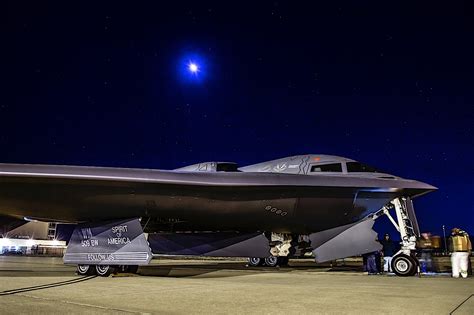
While the B-2 continues to receive upgrades, its eventual successor—the B-21 Raider—is already on the horizon. Also built by Northrop Grumman, the B-21 represents the future of long-range strike capability, promising greater stealth, advanced sensors, and expanded payload options.
The B-21 conducted its first flight in late 2023 and remains in initial production and testing. Although precise technical specifications are classified, the Raider is expected to integrate cutting-edge materials and systems designed to evade even the most sophisticated enemy defenses.
However, fielding the B-21 will take time. The Air Force aims to acquire at least 100 B-21 Raiders, but given the complexities and evolving geopolitical threats, the B-2 will continue serving well into the 2030s.
Maintaining a lethal B-2 fleet ensures that the Air Force retains robust strike capabilities while avoiding operational gaps as the Raider program scales up.
Conclusion: Sustaining Lethality for Decades to Come
The B-2 Spirit remains a linchpin of US strategic deterrence and global strike capability. Through accelerated maintenance cycles, advanced stealth enhancements, revolutionary communications, and sustained funding, the Air Force is ensuring that this decades-old platform retains its battlefield relevance.
In an era where near-peer adversaries continually invest in anti-access and area-denial (A2/AD) capabilities, America’s ability to project power via stealth bombers like the B-2 is indispensable. The modernization of the Spirit guarantees that when deterrence fails, the US military remains ready to strike—anywhere, anytime, undetected.
The B-2’s continued evolution exemplifies how legacy platforms can be transformed to meet the demands of modern warfare, ensuring that these iconic aircraft remain as lethal today as they were when they first took to the skies.