A New Chapter in China’s Helicopter Warfare Doctrine
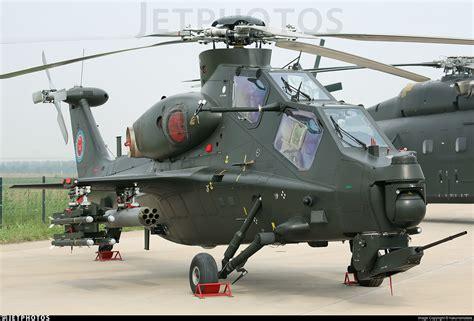
The Changhe Z-10 represents a pivotal leap in China’s aviation and combat helicopter capabilities. Developed in response to a national imperative for indigenous military hardware, the Z-10 is the first dedicated attack helicopter built entirely by Chinese defense contractors. Designed by the 602nd Aircraft Design Institute and manufactured by Changhe Aircraft Industries Corporation, this twin-engine, tandem-seat gunship has established itself as a cornerstone of the People’s Liberation Army Ground Force (PLAGF) since its introduction in 2009.
Emerging from an era of import dependency and restricted Western support post-1989, China sought to build a platform with cutting-edge performance and survivability. The Z-10, while initially shaped with the assistance of Kamov engineers from Russia, evolved into a uniquely Chinese solution. It integrates lessons from global platforms while adapting to the regional operational demands of the PLA. This helicopter not only marks China’s ascent in modern rotorcraft design but also signals a broader shift toward self-reliant aerospace engineering.
From Embargoes to Breakthroughs: The Birth of the Z-10
The origins of the Z-10 can be traced back to a void in Chinese military aviation doctrine during the late 1980s and early 1990s. The PLAGF had been operating Soviet-derived helicopters such as the Mi-4, Z-5, and Mi-8, which were fundamentally utility aircraft ill-suited for frontline attack roles. The post-Tiananmen Square sanctions, which curtailed Western military support, catalyzed China’s resolve to create its own attack helicopter fleet.
In 1994, China launched a 6-ton class medium helicopter program known as CHM, which eventually matured into the Special Armed Project in 1998. The design was refined domestically, optimizing its reduced radar cross-section (RCS) and developing an armored fuselage structure with blended aerodynamic contours. Despite the initial inclusion of PT6C-67C engines and FADEC systems acquired covertly from Canada, geopolitical pressure forced China to shift to domestic WZ-9 turboshafts, a key milestone in its propulsion independence.
The Z-10’s first flight on 29 April 2003 was followed by rigorous testing before formal service entry in 2009–2010. Further trials at sea began in 2014, paving the way for extended versatility across theaters of operation.
Form and Function: A Design for Survivability and Strike Power
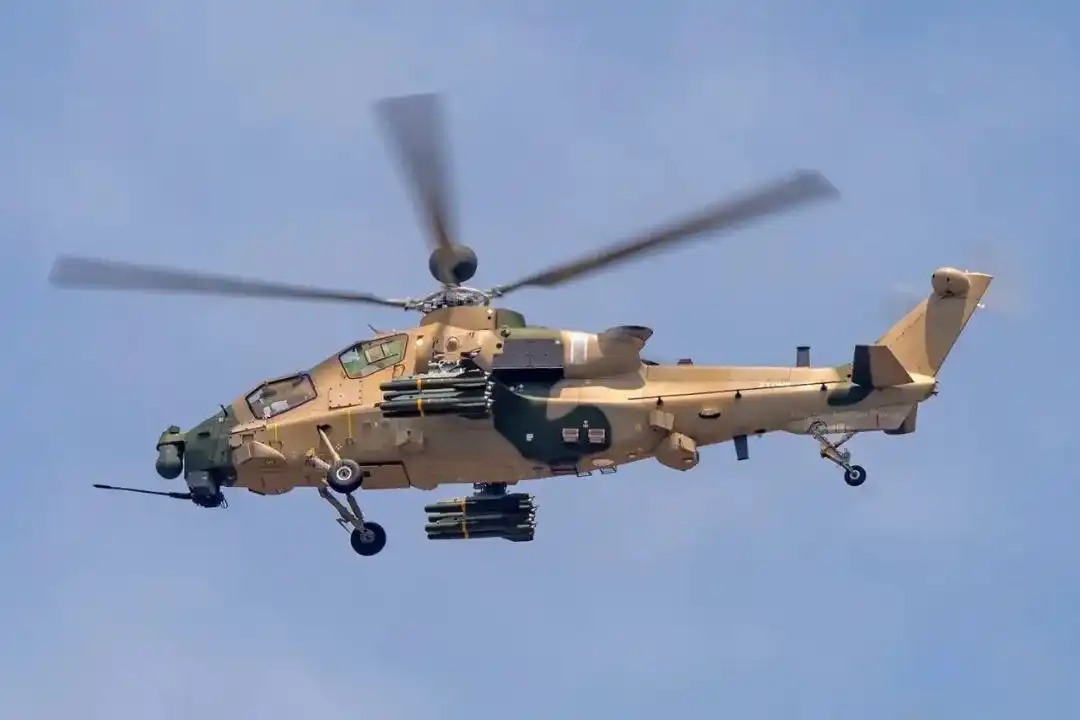
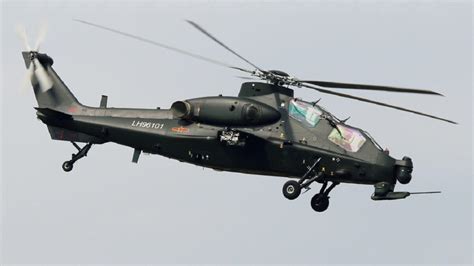
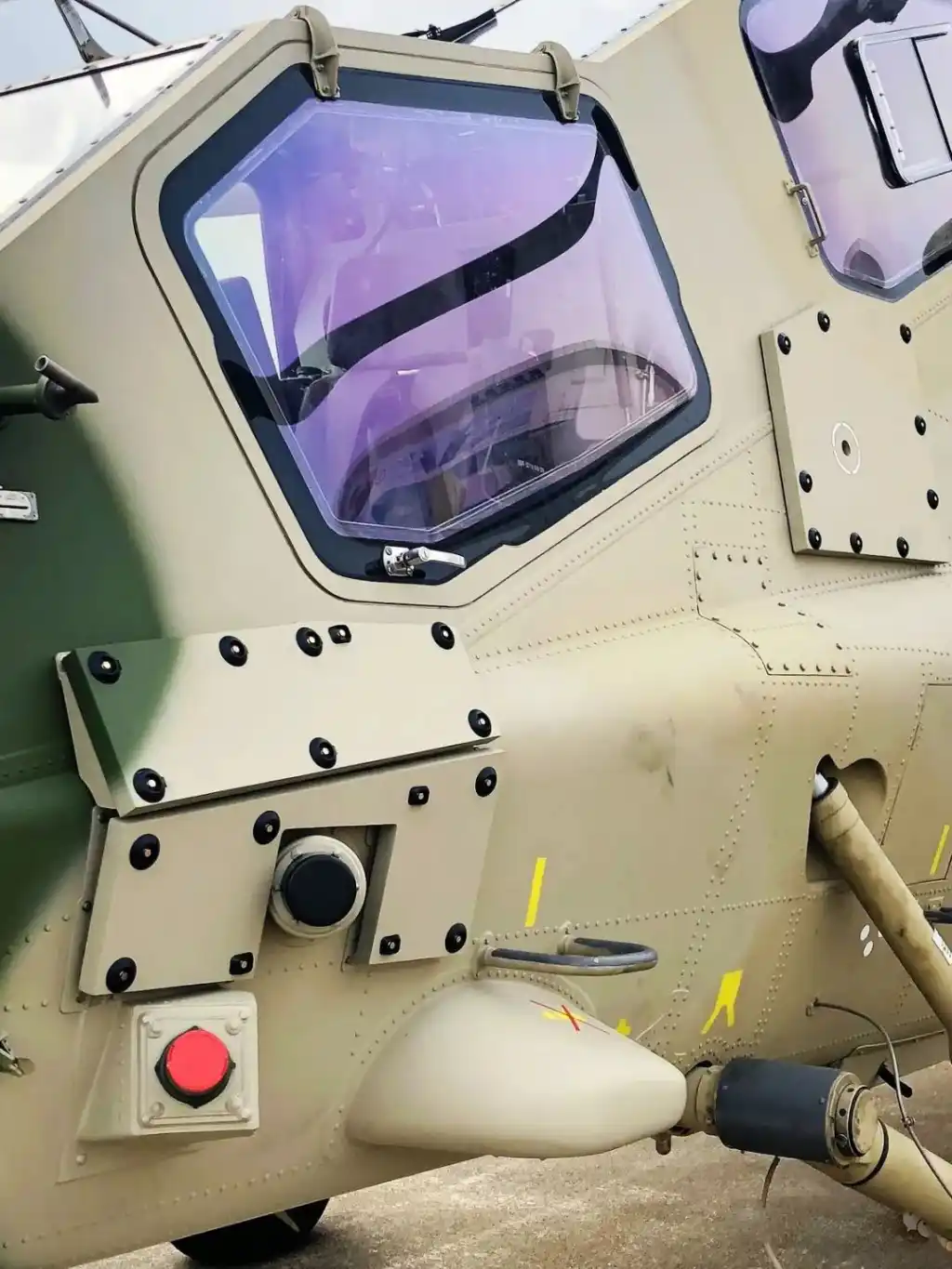
The Z-10’s appearance is unmistakably shaped by battlefield pragmatism. The tandem cockpit layout, stub wings, and angled surfaces give it a compact yet lethal profile. Its five-blade semirigid rotor system and four-blade scissor tail rotor enhance agility while being durable enough to withstand 12.7 mm ballistic threats.
Built from a hybrid of aluminum alloys and composite materials, the Z-10’s fuselage houses graphene-reinforced armor, bulletproof cockpit glass, and self-sealing fuel tanks. These features dramatically enhance crew survivability under heavy fire. Advanced infrared signature reduction comes courtesy of upward-facing HIRSS-equipped exhaust nozzles, metal mesh intake filters, and evolving infrared suppressor technologies.
Advanced Propulsion: The Rise of the WZ-9C Engine
Early Z-10 variants were hindered by the limited output of the initial WZ-9A engines, rated between 1,283 and 1,341 shp. While sufficient for standard missions, these engines restricted the helicopter’s lift and high-altitude performance, particularly in environments such as Tibet. This shortfall contributed to Pakistan’s rejection of initial export units in 2015.
In response, Chinese engineers developed the WZ-9C, producing up to 1,600 shp, significantly enhancing performance and payload capacity. The Z-10 now achieves a maximum speed of 290 km/h, cruises at 230 km/h, and offers an 800 km range, with a service ceiling reaching 6,400 meters. These improvements also empowered the platform to undergo navalization trials, expanding deployment options.
Avionics and Electronics: Digital Warfare Integration
The Z-10’s sensor and navigation suite is impressively modern. The WXG1006 electro-optical (EO) targeting pod integrates FLIR, TV camera, rangefinder, and laser designator, allowing it to conduct precision strikes in low-visibility environments. In recent variants, a mast-mounted millimeter-wave radar further enables all-weather targeting and target prioritization.
Electronic warfare is handled by the YH-96 EW suite, which includes MAWS (Missile Approach Warning System), RWR (Radar Warning Receiver), LWR (Laser Warning Receiver), and six countermeasure dispensers. The Z-10ME prototype also includes AESA radar panels and DIRCM (Directed Infrared Countermeasures) for heightened survivability.
Inside, the digital tandem cockpit employs dual MFDs, HUDs, and HOCAS controls with full redundancy. Navigation is aided by a mix of inertial platforms, laser gyros, Doppler velocity sensors, radio altimeters, and BeiDou satellite integration.
Armament Versatility: Precision and Payload Synergy
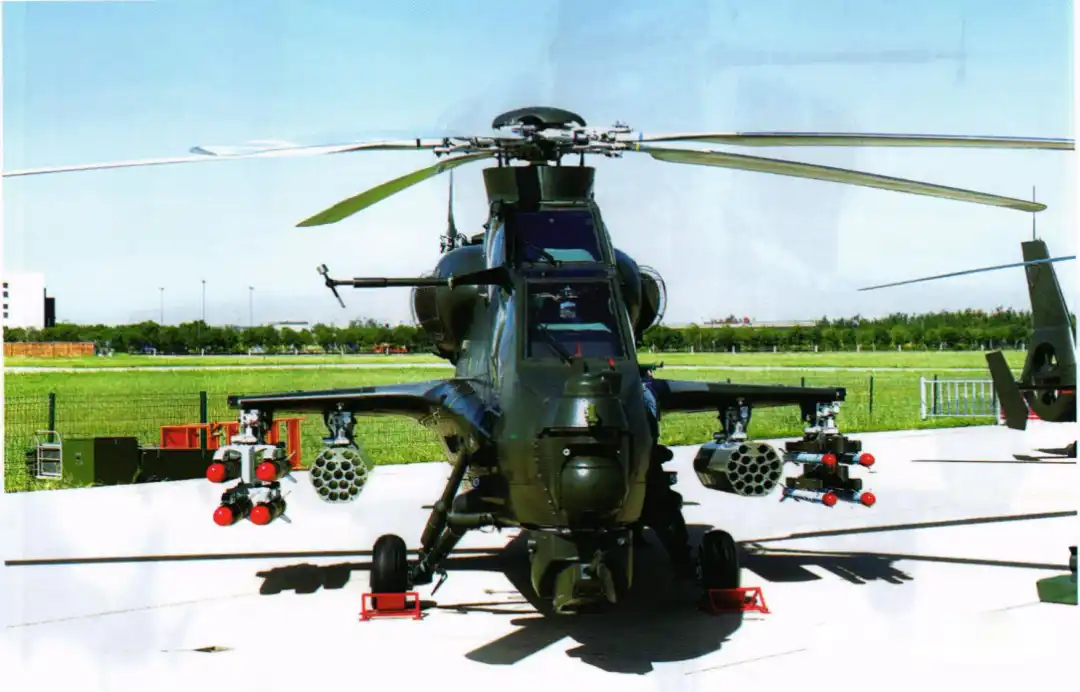
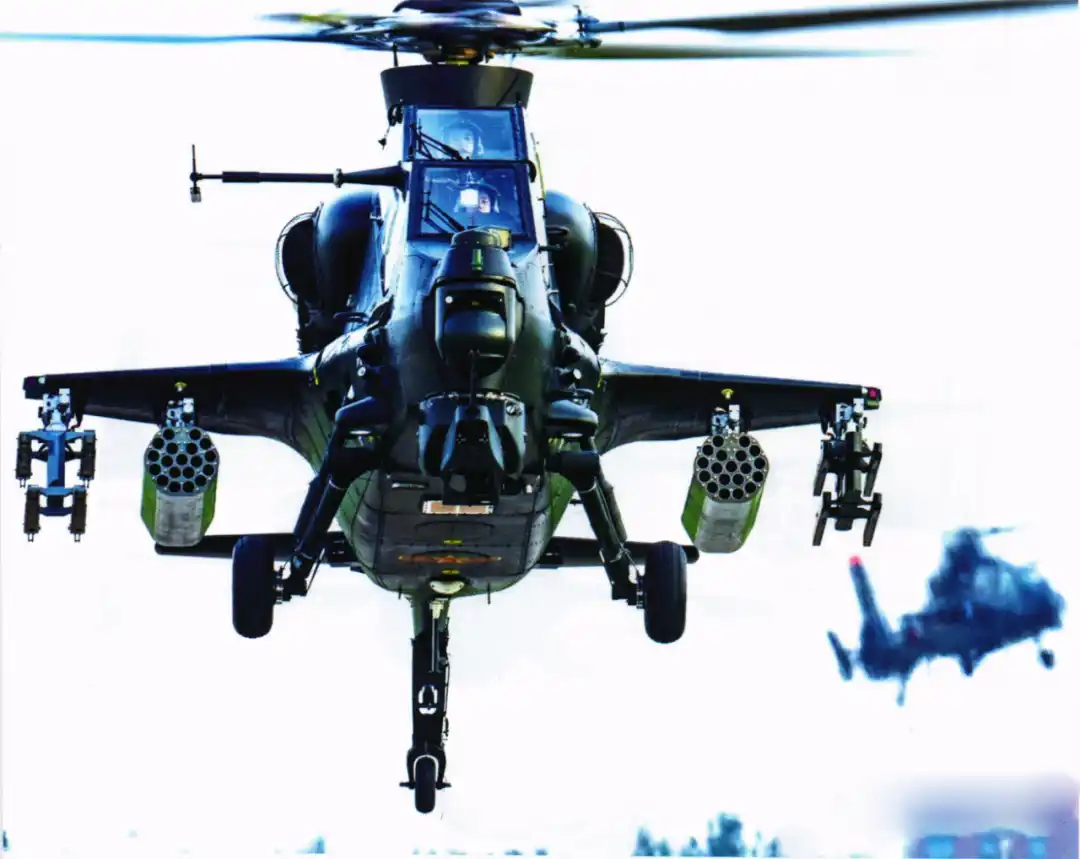
The Z-10 is designed around a modular, MIL-STD-1553B-compliant architecture, enabling it to carry a diverse range of payloads. The PX-10A chin-mounted 23 mm cannon serves as its primary gun, though alternatives can be mounted as needed. The helicopter’s four stub-wing pylons accommodate:
- Up to 16 anti-tank missiles including HJ-8, HJ-9, HJ-10, or the advanced AKD-series
- SW-6 loitering drones and BA-21 munitions
- CM-series air-to-surface missiles
- TY-90 air-to-air missiles for self-defense
- Guided and unguided rocket pods (57 mm to 90 mm)
- External fuel tanks or underslung cargo of up to 3,000 kg
This expansive firepower matrix allows the Z-10 to serve in anti-armor, close air support, air interdiction, and even maritime strike roles, adapting to both low-intensity conflicts and peer-level engagements.
Global Footprint: Operational Use and Export Evolution
By 2011, the Z-10 was fielded across multiple PLAGF aviation brigades, with full fleet saturation achieved by 2016. Its deployment to sensitive theaters like the Tibet Plateau and Taiwan Strait underscores its role as a frontline deterrent.
Export ambitions faced hurdles. Pakistan tested three Z-10s in 2015, but ultimately rejected them due to engine underperformance in mountainous terrain. However, after enhancements led to the Z-10ME, negotiations resumed. Pakistan received its first batch in 2023, with deliveries totaling 40 units by 2026, signifying growing international trust in China’s indigenous systems.
Variants and Strategic Implications
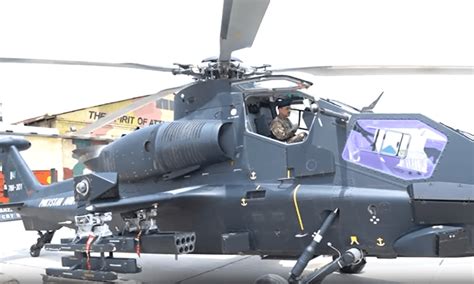
The evolution of the Z-10 showcases China’s determination to advance despite Western embargoes. The introduction of graphene armor, improved countermeasures, and enhanced avionics in variants like the Z-10ME-01 (2018) and ME-02 (2021) reflects a deliberate move toward network-centric warfare and multi-domain adaptability.
The PLA Airborne Corps’ adoption of the Z-10K variant further illustrates cross-branch standardization and joint-force integration. Exportable platforms allow nations previously reliant on Western or Russian systems to acquire advanced attack helicopters without geopolitical entanglements.
Specifications Overview
- Crew: 2 (pilot + gunner)
- Length: 14.2 m
- Height: 3.85 m
- Empty Weight: 5,100 kg
- Max Takeoff Weight (MTOW): 7,200 kg
- Engines: 2× WZ-9C turboshaft, each rated at 1,200 kW (1,600 shp)
- Max Speed: 290 km/h
- Cruising Speed: 230 km/h
- Range: 800 km
- Service Ceiling: 6,400 m
Conclusion: A Symbol of China’s Aerospace Resolve
The Changhe Z-10 embodies more than tactical evolution—it is a symbol of China’s strategic defiance and technical maturity. In a world where access to cutting-edge aerospace technology is often denied to emerging powers, the Z-10 stands as a formidable alternative. Its development arc, from foreign dependency to indigenous innovation, reflects the long-term investment strategy of the Chinese military-industrial complex. As the Z-10ME continues to draw export interest, we anticipate its influence to expand, reshaping attack helicopter doctrines far beyond China’s borders.