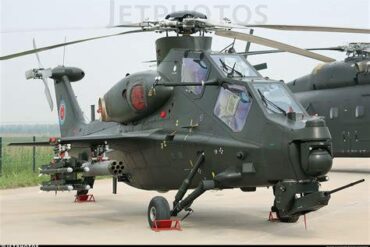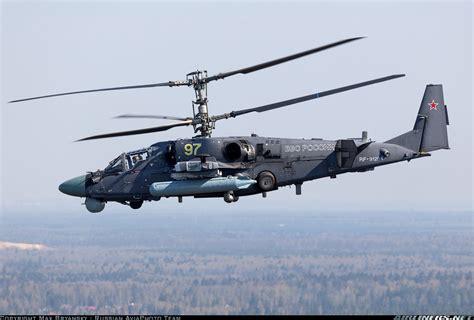
The Kamov Ka-52 “Alligator” stands as one of the most distinctive and formidable rotary-wing aircraft in modern combat aviation. Evolved from the earlier Ka-50 “Black Shark,” the Ka-52 brings together advanced avionics, devastating firepower, and the unique agility of Kamov’s coaxial rotor system. Designed primarily for reconnaissance, target designation, and direct ground assault, the Ka-52 has carved a specialized niche in both battlefield coordination and frontline attack operations.
Built by Progress Arsenyev Aviation Company, the Ka-52 combines Russian ingenuity with battlefield versatility. Its development traces back to the early 1980s, born from the V-80 prototype, and was first publicly revealed in the early post-Soviet era. Its true combat potential, however, would not be realized until decades later.
From Black Shark to Alligator: Evolution of the Kamov Design Philosophy
The Ka-52 owes its origins to the Ka-50, a single-seat attack helicopter designed for high-speed, low-altitude assault missions. Its radical departure from traditional tandem-seating layouts underscored the Kamov design bureau’s focus on pilot workload efficiency and aircraft maneuverability. Despite its innovations—such as the use of an ejection seat and aerobatic flight capabilities—the collapse of Soviet military funding in the 1990s stalled the program. By the late 2000s, only a handful of Ka-50 units had entered service.
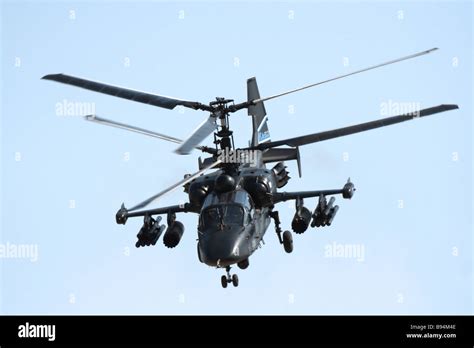
Recognizing operational limitations inherent in a single-pilot configuration, the Kamov bureau developed the Ka-52 Alligator, featuring a side-by-side two-seat cockpit. This design dramatically enhanced reconnaissance and battlefield management capabilities, allowing the co-pilot to manage target acquisition, navigation, and communications. The Ka-52 made its maiden flight on June 25, 1997, and entered service with the Russian Aerospace Forces in May 2011.
Design and Technology: A Fusion of Firepower and Agility
At the heart of the Ka-52’s performance is its coaxial rotor system—two contra-rotating rotors that eliminate the need for a tail rotor. This design provides exceptional yaw control, high-speed maneuverability, and a reduced acoustic signature. The Ka-52 can perform complex aerial maneuvers, including loops, rolls, and flat turns, making it one of the most agile attack helicopters ever built.
The aircraft is powered by two Klimov VK-2500 turboshaft engines, providing enough thrust to offset its increased weight due to added electronics and armament. With a maximum hover ceiling of 4,000 meters, a climb rate of 10 m/s, and the ability to sustain 3.5 g load factors, the Alligator excels in high-stress tactical environments.
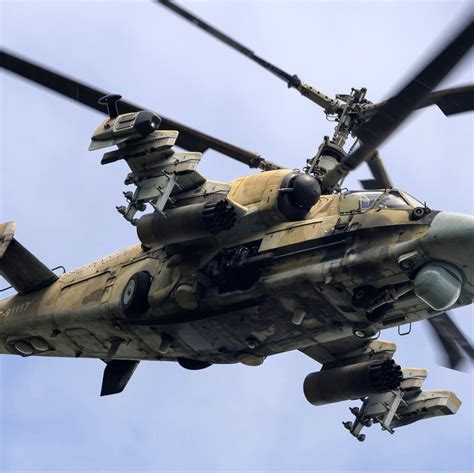
The cockpit is fully compatible with night vision goggles (NVGs) and includes multifunction LCD displays, a helmet-mounted sight, a modern INS/GPS system, and an autopilot. The thermal imaging system and FLIR turret enable precise targeting in all weather conditions, while a Phazotron radar-locator provides terrain mapping and obstacle detection. The ejection system, one of only a few in helicopters worldwide, includes explosive charges that jettison the rotors before pilot egress.
Weapons Suite: Engineered for Battlefield Dominance
The Ka-52’s armament versatility is among its strongest assets. Mounted on a side-turret is a 30 mm Shipunov 2A42 autocannon, capable of firing between 200 to 800 rounds per minute with an ammunition reserve of 460 rounds. Its fire rate and traverse angle make it ideal for engaging both light vehicles and entrenched infantry.
Externally, the helicopter boasts six underwing hardpoints plus two wingtip pods, capable of carrying up to 2,000 kg of ordnance. This includes:
- 12× 9K121 Vikhr or Ataka anti-tank guided missiles with a range of 8 km
- S-8 and S-13 unguided rocket pods
- UV-26 countermeasure dispensers for chaff and flares
- Igla air-to-air missiles for limited aerial combat roles
- Optional external fuel tanks or bombs for extended missions
This weapons suite allows the Ka-52 to act as both a hunter and a deterrent, neutralizing enemy armor and infantry with surgical precision.
Variants and Upgrades: Enhancing the Alligator’s Bite
Recognizing evolving battlefield demands, the Kamov design bureau has rolled out several variants of the Ka-52. The most prominent among them is the Ka-52M “Super Alligator”, unveiled in 2018. This advanced model features a redesigned GOES-451M optical turret, more durable landing gear, a battlefield C2 interface, and compatibility with the LMUR long-range air-to-surface missile.
The cockpit of the Ka-52M has been optimized for NVG use, and the aircraft includes a new self-protection suite, offering resistance against radar-guided and infrared threats. Deliveries began in early 2023, with ongoing contracts indicating increasing strategic emphasis on this model.
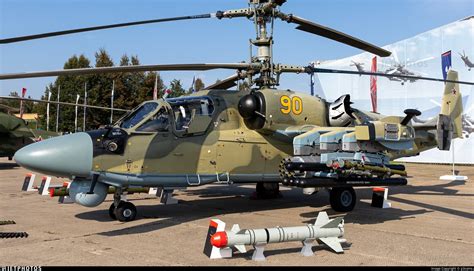
Additionally, the Ka-52K “Katran”, designed for naval use, features folding rotor blades, reinforced landing gear, and corrosion-resistant materials. Though initially intended for deployment aboard the Mistral-class amphibious assault ships—whose transfer from France to Russia was canceled—the Katran remains a key asset for Russia’s Project 23900 amphibious ships.
Egypt became the first export customer for the Alligator, purchasing 46 units of the Ka-52E “Nile Crocodile.” This variant includes tropicalized avionics, specialized anti-corrosion treatments, and an Arbalet-52 dual-band radar system tailored to desert operations. Egypt’s selection of the Ka-52 over Western alternatives underscores the platform’s global relevance.
Operational History: Tested in Battlefields Across Three Continents
The Ka-52 made its combat debut during the Second Chechen War in 2000–2001. These early engagements confirmed the helicopter’s effectiveness in mountainous environments and precision strikes against fortified positions. However, it was in Syria (2015–2018) that the Alligator would truly cement its operational credibility. Deployed primarily for combat search and rescue (CSAR) escort and special forces support, Ka-52s proved invaluable during Russia’s intervention.
A tragic crash near Mayadin in 2018 highlighted the operational risks but also led to subsequent avionics and airframe improvements. Since 2022, the Ka-52 has been heavily involved in Russia’s invasion of Ukraine, where it has faced both praise for its performance and scrutiny for its vulnerabilities. As of March 2025, 64 Ka-52 helicopters have been either destroyed or heavily damaged, including 51 confirmed losses.
Nonetheless, the Ka-52 has shown resilience—some units returned safely despite significant battle damage, including the loss of tail booms. In Ukraine, Ka-52s armed with LMUR missiles have proven effective by striking targets beyond the range of short-range air defense systems (SHORAD), providing a valuable standoff capability in modern warfare.
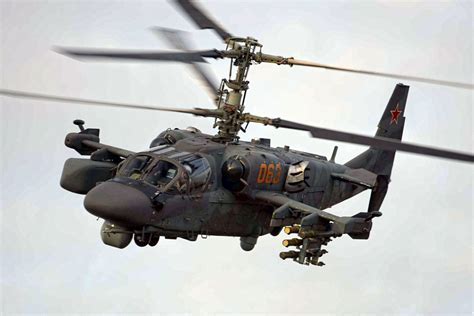
Global Impact and Strategic Relevance
The Kamov Ka-52’s success goes beyond Russian borders. Its integration into the Egyptian Air Force has provided a regional counterweight in North Africa, with aircraft stationed along the Mediterranean and near Sinai. Interest from China in the naval Ka-52K variant also signals a growing export potential, particularly as Asian nations modernize their amphibious and littoral warfare capabilities.
In exercises like “Boundary 2004” in Kyrgyzstan, the Ka-52 demonstrated high-altitude performance, flying in harsh alpine environments with full weapons loads. While it was shortlisted for India’s 2008 attack helicopter tender, the competition was eventually canceled, though the helicopter’s inclusion reflected its global competitiveness.
As of 2022, Russia operates over 133 Ka-52s, with continued production under long-term state armament programs. Syria also hosts deployed squadrons at Khmeimim Air Base, supporting Russian expeditionary operations across the region.
Conclusion: A Lethal Instrument of Russian Air Power
The Kamov Ka-52 Alligator represents the culmination of decades of rotorcraft innovation. Combining the signature coaxial rotor agility of Kamov designs with formidable armament, advanced electronics, and a track record of combat durability, the Ka-52 remains a core element of Russia’s rotary-wing forces. Whether in high-altitude mountain strikes, naval deployments, or desert warfare, the Alligator has shown itself to be adaptable, deadly, and enduring.
As global threats evolve and battlefield environments become increasingly networked and asymmetric, helicopters like the Ka-52—especially in its M variant—will remain essential to any nation’s modern battlefield doctrine.