In 2025, unmanned combat aerial vehicles (UCAVs) have become the centerpiece of modern warfare. No longer relegated to the periphery of military strategy, drones now define frontline capability, offering a blend of precision strike, intelligence gathering, and persistent surveillance unmatched by any other platform. The military value of drones today lies not just in their stealth or endurance, but in their capacity to project power without risking the lives of pilots. In this article, we explore the best military drones in the world in 2025, with detailed insight into their capabilities, operational roles, and geopolitical impact.
The Rise of Drone Supremacy in Global Conflict
Since the early 2000s, drones have transformed from ISR assets into fully armed, autonomous warriors capable of penetrating hostile airspace, neutralizing strategic targets, and operating with real-time battlefield awareness. The evolution of artificial intelligence, advanced targeting systems, and satellite communications has enabled drones to deliver complex combat performance that rivals manned aircraft.
What distinguishes the top-tier military drones in 2025 is a balance between range, payload, autonomy, and affordability. Nations now look beyond raw firepower and prioritize interoperability, multi-role versatility, and logistical ease. As wars become more asymmetric and localized, drones have become the ultimate force multiplier.
General Atomics MQ-9 Reaper: The Benchmark of Lethal Precision
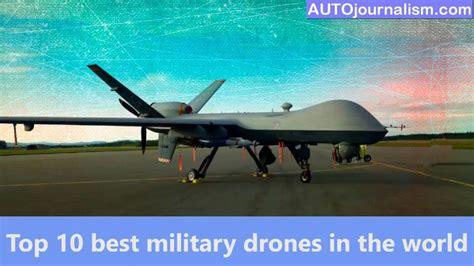
Arguably the most feared UCAV on the planet, the General Atomics MQ-9 Reaper continues to dominate global skies with a legacy built on unmatched battlefield performance. Developed in the U.S. and operated since 2007, the Reaper is a long-endurance, multi-mission drone that has proven itself across every major conflict in the 21st century.
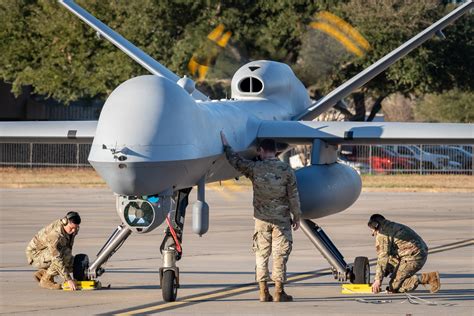
Key Capabilities:
- Endurance: Up to 27 hours of flight time
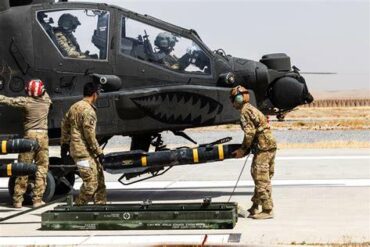
- Payload: 1,700 kg including AGM-114 Hellfire missiles, GBU-12 Paveway II laser-guided bombs, and JDAM kits
- Sensors: SAR radar, EO/IR systems, laser designator
- Networked Autonomy: Semi-autonomous operations with satellite link control
- Operational Theaters: Iraq, Afghanistan, Yemen, Somalia, Syria
The MQ-9 offers a versatile and modular design, which has seen continuous upgrades in sensor fusion, autonomous navigation, and battlefield awareness. Its ability to loiter over a target area for more than a day while delivering pinpoint strikes makes it the cornerstone of U.S. drone doctrine.
Currently operated by over ten countries, including France, the UK, Italy, India, and the Netherlands, the MQ-9 Reaper is both a symbol of aerial supremacy and a reliable workhorse for persistent strike missions.
Bayraktar TB2: Affordable Power, Proven in Real Combat
From the deserts of Libya to the trenches of Ukraine, the Bayraktar TB2 has earned a fearsome reputation. Built by Turkey’s Baykar Defense, this medium-altitude tactical drone is the embodiment of cost-effective lethality.
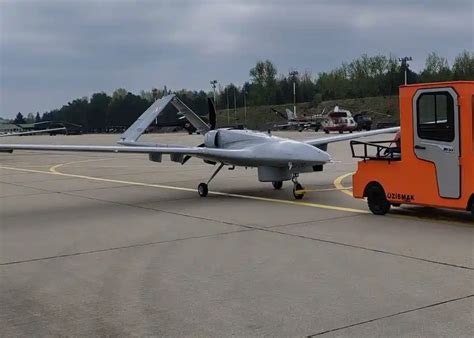
Key Features:
- Payload: 150 kg of MAM-L and MAM-C smart munitions
- Range: 150 km line-of-sight
- Combat-Proven: Used effectively in Nagorno-Karabakh, Syria, Ukraine, and Libya
- Affordability: Estimated at $5–$10 million per unit
What makes the TB2 stand out is not raw power, but strategic accessibility. For militaries priced out of Western systems, the TB2 delivers combat-ready UAV capability at a fraction of the cost. Its minimal support requirements, simple runway needs, and easy deployment have made it popular among countries like Poland, Azerbaijan, Qatar, Ethiopia, and Ukraine.
The TB2’s global footprint is a testament to its battlefield credibility. It has knocked out tanks, air defense systems, and logistics convoys under combat conditions and continues to evolve through AI-based upgrades and network-centric enhancements.
TAI Anka: NATO-Compatible Versatility from Turkey
A step up from the TB2, the TAI Anka represents Turkey’s answer to the need for heavier payloads and longer missions. Developed by Turkish Aerospace Industries, the Anka family includes multiple variants, including the Anka-S, which integrates SATCOM for long-distance control.
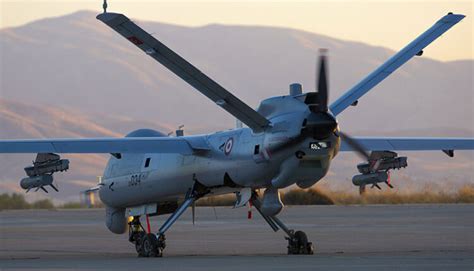
Key Specifications:
- Payload: 359 kg with EO/IR sensors, SAR, SIGINT, and strike munitions
- Endurance: Over 30 hours
- Variants: Anka-A, Anka-B, Anka-S
- Operational Use: Turkey, Libya, Tunisia, Kazakhstan, Chad
The Anka is NATO-interoperable and built to carry out ISR missions, tactical strikes, and electronic warfare. Its higher endurance and heavier loadout give it greater versatility than the TB2, while retaining a relatively low operating cost. The Anka-S version also supports encrypted communications and network-centric warfare, making it ideal for integrated battlefield operations.
Looking ahead, the Anka-3 is expected to launch in 2026. This stealthy, supersonic jet-powered UCAV will mark a quantum leap in Turkish drone warfare capability.
CAIG Wing Loong II: China’s Scalable Strike Solution
China’s Chengdu Aircraft Industry Group (CAIG) has introduced a powerful MQ-9 alternative with the Wing Loong II. Designed to offer both surveillance and attack capabilities at exceptionally low costs, this drone is part of China’s broader effort to supply export-friendly military tech across Asia, Africa, and the Middle East.
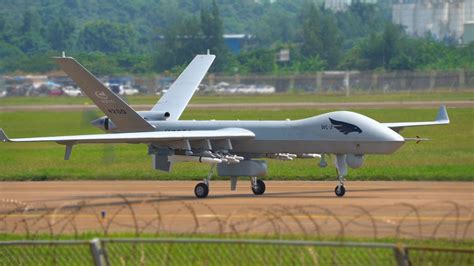
Operational Features:
- Payload: 480 kg with up to 12 precision-guided missiles and bombs
- Endurance: 32 hours (cruising), 20 hours at max speed
- Combat Use: Employed in Yemen and Libya by Saudi Arabia and the UAE
- Affordability: Between $1–$5 million
Despite its affordability, the Wing Loong II boasts combat-ready accuracy and robust multi-role capability. It uses HJ-10 anti-tank missiles, guided bombs, and features integrated Chinese C4ISR systems.
China’s success in exporting this drone highlights a growing rift in global drone politics—Western restrictions on military exports have opened up markets for platforms like the Wing Loong II in Egypt, Pakistan, Iraq, and Ethiopia.
Kronshtadt Orion: Russia’s MALE Drone Enters the Fray
Russia has long lagged in the UCAV space, but the Kronshtadt Orion represents its first viable answer to American and Turkish systems. Known locally as Inokhodets, this drone is Russia’s entry into the Medium Altitude Long Endurance (MALE) segment, and it’s already seen use in Ukraine and Syria.
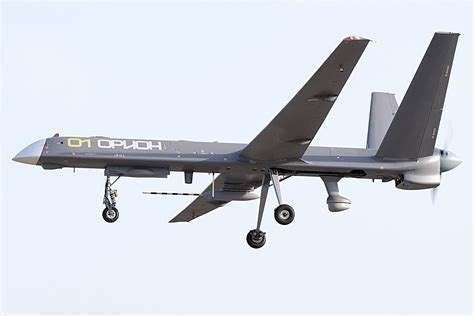
Drone Specifications:
- Payload: 250 kg including KAB-20 bombs and Vikhr-1 missiles
- Endurance: Up to 24 hours
- Operational Use: Russian Aerospace Forces and military intelligence
- Cost: $5–$10 million per unit
The Orion is a rugged drone built for Russian terrain and weather, and compatible with the full range of domestic weaponry including Kornet-D anti-tank missiles and FAB-50 bombs. It offers both ISR and combat strike capability, with growing deployment across Russian border regions and contested zones.
Though it lags slightly behind its peers in sensor quality and autonomy, the Orion marks a pivotal transition in Russian military drone doctrine—from tactical quadcopters to full-fledged MALE systems.
Conclusion: The Global Drone Landscape in 2025
The race for drone supremacy is no longer confined to the United States. In 2025, the best military drones are being designed, built, and deployed by a diverse set of nations, reflecting a shifting balance of power in aerial warfare. While the MQ-9 Reaper remains the benchmark for capability, challengers like the Bayraktar TB2, TAI Anka, and Wing Loong II are carving out major roles in regional conflicts and global exports.
Each of these drones represents a strategic philosophy—whether it’s precision and power, cost and deployability, or local production and autonomy. In a world where electronic warfare, asymmetric threats, and rapid response are critical, these UCAVs form the tip of the spear in military operations.
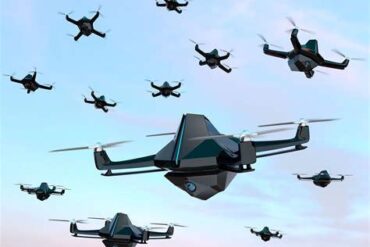
As drone technology continues to evolve, with advancements in AI-driven targeting, stealth design, and swarm integration, the battlefield of tomorrow will be fought from the skies—with no cockpit in sight.