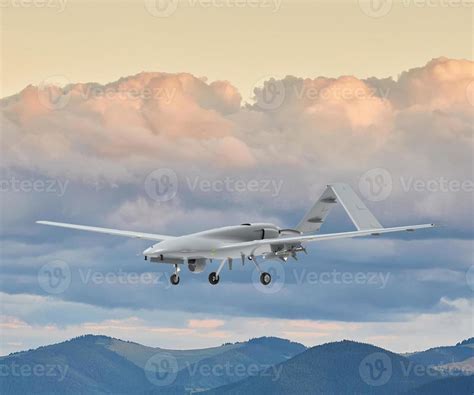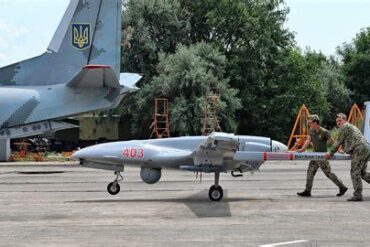
Military drone technology is undergoing a profound transformation, evolving far beyond its reconnaissance roots into a dynamic force reshaping the battlefield. As defense strategies pivot toward automation, precision, and survivability, future military drones are emerging as indispensable assets. These unmanned systems are being crafted not only to gather intelligence but also to execute autonomous strikes, communicate in swarms, and outmaneuver modern threats with stealth and artificial intelligence.
The emergence of cutting-edge technologies in Unmanned Aerial Systems (UAS) promises a future where drones act as thinking agents, capable of adaptive learning, real-time decision-making, and flexible mission profiles. This leap from passive surveillance to full-spectrum warfare roles places drones at the center of 21st-century combat doctrine.
The Evolution from Eyes in the Sky to Autonomous Weapons
The first military drones were rudimentary tools: unarmed, remotely piloted, and used primarily for aerial reconnaissance. These early UAS, like the RQ-2 Pioneer, were invaluable for monitoring enemy troop movements without risking pilot lives. However, the shift truly accelerated with the advent of the RQ-1 Predator—a platform capable of loitering over enemy territory while streaming real-time intelligence.
This revolution was supercharged in the 2000s when drones like the MQ-9 Reaper took center stage. Armed with Hellfire missiles and enhanced sensor packages, they bridged the gap between surveillance and combat. The integration of satellite communications, thermal imaging, and precision-strike payloads made them tactical game-changers. By removing the risk to pilots, they enabled persistent aerial presence and surgical engagements.
AI-Powered Autonomy: The Rise of Intelligent Warfare
The biggest leap in future military drone capability is coming from artificial intelligence. Unlike earlier models that relied heavily on human input, next-generation drones will operate semi-independently or even autonomously, guided by AI algorithms that enable them to interpret sensory data, make mission-critical decisions, and respond to changing conditions in real time.
These drones can now:
- Identify enemy targets using onboard computer vision.
- Predict and evade missile threats using real-time environmental mapping.
- Coordinate swarm behavior without external commands.
This level of autonomy allows for missions in GPS-denied environments, behind enemy lines, or during communication blackouts—areas where traditional assets would fail. AI also enables dynamic retasking, where a drone can be diverted mid-mission to address higher-priority threats based on real-time battlefield analysis.

Stealth and Survivability in Hostile Airspace
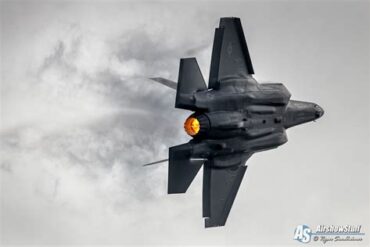
Stealth, once the hallmark of elite fighter jets like the F-117 Nighthawk, has now become a core feature in drone design. Advanced military drones such as the RQ-170 Sentinel or the upcoming XQ-58A Valkyrie are being engineered with low-RCS (Radar Cross Section) bodies, thermal signature suppression, and acoustic dampening to operate undetected in contested airspace.
These features are essential for future conflict zones saturated with multi-layered air defenses. Drones will rely on stealth not only to survive but to infiltrate, collect intelligence, and strike targets deep within fortified areas—all without tipping off the enemy.
Swarm Intelligence: The Drone Hive Mind
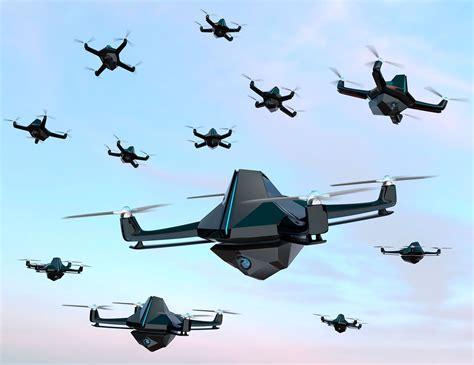
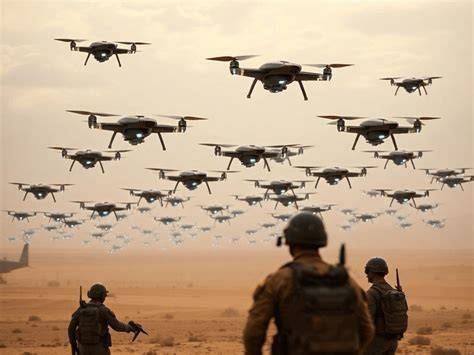
One of the most revolutionary advances in drone warfare is the implementation of swarm technology. Inspired by biological behaviors seen in ant colonies or flocks of birds, military drone swarms consist of dozens or hundreds of autonomous units that operate as a cohesive force.
These drone swarms can:
- Overwhelm enemy radar and missile defenses.
- Surveil large areas simultaneously with distributed coverage.
- Conduct saturation attacks by coordinating multi-angle strikes.
- Heal operational gaps by redistributing roles among surviving drones.
The U.S. Department of Defense and other nations are investing heavily in swarm simulation algorithms, edge computing, and peer-to-peer communication protocols to make these concepts operational. Drones like DARPA’s Gremlins or China’s Wing Loong swarms are at the forefront of these efforts.
Modular Payloads: Mission Flexibility on Demand
Future military drones will be defined not just by their base platforms, but by their interchangeable payloads. This modularity allows a single drone to serve multiple purposes without the need for complete platform redesign.
Drones will be able to:
- Swap between ISR (Intelligence, Surveillance, Reconnaissance) sensors and kinetic weapons.
- Deploy electronic warfare suites for jamming or deception.
- Carry logistics pods for autonomous resupply.
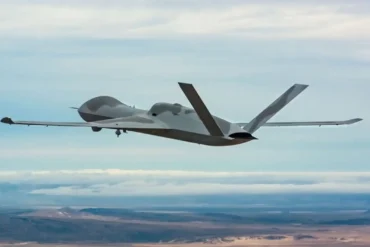
This modular design approach enables cost efficiency, field adaptability, and rapid mission tailoring. The U.S. Air Force’s Skyborg program is a prime example, aiming to build a fleet of attritable drones with plug-and-play mission kits that can be deployed on short notice.
Hybrid and Vertical-Launch Platforms
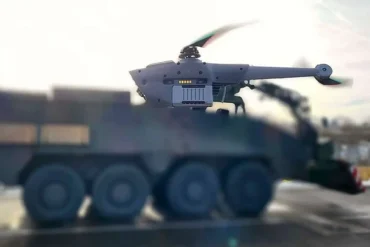
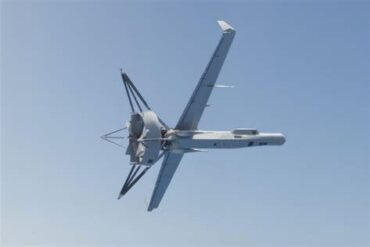
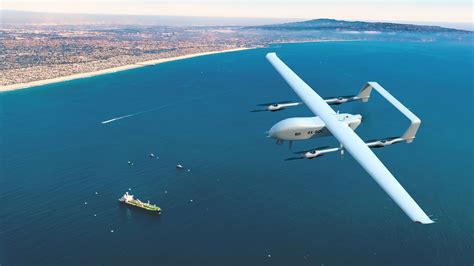
Conventional drones have faced logistical limits—requiring long runways or dedicated launchers. Future drone systems will combine rotary-wing and fixed-wing capabilities, resulting in Vertical Takeoff and Landing (VTOL) platforms with long-endurance flight profiles.
These hybrid drones can:
- Operate from naval vessels, rooftops, or rough terrain.
- Transition between hover and cruise modes mid-mission.
- Serve as forward-deployed assets without permanent infrastructure.
Examples like the Bell V-247 Vigilant and Northrop Grumman’s Fire Scout showcase this versatility. Such drones are ideal for expeditionary warfare, urban combat zones, and humanitarian operations where traditional aircraft cannot be deployed.
Energy Innovation: Endurance Without Limits
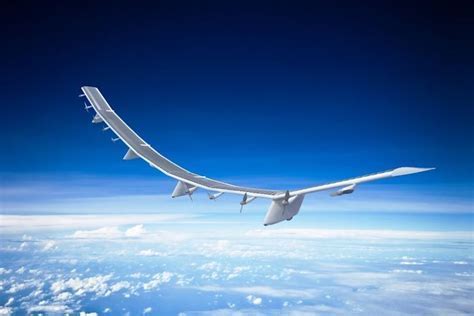
One of the final frontiers in military drone evolution is energy efficiency. New designs will leverage solar panels, hydrogen fuel cells, and electric propulsion to extend flight times dramatically—enabling persistent surveillance or loitering capabilities.
Key developments include:
- Perpetual flight systems for high-altitude drones.
- Rechargeable autonomous drones capable of mid-air docking.
- Integration with wireless Li-Fi communication for data-rich, energy-light operations.
Drones like the Zephyr S or Aurora Orion are pushing endurance boundaries, staying airborne for days, if not weeks, at a time. These technologies reduce the need for frequent launches, making drone operations more logistically efficient and tactically persistent.
Global Arms Race: Strategic Implications of Drone Supremacy
The militarization of drone technology is fueling a global competition among superpowers. Nations like the United States, China, Russia, Israel, and Turkey are investing heavily in both autonomous and semi-autonomous aerial systems. The goals range from force projection and strategic deterrence to electronic warfare and anti-access/area denial (A2/AD) strategies.
- The U.S. leads in AI-integrated platforms and stealth drones.
- China focuses on mass production and cost-effective swarm capabilities.
- Russia emphasizes long-range missile-equipped drones with hardened cyber-resistance.
This drone race isn’t merely about air superiority; it’s about reshaping military doctrine, influencing geopolitical standoffs, and controlling information battlespaces.
Conclusion: The Dawn of a Drone-Driven Doctrine
Military drones are evolving from remote-controlled assets into strategic operators of modern warfare. Fueled by artificial intelligence, stealth, swarming, and modularity, they will soon rival manned aircraft in capability and versatility. Their ability to autonomously identify, track, and neutralize threats will redefine rules of engagement across land, sea, and sky.
In this new era, wars may not be fought by squadrons of jets or legions of soldiers, but by intelligent drones operating as integrated networks, reacting faster than humans ever could. The future of combat is unmanned—but it is far from unthinking.