In the evolving theater of modern warfare, tactical drones have emerged as indispensable tools for Intelligence, Surveillance, and Reconnaissance (ISR) operations. These compact, versatile, and often autonomous platforms have revolutionized the way military and security forces collect, analyze, and disseminate real-time data. As threats become more asymmetric and battlefield conditions more fluid, the integration of tactical ISR drones provides a decisive edge in mission planning and execution.
At the forefront of this transformation is a new generation of micro and short-range unmanned aerial systems (UAS), offering enhanced agility, endurance, and low visibility. These systems fill a critical gap between large, strategic UAVs and manned assets, delivering real-time, actionable intelligence directly to the tactical edge.
The sophistication of these systems lies not merely in their flight capabilities but in the precision, autonomy, and resilience of their sensor payloads, navigation systems, and communication links. Among these, the Martlet MI-1 stands out as a case study in design minimalism, payload optimization, and operational efficiency.
Martlet MI-1: A Benchmark in Micro-UAS ISR Capabilities
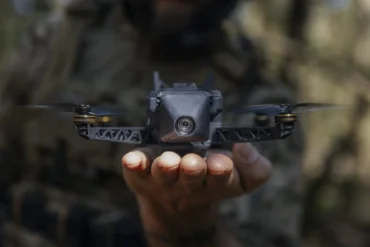
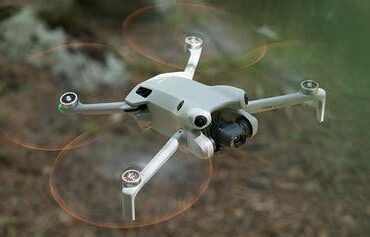
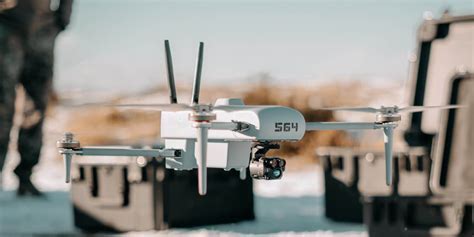
The Martlet MI-1 represents a new class of short-range tactical ISR micro-UAS engineered for silent, covert operations in complex operational environments. Designed with a focus on portability, endurance, and sensor integration, the MI-1 addresses the need for rapid-deployment reconnaissance assets at the squad and platoon level.
With a flight endurance of over 40 minutes, even with the inclusion of an Electro-Optical/Infrared (EO/IR) payload, the MI-1 allows for sustained area monitoring and target tracking. This duration is significant considering the system’s minimal weight and reduced radar signature. Its 5 km datalink range provides operators with sufficient operational standoff while maintaining high-fidelity control and data transmission.
Its ±120-meter covert engagement distance underscores its stealth advantage. This level of operational covertness enables ISR missions in urban or contested environments without alerting adversaries. Despite its compact frame, the MI-1 supports a payload of 0.2 kg, balancing size and functionality effectively within a maximum takeoff weight (MTOW) of just 1.6 kg.
ISR Value Chain: How Tactical Drones Deliver Real-Time Superiority
ISR drones are embedded into a broader value chain where they function as both data collectors and network nodes. These micro-UAS platforms feed real-time data into tactical networks, enabling intelligence cells to execute target acquisition, pattern analysis, and predictive modeling faster than ever before.
The MI-1, with its EO/IR sensors, excels in day/night surveillance, providing thermal imaging and high-resolution visual data from altitudes and angles inaccessible to ground teams. Its real-time feed supports:
- Force protection and perimeter monitoring
- Target tracking and movement prediction
- Battle damage assessment
- Search and rescue reconnaissance
The utility of this data extends beyond tactical units. ISR drones also enhance C4ISR architecture, enabling multi-domain situational awareness. Through integration with command networks, operators can overlay drone intelligence with satellite imagery, HUMINT, and SIGINT to create a composite operational picture.
Design Innovations and Platform Efficiency
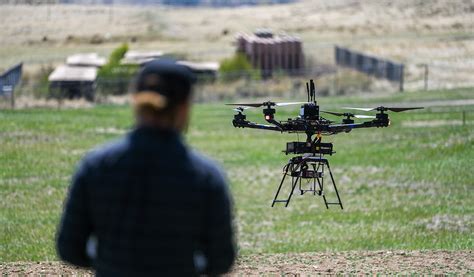
The defining feature of modern tactical drones is not simply their ability to fly but how they optimize energy efficiency, payload management, and operational resilience. The MI-1 leverages advanced materials and miniaturized components to reduce energy consumption and increase operational stability.
Its design emphasizes:
- Lightweight composite airframe for enhanced durability and low signature
- Swappable modular payload bays for rapid reconfiguration
- Low acoustic footprint enabling near-silent operations
The integration of a multi-spectral EO/IR system with an onboard processing unit means that real-time object detection and image stabilization can occur at the edge, reducing latency and offloading compute tasks from the ground station.
Operational Scenarios: Micro-UAS in Tactical Deployment
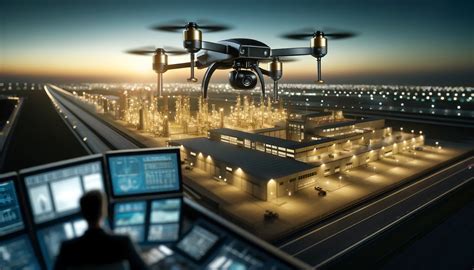
Tactical ISR drones like the MI-1 are fielded in a range of mission scenarios where legacy assets would either be too expensive, too large, or too slow to deploy. In counter-insurgency and hybrid warfare environments, these drones provide the eyes and ears of the unit without putting human lives at risk.
Consider a scenario in which a dismounted infantry unit is tasked with securing a village suspected of hosting enemy scouts. Deploying an MI-1 from cover enables the unit to visually scan rooftops, alleys, and windows for threats—all without entering the kill zone. Similarly, in convoy security, drones can scout road segments and chokepoints for IED threats or ambush positions.
In urban warfare, the MI-1 excels in above-the-rooftop ISR, navigating between structures with precise control and relaying footage that aids in breach planning and room-clearing strategies. Its agility allows it to operate in confined airspace and maintain overwatch during building ingress.
Challenges and Constraints in Tactical Drone Deployment
While the benefits of tactical ISR drones are substantial, there are still inherent limitations that operators and mission planners must address. These include:
- Electronic warfare vulnerabilities: Jamming and spoofing remain serious threats, especially from peer adversaries with advanced EW capabilities.
- Line-of-sight (LOS) datalink limitations: Obstructions in terrain or urban environments can compromise communication unless relayed.
- Weather dependence: Wind gusts, rain, and extreme temperatures affect performance and payload effectiveness.
To mitigate these, newer systems—including the MI-1—are being developed with frequency-hopping datalinks, automated return-to-base failsafes, and environmental calibration protocols that adapt sensor behavior based on weather input.
Future Outlook: AI and Swarm Intelligence in ISR Platforms
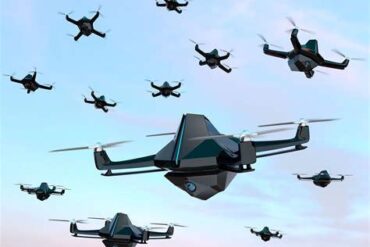
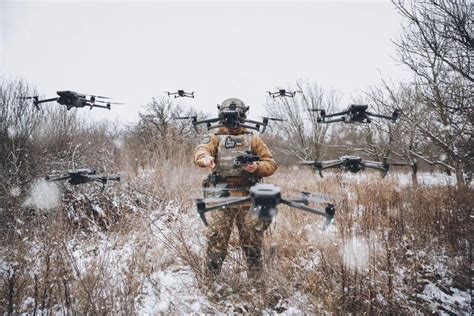
The tactical drone domain is fast advancing toward autonomous ISR ecosystems, where fleets of micro-UAS operate collaboratively using AI-powered swarm intelligence. This progression will radically alter the ISR doctrine, enabling a single operator to control a network of drones performing multi-vector surveillance, coordinated tracking, and distributed sensor fusion.
AI will also play a pivotal role in:
- Edge processing for instant object classification
- Autonomous navigation in GPS-denied environments
- Predictive threat modeling based on observed patterns
Platforms like the MI-1 are already being prototyped with machine learning-enabled object detection and adaptive mission planning algorithms that can change flight paths based on observed environmental or behavioral triggers.
Conclusion: ISR Dominance Through Tactical Micro-UAS
In the high-stakes environment of modern combat, information dominance is no longer a luxury—it is a requirement. Tactical ISR drones like the Martlet MI-1 represent a critical leap forward in battlefield awareness, offering precision, speed, and survivability in scenarios where traditional intelligence tools fall short.
With their ability to deliver high-resolution imagery, infrared data, and real-time video under covert conditions, these platforms are reshaping tactical decision-making. As AI, autonomy, and swarm capabilities mature, the tactical ISR drone will become even more central to both kinetic and non-kinetic mission success.
It is not an overstatement to assert that future battlefield superiority will depend on the agility, intelligence, and ubiquity of tactical ISR drones. The Martlet MI-1 is only the beginning.