For decades, airlines treated the space between economy and business class as an uncertain experiment rather than a serious commercial opportunity. The traditional thinking was simple: passengers who wanted more comfort would either pay for business class or accept standard economy seating. A middle cabin appeared unnecessary, and many airlines worried that introducing a premium economy product would encourage valuable business travelers to trade down.
That assumption turned out to be one of the biggest missed opportunities in modern aviation. Today, premium economy has become one of the most profitable sections of a widebody aircraft, delivering strong revenue while requiring far less space and investment than business class. Airlines have discovered that many travelers are willing to pay significantly more for extra comfort, additional personal space, and improved service without entering the expensive world of lie-flat seats and luxury suites.
The success of premium economy represents a major shift in how airlines view aircraft interiors. Instead of measuring profitability only by ticket price, carriers increasingly analyze revenue generated per square foot of cabin space. By that measurement, premium economy often outperforms the cabins that once dominated airline strategies.
The concept seems obvious today, but its introduction was far from guaranteed. The first airlines that experimented with the idea had to convince passengers that a new category between economy and business was worth paying for. They also had to convince themselves that the additional cabin space would generate enough revenue to justify removing traditional economy seats.
The airline industry eventually learned that premium economy was not competing against business class. Instead, it created an entirely new market of passengers who wanted better comfort but did not consider business class a reasonable expense.
EVA Air Created The Premium Economy Concept In The 1990s
The origins of modern premium economy can be traced back to EVA Air, which introduced its Evergreen Class product in 1991. The Taiwanese carrier recognized a gap that existed in long-haul travel. Many passengers wanted something better than economy but could not justify paying first-class or business-class prices.
The idea followed a similar pattern to the creation of business class itself. In the late 1970s, airlines discovered that there was a group of travelers between economy and first class who wanted extra comfort and were willing to pay more. Qantas helped pioneer business class, and competitors soon followed.
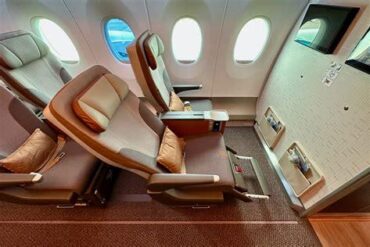
EVA Air applied the same logic to the space between economy and business. Its early premium economy seats appeared on Boeing 747-400 aircraft and offered a significantly more spacious experience than standard economy. The cabin featured a 2-2-2 seating arrangement, giving passengers more room compared with the tighter economy layouts commonly found on large aircraft.
The product was not simply an upgraded economy seat. It was a new category designed around a different customer segment. Travelers received wider seats, additional legroom, improved service, and a quieter cabin environment while airlines gained a new source of premium revenue.
However, adoption across the aviation industry remained slow. Many airlines watched the experiment carefully but hesitated to follow.
Airlines Feared Premium Economy Would Damage Business Class Revenue
The biggest obstacle to premium economy expansion was not passenger demand. It was airline uncertainty.
Many executives worried that premium economy would encourage business-class travelers to downgrade. Since business-class passengers traditionally generated some of the highest margins on international routes, airlines feared that offering a cheaper premium alternative would weaken their most valuable cabin.
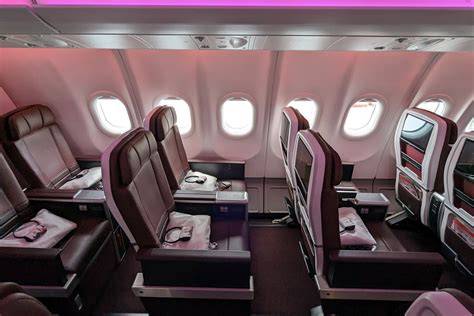
Virgin Atlantic was among the first major airlines to follow EVA Air’s approach, introducing its premium economy product in 1992. The airline successfully created a clearly separated cabin between economy and business, proving that passengers understood the difference between the products.
Despite early success, many global carriers continued to delay adoption. Some experimented with extra-legroom economy seats or small upgrades but avoided creating a dedicated premium economy cabin. The industry remained concerned that customers would simply move downward from business class rather than upward from economy.
The reality was completely different. Premium economy attracted a large group of travelers who had previously been ignored: passengers who valued comfort but did not have access to corporate travel budgets or personal willingness to pay for business-class fares.
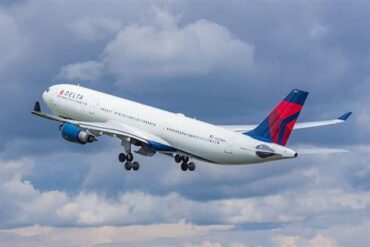
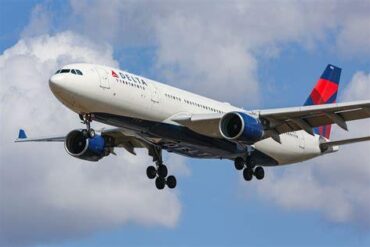
British Airways eventually accelerated acceptance of the concept when it introduced World Traveller Plus in 2000. The airline quickly discovered that demand was much stronger than expected. Other carriers gradually followed, including Air New Zealand, Qantas, Cathay Pacific, Lufthansa, Singapore Airlines, American Airlines, Delta Air Lines, United Airlines, and Emirates.
The long delay showed how difficult it can be for airlines to recognize profitable opportunities when existing revenue streams appear more important.
Emirates Discovered The Premium Economy Opportunity Late
One of the most interesting examples of premium economy’s success comes from Emirates, an airline famous for its luxury-first image. For years, the carrier avoided premium economy because it believed its business-class and first-class products represented the best use of premium cabin space.
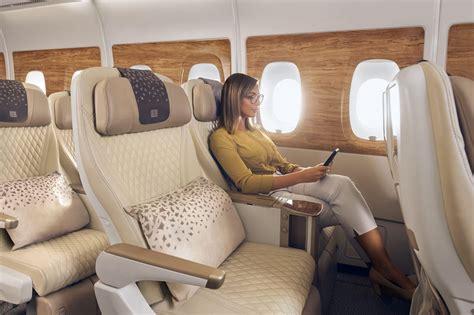
That strategy changed in the early 2020s when Emirates finally introduced premium economy on refurbished Airbus A380 aircraft and later expanded the product to Boeing 777 fleets and new Airbus A350 deliveries.
The results exceeded expectations. Emirates reported that hundreds of thousands of passengers selected premium economy seats across dozens of routes shortly after launch. As the airline expanded availability, demand continued to grow rapidly.
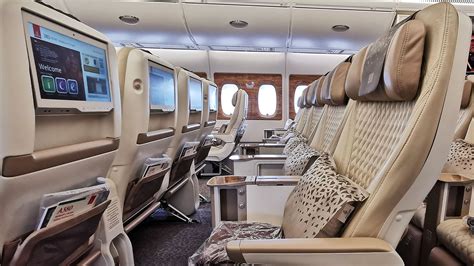
The airline discovered that most premium economy customers were not replacing business-class passengers. Instead, they were travelers who previously purchased economy tickets and were willing to pay more for additional comfort.
This finding challenged one of the aviation industry’s longest-held assumptions. Emirates president Tim Clark highlighted that the majority of premium economy customers represented incremental revenue rather than lost business-class income.
The lesson was clear: premium economy was not reducing premium demand. It was creating new premium demand.
Why Premium Economy Generates Exceptional Revenue Per Square Foot
The financial advantage of premium economy comes from a simple equation. Airlines can charge significantly higher fares while adding only a moderate amount of additional cabin space.
A premium economy seat may provide 40% to 60% more personal space than an economy seat, but ticket prices can increase by far more than that percentage. On many long-haul routes, premium economy fares can be 50% to 100% higher than economy prices, while some markets see even larger differences.
The economics become especially attractive because premium economy does not require the expensive features associated with business class.
Business-class cabins increasingly include:
- Fully flat beds
- Private suites
- Premium dining
- Large personal screens
- Extensive service elements
These features create exceptional passenger experiences, but they also consume significant aircraft space and increase operating costs.
Premium economy offers airlines a different balance. The cabin provides visible comfort improvements without requiring the same level of investment.
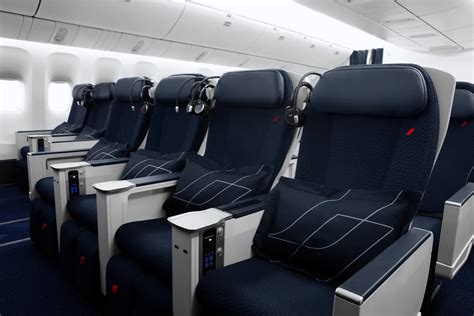
Lufthansa discovered this advantage after introducing premium economy, reporting that the cabin generated higher revenue per square meter than both economy and business class. The reason was straightforward: airlines could earn more money from each section of aircraft floor space.
The Qantas Example Shows Premium Economy’s Efficiency
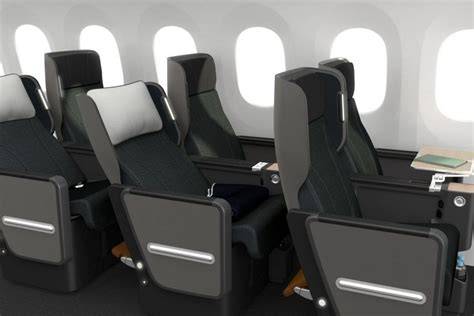
A Boeing 787 aircraft provides a clear example of why premium economy has become so attractive.
On certain configurations, the same section of aircraft could hold significantly different numbers of economy, premium economy, or business-class seats. While business class produces higher individual fares, it requires much more space per passenger.
Premium economy creates a powerful middle ground. Airlines can remove some economy seats, add premium economy seats, and increase revenue without sacrificing as much capacity as a business-class conversion would require.
For example, a premium economy seat might occupy only moderately more space than economy while generating several times more revenue. Business class may still produce higher individual fares, but its space requirements reduce the amount of total revenue generated from a specific area.
This is why airline planners now evaluate cabin layouts through a more detailed financial lens. The question is no longer simply, “Which seat sells for the highest price?” Instead, airlines ask, “Which cabin produces the greatest return from limited aircraft space?”
Premium Economy Is Expanding Across Global Airlines
The growth of premium economy has accelerated as airlines recognize changing passenger expectations. Modern travelers increasingly want comfort, especially on long-haul flights, but many remain unwilling to pay thousands of dollars for business-class tickets.
This creates a perfect environment for premium economy.
According to industry research, premium economy has become the fastest-growing traditional airline cabin segment. Dozens of airlines now operate dedicated premium economy products, and more carriers continue to introduce or expand their offerings.
Airlines including Thai Airways, LATAM Airlines Group, and Discover Airlines have joined the growing number of operators investing in this category.
The expansion reflects broader changes in travel behavior. Leisure travelers are increasingly willing to spend more on comfort, while companies often prefer premium economy as a cost-conscious alternative to business class for employee travel.
The Future Of Widebody Aircraft Depends On Smarter Cabin Design
The rise of premium economy shows that airline profitability is not always connected to the most luxurious product. For years, the aviation industry focused heavily on first class and business class as symbols of premium travel.
However, premium economy has revealed that value-driven luxury can sometimes create stronger financial results than traditional luxury.
The cabin succeeds because it satisfies a large audience. Economy passengers gain a realistic upgrade path, business travelers receive a more affordable alternative, and airlines generate additional revenue from space that might otherwise remain underutilized.
As widebody aircraft become more expensive to operate and airlines search for greater efficiency, cabin design will continue evolving. Premium economy will likely become an even more important part of airline strategies, especially on long-haul routes where passenger comfort directly influences purchasing decisions.
The cabin once dismissed as unnecessary has become one of the most valuable assets inside modern aircraft. Premium economy proves that sometimes the biggest opportunities in aviation are found not at the top of the market, but in the space between what passengers have and what they truly want.