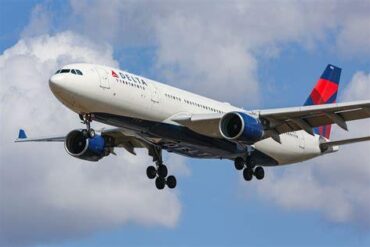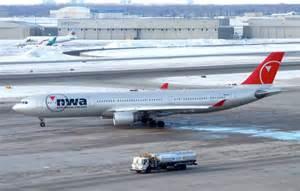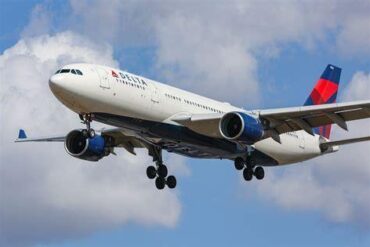
The story of Delta Air Lines’ most valuable widebody aircraft did not begin with a strategic purchase, a billion-dollar order, or a carefully planned fleet transformation. Instead, it came from a bankrupt airline that had little choice but to merge with a stronger partner. When Delta acquired Northwest Airlines in 2008, it inherited a collection of aircraft types that initially looked like a complicated operational challenge. Yet among those inherited aircraft was a family of jets that would eventually reshape Delta’s long-haul strategy: the Airbus A330.
Airline mergers are rarely simple. Combining networks, employees, technology systems, and frequent-flyer programs requires years of planning. Aircraft integration can be one of the most difficult parts because every aircraft type brings unique maintenance requirements, pilot training costs, spare parts needs, and operational limitations. A fleet decision that looks attractive on paper can become expensive when two airlines operate different aircraft philosophies.
For Delta, the Northwest merger created exactly that situation. Before the combination, Delta operated a fleet dominated by Boeing aircraft, including the 737, 757, 767, 777, MD-80, and MD-90 families. Northwest, meanwhile, operated a much more diverse fleet featuring Airbus A320-family aircraft, Airbus A330s, Boeing 747s, Boeing 757s, and aging McDonnell Douglas DC-9s.
Some inherited aircraft types disappeared quickly. Delta retired Northwest’s DC-9 fleet in 2014, while the legendary Boeing 747 fleet left service in 2017. However, one aircraft family survived and became increasingly important: the Airbus A330.
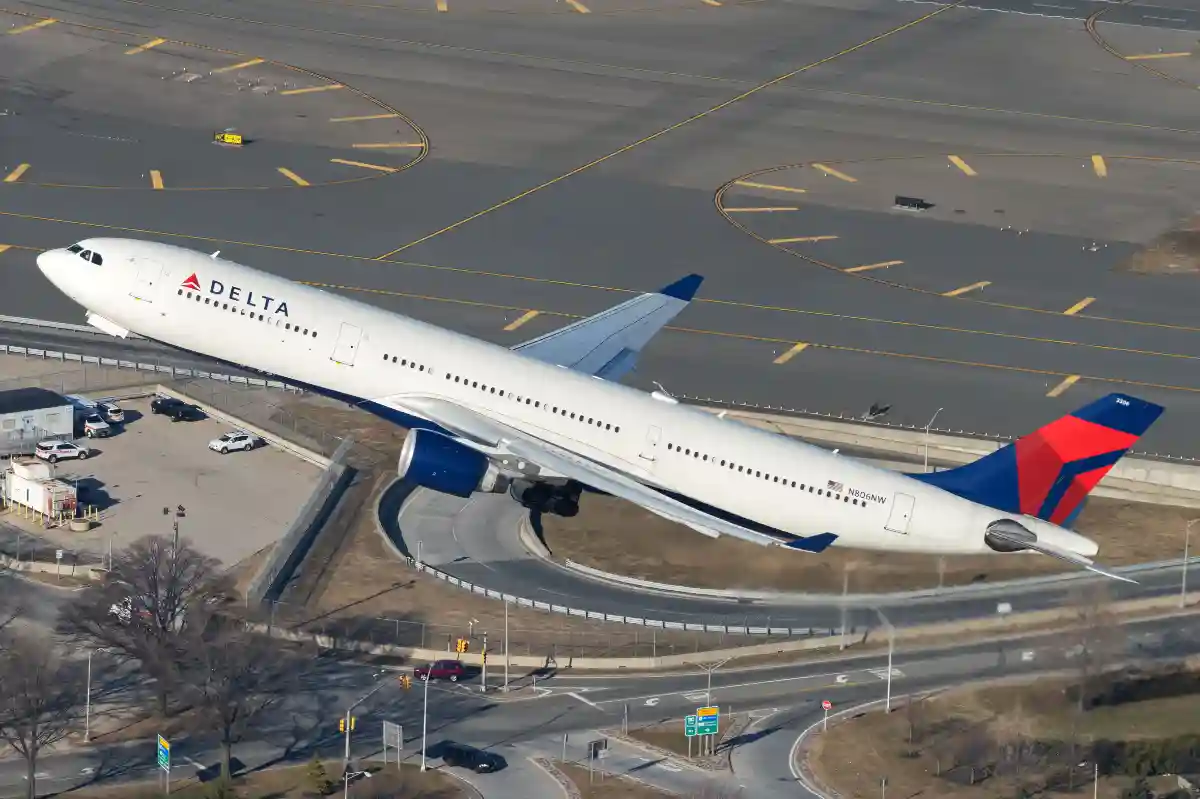
Northwest Airlines’ Airbus A330 Order Became Delta’s Long-Term Advantage
Northwest Airlines was one of the earliest supporters of Airbus’ widebody ambitions. The carrier originally became interested in the A330 program during the late 1980s, when it placed orders alongside the Airbus A340. However, financial challenges and changes surrounding Airbus’ four-engine A340 program caused those early plans to collapse.
Years later, Northwest returned to Airbus and placed a firm order for the A330 family. In 2000, the airline ordered a combination of Airbus A330-300 and A330-200 aircraft, eventually taking delivery of 32 examples between 2003 and 2007.
The timing proved extremely fortunate for Delta. Many of these aircraft were still relatively young when the merger occurred, meaning Delta inherited a modern long-haul fleet without having to spend billions creating one from scratch.
The A330s also fit surprisingly well with Delta’s existing maintenance infrastructure. Northwest selected the Pratt & Whitney PW4000 engine for its A330 fleet, and Delta already operated PW4000-powered Boeing 767-300ER aircraft. This common engine experience reduced some of the complexity normally associated with absorbing a foreign fleet type.
The inherited A330 fleet included both versions of the aircraft. The smaller A330-200 offered additional range and flexibility, while the larger A330-300 provided greater passenger capacity and stronger economics on high-demand international routes.
Initially, Delta continued using many A330s from Northwest’s former hubs, including Detroit and Minneapolis. Over time, however, the aircraft expanded into Delta’s traditional hubs such as Atlanta and New York, becoming a central part of the airline’s international growth strategy.
Why The Airbus A330 Became More Valuable Than Delta’s Boeing 767 Fleet
At first glance, Delta’s Airbus A330 and Boeing 767 fleets appeared to serve similar missions. Both aircraft families were designed for long-range international operations, especially across the Atlantic. However, the economics of the two aircraft gradually moved in different directions.
The Boeing 767 had one major advantage: efficiency. Its smaller size meant lower fuel consumption and lower operating costs. For decades, airlines valued the 767 because it could profitably serve thinner international routes that did not require a larger aircraft.
The A330, however, offered something the 767 could not match: significantly more revenue potential.
An Airbus A330-300 can carry roughly 60 to 70 more passengers than a Boeing 767-300ER in typical airline configurations. Even compared with the larger 767-400ER, the A330-300 still provides a meaningful capacity advantage. More seats mean more ticket revenue, especially on busy transatlantic markets.
The Airbus also has a larger cargo capability. International airlines do not only sell passenger seats; they also rely on belly cargo revenue. The A330’s wider fuselage and larger lower-deck cargo capacity created another advantage over the 767 family.
This difference became increasingly important as Delta expanded its international network. A fully loaded A330 flying between major markets could generate substantially more revenue than a smaller 767 operating the same route.
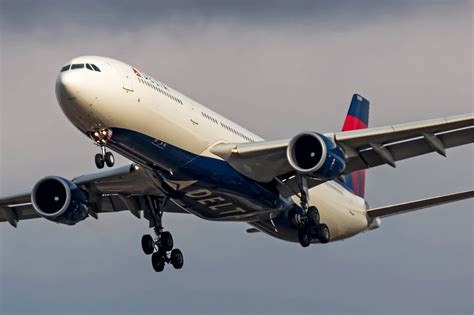
The result was a strategic shift. While Delta continued using the 767 for lower-demand European destinations and premium domestic routes, the A330 became the airline’s preferred aircraft for many major Atlantic markets.
Delta Invested In The Airbus A330 Even After The Merger
The strongest evidence of Delta’s confidence in the A330 came years after the Northwest merger. Instead of simply operating the inherited aircraft, Delta actively expanded the fleet.
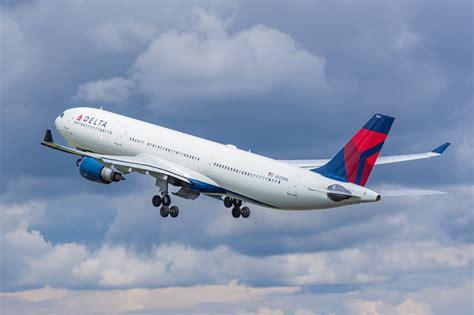
In 2013, Delta ordered 10 additional Airbus A330-300 aircraft, increasing its A330-300 fleet while demonstrating that the aircraft had become an important part of its future international strategy.
These aircraft were not ordinary A330s. Delta became the launch customer for Airbus’ upgraded 242-ton A330-300 variant, which dramatically improved the aircraft’s range capability.
The improved version could travel approximately 6,340 nautical miles (11,750 kilometers), allowing it to operate routes that earlier A330-300 models could not reliably handle.
Delta also selected the General Electric CF6-80 engine for these aircraft, creating additional commonality with parts of its Boeing 767 fleet. Deliveries took place between 2015 and 2017, making them among the youngest A330-300 aircraft in commercial service.
These aircraft expanded Delta’s ability to operate long-haul routes such as New York to Tel Aviv and Atlanta to Southern Europe while maintaining strong passenger and cargo economics.
The Airbus A330neo Strengthened Delta’s Widebody Strategy
Delta’s relationship with the A330 did not end with older inherited aircraft. The airline became one of the strongest supporters of Airbus’ next-generation version: the A330neo.
Airbus developed the A330neo after airlines expressed demand for a widebody aircraft positioned between smaller long-range jets and larger aircraft such as the Airbus A350 and Boeing 777.
The A330-900neo kept the basic structure of the original A330 but introduced major improvements. These included:
- Rolls-Royce Trent 7000 engines
- Improved aerodynamics
- New wingtip devices
- Updated avionics
- Airbus Airspace cabin features
Delta initially ordered 25 A330-900 aircraft along with 25 Airbus A350-900s. Together, these aircraft became the foundation of Delta’s modern widebody fleet.
The airline originally deployed the A330-900 from its Seattle hub for transpacific operations, but the aircraft later moved into broader international service. Today, the type plays an important role across Delta’s global network, especially on transatlantic routes.
Delta continued increasing its commitment to the aircraft. By 2026, the airline had expanded its A330-900 order book significantly, including additional aircraft expected to arrive later in the decade.
Why The A330 Remains Delta’s Most Important Widebody Family
Today, the Airbus A330 represents one of the biggest success stories in Delta’s fleet history. What began as an inherited aircraft type from a struggling airline has become the foundation of Delta’s international operations.
Delta operates the A330 family across three major variants:
- Airbus A330-200
- Airbus A330-300
- Airbus A330-900neo
Combined, these aircraft make Delta one of the largest A330 operators in the world.
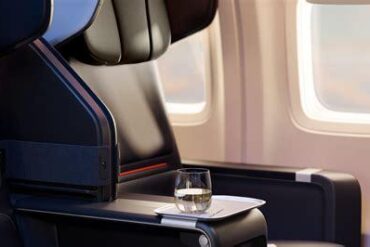
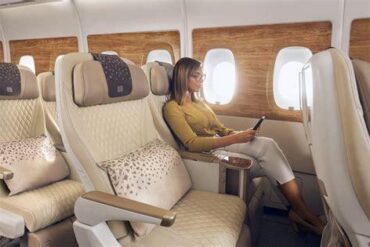
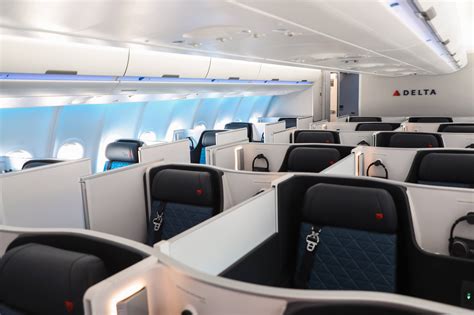
The airline has continued investing in its existing A330 fleet rather than simply replacing older aircraft. Delta plans cabin upgrades that include improved Delta One Suites, updated premium cabins, larger entertainment screens, and refreshed passenger experiences.
These improvements demonstrate that Delta views the A330 as a long-term asset rather than a temporary solution.
The airline’s future widebody strategy will eventually introduce more Airbus A350 aircraft and Boeing 787-10 aircraft, but the A330 will remain important for many years. New aircraft will gradually replace older Boeing 767 models, while the A330 family continues serving the backbone of Delta’s transatlantic network.
A Bankrupt Airline’s Aircraft Became Delta’s Greatest Widebody Success Story
The Airbus A330’s journey at Delta is a reminder that airline mergers can create unexpected opportunities. Northwest Airlines entered bankruptcy protection before merging with Delta, but the aircraft it brought into the partnership became some of the most valuable assets in the combined company.
Delta did not originally design its widebody future around the A330. It inherited the aircraft through a difficult merger. Yet through careful fleet management, additional orders, cabin investments, and strategic deployment, Delta transformed the A330 into a cornerstone of its global network.
The aircraft represents one of the rare cases where an inherited fleet decision became a competitive advantage. A plane that arrived through a struggling airline ultimately helped shape one of the world’s strongest long-haul carriers.