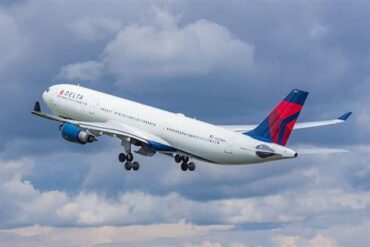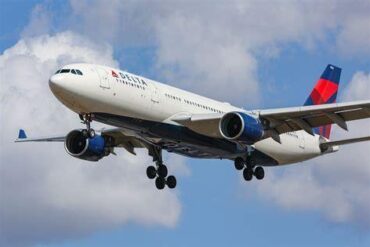
Delta Air Lines’ 2008 merger with Northwest Airlines is often remembered as the deal that transformed two struggling carriers into one of the world’s largest airlines. Yet the merger delivered something more enduring than size, hubs, or even a broader international network. It gave Delta the Airbus A330 family, an aircraft type that would become one of the most important widebody platforms in the carrier’s history and eventually influence the airline’s future fleet strategy.
The significance of that inheritance is easy to underestimate. When Delta and Northwest announced their merger in April 2008, neither airline was in an enviable financial position. The proposed combination was designed primarily around survival, scale, cost savings, and operational efficiency. But in the years that followed, Delta discovered that Northwest had brought along an exceptionally useful fleet of Airbus aircraft, including a large A330 operation that gave Delta a capability it previously lacked.
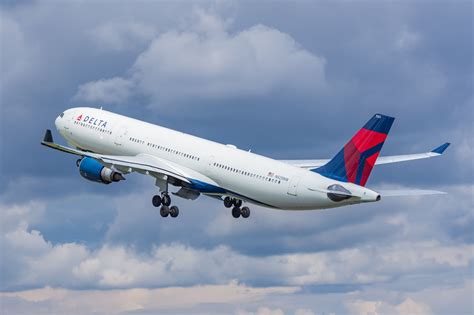
The modern Delta fleet is obviously much more sophisticated than the collection of aircraft inherited from Northwest. The airline has since ordered new-generation A330-900neos, added Airbus A350s and Boeing 787s, and developed a much more diversified international network. Even so, the A330 remains a remarkably visible legacy of Northwest Airlines. Its combination of capacity, range, passenger appeal, and operating flexibility has allowed Delta to use the type across some of its most important routes.
The 2008 Delta Air Lines and Northwest Airlines Merger
The origins of the merger were rooted in necessity rather than luxury. By early 2008, both Delta Air Lines and Northwest Airlines were under enormous financial pressure. Reports surrounding the proposed transaction highlighted the scale of their difficulties, with the two airlines collectively losing billions of dollars during the first quarter alone.
Against that backdrop, combining the airlines offered an opportunity to eliminate overlapping operations, strengthen the network, reduce costs, and improve the ability to compete against larger rivals. On April 14, 2008, Delta and Northwest formally announced their agreement to merge, creating what was expected to become the world’s largest airline at the time.
The surviving company retained the Delta Air Lines name and Atlanta headquarters. Richard Anderson, who had previously served as Northwest Airlines’ chief executive, became Delta’s CEO and took on the enormous responsibility of integrating two complex airlines. The task was far more complicated than simply painting Northwest aircraft in Delta colors.
The combined airline inherited more than 780 aircraft, multiple major hubs, different corporate cultures, separate reservation and loyalty systems, and aircraft families that had never previously been part of Delta’s fleet. Northwest had a particularly significant relationship with Airbus, while Delta had historically operated an overwhelmingly American-made fleet.
The merger therefore forced Delta to rethink what its fleet could look like.
Integrating Northwest Airlines Into the Delta Network
The operational integration was enormous. Airports where the two airlines had operated from different terminals needed to consolidate their activities. Tampa International Airport, Los Angeles International Airport, and Orlando International Airport were among the locations where significant changes were required.
Philadelphia International Airport completed one of the final major terminal consolidations on January 18, 2010. Meanwhile, Northwest’s WorldPerks frequent-flyer program was absorbed into Delta SkyMiles in October 2009.
These changes were important because an airline merger does not truly become one operation simply because regulators approve the transaction. Aircraft have to be scheduled together, crews have to be integrated, airport facilities need to be rationalized, and customers must be moved into a common commercial system.
For Delta, however, one of the most interesting parts of the process was what happened to Northwest’s aircraft.
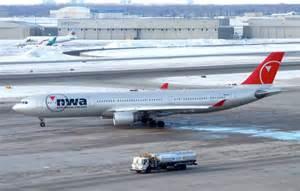
Northwest operated a mixed fleet containing Boeing, McDonnell Douglas, and Airbus aircraft. The Airbus portion was especially significant because Northwest had developed substantial expertise with the Airbus A330, becoming one of the type’s largest operators worldwide.
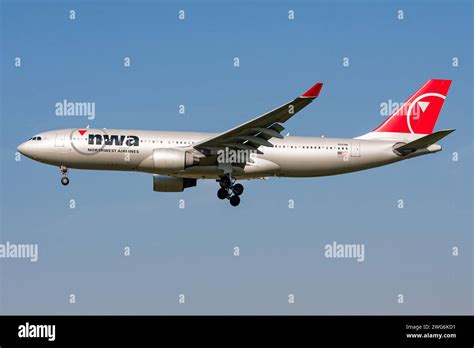
For Delta, this was effectively an introduction to a new widebody family at a moment when international network growth was becoming increasingly important.
Why the Airbus A330 Became So Important to Delta
The A330 arrived at Delta at precisely the right moment. The aircraft occupied a useful position between smaller long-haul jets and larger widebody aircraft, offering enough capacity for major international markets without requiring the enormous passenger volumes associated with the largest aircraft.
That flexibility has become one of its defining characteristics.
According to the reference fleet data, Delta’s A330 family includes 11 A330-200s, 31 A330-300s, and 39 A330-900neos. The first two variants represent the legacy of the Northwest operation, while the A330-900neo demonstrates something even more important: Delta eventually decided that the aircraft was valuable enough to continue investing in the family long after the merger itself had disappeared into history.
The A330-200 offers a relatively moderate capacity of around 223 seats in Delta’s configuration. The larger A330-300 carries approximately 281 passengers, while the newer A330-900neo has around 282 seats.
Those figures give Delta an unusually useful range of capacity options. The aircraft can be deployed where a Boeing 777 or Airbus A350 would be unnecessarily large, while still offering substantially more capacity and international capability than many narrowbody aircraft.
That middle ground is extremely valuable in airline network planning.
The A330’s Eight-Abreast Cabin Is Another Major Advantage
There is also a passenger-experience argument for the A330 that should not be overlooked.
The aircraft’s 2-4-2 economy-class configuration gives it eight seats across the cabin. Compared with the nine-abreast configuration found on many Boeing 787 and 777 aircraft, the A330 can provide passengers with a more spacious-feeling cabin layout.
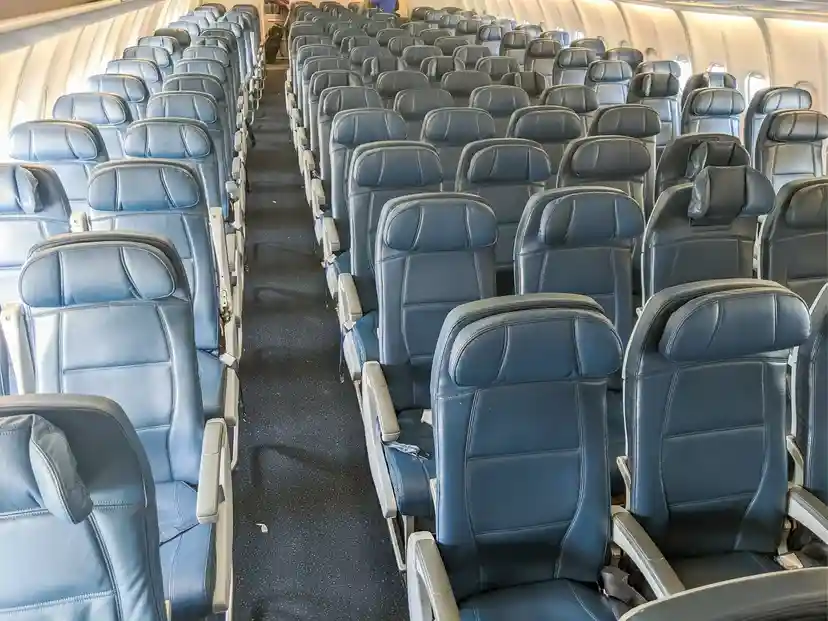
The window pairs are particularly attractive. Travelers sitting together can avoid the awkward middle-seat arrangement found in many larger widebody cabins. Couples can have two seats to themselves, while families can make use of the central four-seat block.
That configuration has helped make the A330 popular with passengers for years, particularly on long international flights where cabin density and personal space can dramatically influence the travel experience.
For Delta, the value is even greater because the airline operates a premium-oriented network. Its international aircraft are not simply designed to move the maximum number of passengers from one airport to another. They are also designed to attract high-yield business travelers and premium leisure customers.
The A330 fits that strategy remarkably well.
Delta’s A330 Network Flexibility Gives It a Major Strategic Advantage
One of the strongest arguments for the A330 is its operational versatility. Delta can use the aircraft on major transatlantic markets, but it is not restricted to a single type of route.
Services between New York-JFK and London Heathrow, for example, are representative of the kind of high-demand international flying where the A330 makes sense. The aircraft also has the range to connect the United States with destinations such as Athens, allowing Delta to serve important European markets with an appropriately sized widebody.
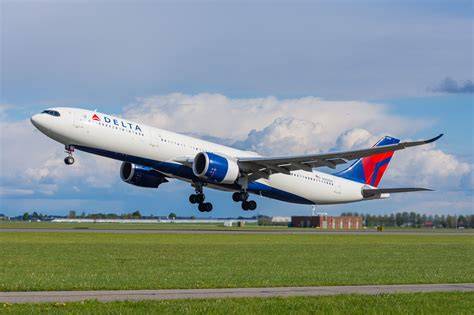
The aircraft can also be useful on long domestic or transcontinental sectors where premium demand justifies widebody capacity. This is an important part of the A330’s appeal because airline economics are increasingly dependent on matching aircraft size to demand rather than simply choosing the aircraft with the greatest range or capacity.
An A330 can therefore be valuable on a route that does not justify a larger flagship aircraft but still has enough demand to support a widebody.
That makes the type a network optimization tool, not merely a passenger aircraft.
The Northwest Merger Also Gave Delta a More Global Footprint
The A330 was only one part of what Northwest contributed. The merger also gave Delta access to an established international network and powerful connecting hubs, most notably Minneapolis-St. Paul International Airport.
MSP became one of the most important connecting facilities within the combined Delta system. Its geographic position allows the airline to funnel passengers between numerous domestic markets while supporting international services.
Northwest had spent decades developing its presence in the Upper Midwest and Pacific markets. Delta inherited that network strength and was able to combine it with its own powerful Atlanta, New York, and other hubs.
The result was greater network depth rather than simply a larger route map.
This distinction matters. An airline can announce hundreds of destinations, but the real competitive advantage comes from the ability to connect those destinations efficiently. Northwest gave Delta infrastructure, customers, airport positions, employees, aircraft, and network knowledge that would have been enormously difficult and expensive to recreate organically.
The Most Convincing Evidence Came After the Merger
Perhaps the strongest evidence that Delta benefited from Northwest’s A330 fleet is what happened after the integration was complete.
Delta did not simply operate the inherited aircraft until they reached retirement and then move on. Instead, the airline ordered 39 Airbus A330-900neos.
That decision is significant because it demonstrates that the A330’s value went beyond the circumstances of the 2008 merger.
If Delta had considered the inherited A330s merely temporary equipment, there would have been little reason to commit billions of dollars to a modernized version of the same aircraft family. Instead, the airline effectively validated Northwest’s original fleet strategy by making the A330 part of its long-term international fleet planning.
The A330-900neo brings improved engines, updated aerodynamics, greater efficiency, and a modern passenger cabin while retaining the basic characteristics that made the original A330 attractive.
It is, in many respects, Northwest’s legacy refined for Delta’s modern network.
Why the A330 May Be Delta’s Greatest Merger Asset
Delta gained many things from Northwest Airlines. It gained important hubs, international traffic, experienced employees, valuable airport positions, and a much broader customer base. Each of those assets played a role in creating the modern airline.
Yet the A330 has a particularly compelling claim to being the merger’s greatest tangible operational asset.
The reason is longevity.
Hubs can change. Routes can be discontinued. Corporate systems can be replaced. Loyalty programs can evolve. But the A330 has remained deeply embedded in Delta’s international operation for well over a decade after the merger.
More importantly, the airline chose to reinvest in the aircraft family.
That decision transformed the A330 from an inherited Northwest asset into a distinctly Delta capability. The airline took an aircraft it did not previously operate, integrated it into its network, learned how to maximize its economics, built premium cabins around it, and eventually ordered an entirely new generation.
Few merger benefits can demonstrate that kind of staying power.
A Merger That Changed More Than Delta’s Size
Looking back at the 2008 merger, it is tempting to focus on the headline numbers. Delta became bigger. Its network expanded. Its fleet grew. Its international presence strengthened.
But the most consequential mergers are not necessarily defined by the biggest numbers on announcement day. They are defined by the assets that continue producing value years later.
The Airbus A330 is one of those assets.
Northwest Airlines helped introduce Delta to a widebody aircraft family that proved exceptionally well suited to the carrier’s evolving strategy. Its capacity is useful, its range is competitive, its cabin configuration remains appealing, and its economics allow Delta to serve markets that might not support a larger aircraft.
The irony is that the A330 may have been one of the merger’s least celebrated benefits when the transaction was announced. Nobody was talking about it with the same enthusiasm reserved for becoming the world’s largest airline.
Yet nearly two decades later, the aircraft tells a different story.
The Northwest Airlines name disappeared, but its A330 legacy endured. Delta did not merely inherit the aircraft; it turned the A330 into one of the foundations of its modern long-haul operation. And with the A330-900neo continuing to enter the fleet, Northwest’s influence on Delta’s aircraft strategy is still flying today.