The Airbus A380 made its debut in 2007 as the pinnacle of aviation ambition: the largest passenger aircraft ever built. Boasting two full decks, seating for over 500 passengers in typical layouts, and a cabin space unmatched by any other commercial airliner, it was designed to redefine long-haul air travel. At the time, airlines embraced the superjumbo as both a prestige symbol and a practical solution for moving enormous passenger volumes between the world’s busiest hubs. Yet, less than two decades later, the same engineering choices that established the A380 as revolutionary have become its most formidable economic obstacle. At the heart of this transformation lies a single technical decision: its four-engine configuration.
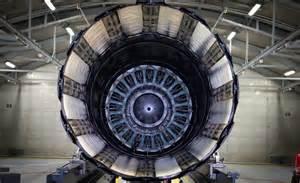
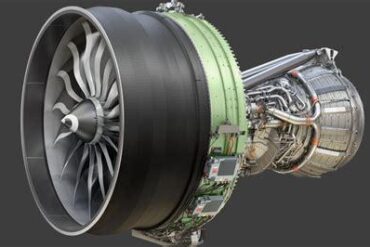
Airbus conceived the A380 in the 1990s under assumptions that now seem almost prophetic yet ultimately misaligned with modern aviation economics. The four-engine layout was not chosen for style or brand identity—it was a technical necessity. The aircraft’s design called for a maximum takeoff weight surpassing 1.2 million pounds, vastly exceeding contemporaries like the Boeing 777-300ER. At that time, no twin-engine powerplant could provide the required thrust efficiently or safely for a machine of that magnitude. To meet these requirements, Airbus installed either Rolls-Royce Trent 900s or Engine Alliance GP7200 turbofans, each capable of producing up to 76,000 pounds of thrust. Collectively, these engines delivered over 307,000 pounds of thrust during takeoff, a feat simply unattainable with two engines at the time.
Moreover, regulatory frameworks influenced Airbus’ decision. During the 1990s, twin-engine aircraft faced strict ETOPS (Extended-range Twin-engine Operational Performance Standards) limitations, which governed how far they could operate from diversion airports in the event of engine failure. Four-engine aircraft, by contrast, were exempt from such constraints, providing unparalleled operational flexibility on transoceanic or remote routes. Airbus also designed the A380 based on the anticipated evolution of global aviation, which predicted growing congestion at major hubs such as London Heathrow, Singapore Changi, and Tokyo Narita. The superjumbo was intended to transport massive passenger volumes on fewer flights, theoretically optimizing slot-constrained airports.
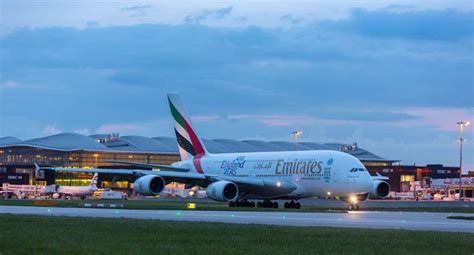
Four Engines Were Once the Only Practical Solution
When Airbus launched the A380 program, the aerospace industry faced technological limitations that are easy to overlook today. Commercial jet engines had not yet reached the levels of reliability, thrust, and fuel efficiency that characterize modern powerplants. Designing an aircraft capable of carrying hundreds of passengers over intercontinental distances required a propulsion system that distributed enormous loads across multiple engines.
The four-engine configuration provided exactly that capability. Beyond producing the required thrust, it offered redundancy that reassured regulators and airlines alike. For ultra-long-haul routes crossing oceans, deserts, and polar regions, four engines represented both operational confidence and scheduling flexibility. Airlines could deploy the aircraft on routes that stretched the boundaries of contemporary commercial aviation without worrying about the restrictions imposed on twin-engine aircraft.
At the time, Airbus’ vision appeared logical. Passenger demand was rising rapidly, major airports were becoming increasingly congested, and many industry analysts predicted that airlines would need larger aircraft rather than more frequent flights. The A380 was built to dominate that future. Unfortunately for Airbus, the future evolved in a different direction.
The Massive Operating Cost Penalty of a Quadjet
The fundamental problem with four engines is simple: they cost significantly more to operate than two.
Fuel consumption is the most visible challenge. The Airbus A380 burns approximately 4,600 gallons of jet fuel per hour under normal operating conditions. Depending on fuel prices, this can translate into tens of thousands of dollars in fuel costs for a single long-haul flight. While the aircraft can spread those costs across hundreds of passengers, profitability depends on consistently high occupancy rates.
When load factors fall, the economics deteriorate quickly. A half-full A380 remains an extremely expensive aircraft to fly. Unlike smaller widebodies, it cannot easily adapt to seasonal demand fluctuations without sacrificing profitability.
Maintenance expenses further widen the gap. Every engine requires inspections, repairs, replacement parts, monitoring systems, and periodic overhauls. An airline operating an A380 must maintain four expensive turbofan engines rather than two. The result is substantially higher maintenance spending throughout the aircraft’s operational life.
Industry estimates often place A380 maintenance expenses between $6,000 and $8,000 per flight hour. Combined with fuel costs, crew expenses, airport charges, and other operational requirements, total operating costs can reach $25,000 to $35,000 per flight hour. Modern twin-engine competitors frequently operate at a fraction of those costs.
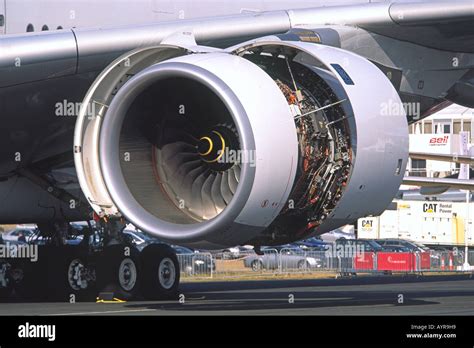
How ETOPS Eliminated a Critical Advantage
One of the strongest historical arguments in favor of four-engine aircraft gradually disappeared during the A380’s lifetime.
For decades, twin-engine airliners faced strict ETOPS restrictions. Regulators limited how far these aircraft could fly from suitable diversion airports because of concerns about engine failures over remote areas. Four-engine aircraft enjoyed greater freedom because they possessed additional redundancy.
This distinction mattered enormously in the 1980s and 1990s. Airlines operating long overwater routes often favored aircraft such as the Boeing 747 because regulatory limitations made twin-engine alternatives less practical.
However, engine technology improved dramatically during the 2000s and 2010s. Modern turbofans achieved reliability levels once considered impossible. As confidence increased, aviation authorities expanded ETOPS certifications.
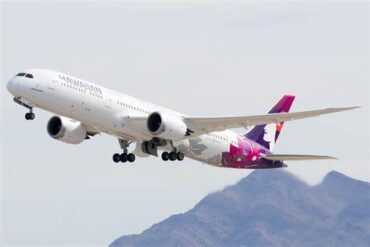
The Boeing 787 eventually received ETOPS-330 approval, while the Airbus A350 achieved certifications that allowed operations far from diversion airports. These approvals effectively opened almost every commercially viable route to twin-engine aircraft.
As a result, airlines no longer needed four engines to cross oceans or connect distant continents. They could achieve the same mission profiles using aircraft that consumed less fuel and required less maintenance. The A380 lost one of its most important competitive advantages without gaining any new economic benefits in return.
The Rise of Efficient Twinjets
The emergence of the Airbus A350 and Boeing 787 fundamentally altered the economics of long-haul travel.
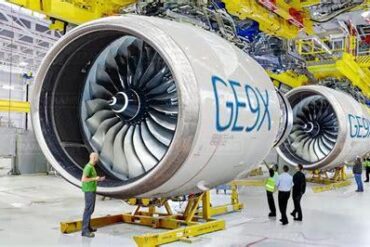
These aircraft were designed around a different philosophy. Rather than maximizing passenger capacity, they prioritized efficiency, flexibility, and lower operating costs. Advanced composite materials reduced weight. New-generation engines delivered greater fuel efficiency. Improved aerodynamics enhanced performance across a broad range of missions.
For airlines, the appeal was obvious. A 787 or A350 could serve many of the same long-haul routes as the A380 while carrying fewer passengers and generating significantly lower operating expenses. This reduced financial risk and made route planning more flexible.
Airlines no longer needed to fill more than 500 seats to justify a flight. Instead, they could profitably operate routes with smaller passenger volumes while maintaining attractive yields. The business case increasingly favored twinjets, leaving the A380 in an increasingly vulnerable position.
The Collapse of the Hub-and-Spoke Assumption
The A380 was designed around a specific vision of global air travel: the hub-and-spoke model.
Under this system, airlines funnel passengers into major hubs before redistributing them to final destinations. Large aircraft become highly efficient because they concentrate enormous numbers of travelers onto a limited number of flights.
The A380 excelled in precisely this environment. Airports such as Heathrow, Dubai International, Singapore Changi, and Hong Kong International seemed destined for ever-increasing congestion. Airbus expected airlines to respond by deploying larger aircraft to maximize passenger throughput.
Yet the arrival of advanced twinjets changed the equation.
Rather than routing travelers through major hubs, airlines increasingly adopted point-to-point strategies. New aircraft made it economically feasible to connect secondary cities directly, bypassing traditional transfer centers.
Routes that once required connections through London, Singapore, or Frankfurt could now operate nonstop between smaller markets. Passengers benefited from shorter travel times, while airlines gained flexibility in scheduling and capacity management.
This transformation undermined one of the A380’s core assumptions. Demand became distributed across more routes rather than concentrated onto a smaller number of giant aircraft.
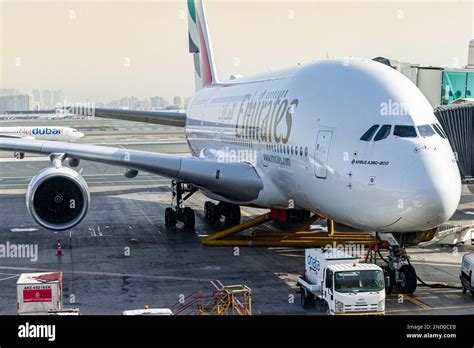
Why Most Airlines Could Not Make the Numbers Work
Although passengers generally loved flying on the A380, airline executives faced a different reality.
The aircraft delivered exceptional comfort, quiet cabins, spacious interiors, and premium onboard experiences. Many travelers considered it one of the most enjoyable commercial aircraft ever built.
Unfortunately, passenger admiration does not automatically translate into airline profitability.
To justify operating costs, airlines often needed to fill hundreds of seats consistently throughout the year. Seasonal demand fluctuations, economic downturns, geopolitical disruptions, and changing travel patterns could quickly undermine route economics.
Only a limited number of carriers possessed networks capable of supporting the aircraft effectively. Singapore Airlines, British Airways, Lufthansa, and Qantas found success on selected routes, but few airlines could deploy the aircraft broadly enough to achieve long-term fleet efficiency.
The final production tally illustrates the challenge. Airbus originally envisioned a market for hundreds more aircraft than it ultimately sold. Production ended in 2021 after just 251 deliveries, far below the company’s early projections.
COVID-19 Accelerated an Existing Trend
The COVID-19 pandemic did not create the A380’s problems, but it dramatically accelerated them.
When international travel collapsed in 2020, airlines faced urgent pressure to reduce costs and simplify fleets. Under those circumstances, the A380 became an obvious retirement candidate.
Its enormous capacity, high operating expenses, and dependence on dense international traffic made it difficult to justify during a period of severely reduced demand.
Several airlines permanently retired their fleets. Air France removed the type entirely. Other carriers reduced operations substantially or reconsidered long-term commitments.
Meanwhile, airlines relied increasingly on smaller twin-engine aircraft to rebuild international networks. The flexibility of the A350 and 787 allowed carriers to restore routes gradually without exposing themselves to the financial risks associated with operating very large aircraft.
The pandemic effectively accelerated decisions that many airlines were already considering before 2020.
Emirates: The Exception That Proves the Rule
No discussion of the A380 is complete without examining Emirates.
The Dubai-based carrier remains the aircraft’s most successful operator, maintaining a fleet of more than 100 A380s and planning to keep them flying for many years. At first glance, Emirates appears to contradict the argument that four-engine airliners are commercially disadvantaged.
In reality, the airline demonstrates exactly why the A380 works only under highly specific circumstances.
Dubai International Airport faces significant slot constraints. Adding more flights is not always practical, making larger aircraft particularly valuable. Emirates also operates one of the world’s most extensive hub-and-spoke networks, funneling enormous volumes of connecting passengers through a centralized hub.
These conditions align perfectly with the A380’s strengths. High demand, limited slots, and a transfer-focused network create an environment where maximum capacity matters more than flexibility.
Few airlines enjoy the same combination of circumstances. Most carriers operate in markets where adaptability, efficiency, and lower trip costs are more important than sheer passenger volume.
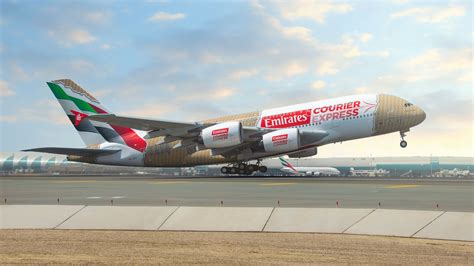
A Remarkable Aircraft That Arrived at the Wrong Time
The Airbus A380 remains one of the most impressive engineering achievements in commercial aviation history. It pushed the boundaries of aircraft design, redefined passenger comfort, and demonstrated what was technologically possible in the early twenty-first century.
Yet commercial success depends on more than engineering excellence.
The aircraft entered service just as twin-engine technology was advancing at extraordinary speed. Improvements in engine reliability, expanded ETOPS approvals, changing airline strategies, and the rise of point-to-point travel steadily eroded the advantages that once justified four engines.
What began as a symbol of power, range, and operational freedom gradually became a symbol of excess operating cost and reduced flexibility. The A380 was not defeated by safety concerns, passenger dissatisfaction, or technological shortcomings. It was overtaken by a marketplace that increasingly rewarded efficiency over scale.
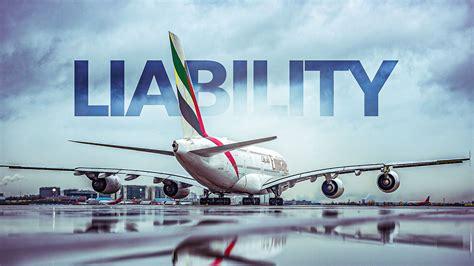
Today, the aircraft remains beloved by travelers and aviation enthusiasts. However, its four-engine layout stands as the clearest example of how quickly industry assumptions can change. The same design choice that made the A380 possible ultimately became its greatest commercial liability, transforming a revolutionary aircraft into one of the most fascinating lessons in modern aviation economics.