The 2008 merger between Delta Air Lines and Northwest Airlines wasn’t just another corporate consolidation—it was a defining moment that reshaped the modern aviation landscape. At a time when both carriers were hemorrhaging billions, the deal was less about ambition and more about survival. Yet from that urgency emerged something far more powerful: a transformed airline with a global reach, diversified fleet, and a quietly decisive competitive edge that still defines Delta today.
Most discussions around the merger tend to focus on scale—more aircraft, more routes, more passengers. That’s the obvious story. The more interesting one lies beneath the surface: how a single inherited asset fundamentally changed Delta’s operational DNA. Among all the gains, one stands out with remarkable clarity—the Airbus A330, a widebody aircraft that Delta had never operated before but would soon come to rely on as a cornerstone of its long-haul strategy.
The High-Stakes Context Behind the Delta–Northwest Merger
In early 2008, both Delta and Northwest found themselves navigating brutal financial headwinds. Fuel prices were surging, operational costs were climbing, and demand was weakening. In just the first quarter of that year, the two airlines reported combined losses exceeding $10 billion, a figure so staggering it eclipsed their total market value.
The merger, announced on April 14, 2008, was not merely a strategic move—it was a calculated necessity. By combining forces, the airlines aimed to unlock operational efficiencies, eliminate redundancies, and create a more resilient entity capable of weathering economic turbulence.
Leadership played a crucial role. Richard Anderson, a former Northwest executive, stepped in as CEO of the newly formed Delta. His deep familiarity with both organizations gave him a unique advantage in navigating the complexities of integration. The challenge was immense: merging fleets, aligning corporate cultures, and optimizing a sprawling global network without alienating customers or employees.
Regulatory Scrutiny and Industry Transformation
The sheer scale of the merger raised immediate concerns among regulators. Would this consolidation reduce competition? Would fares rise? These were valid questions in an industry already known for its volatility.
After extensive analysis, regulators concluded that the merger would likely deliver net benefits to consumers. By streamlining operations and expanding route networks, the combined airline could offer more efficient service and potentially lower fares. The alternative—two struggling airlines operating independently—offered little promise of improvement.
This approval marked a turning point. The newly formed Delta Air Lines emerged not just as the largest airline in the world at the time, but as a blueprint for how consolidation could drive stability in a fragmented industry.
The Complex Art of Integration
Merging two global airlines is a logistical marathon. Delta had to unify operations across dozens of airports, many of which previously hosted separate terminals for each carrier. Key hubs like Los Angeles International Airport (LAX), Orlando International Airport (MCO), and Philadelphia International Airport (PHL) underwent significant restructuring to streamline operations.
Loyalty programs were consolidated as well. Northwest’s WorldPerks program was absorbed into Delta’s SkyMiles, creating a unified rewards ecosystem that retained customer loyalty while simplifying the user experience.
But the most intricate challenge lay in fleet integration. Prior to the merger, Delta operated an almost exclusively American-built fleet. Northwest, on the other hand, brought a diverse mix of Boeing, McDonnell Douglas, and—most importantly—Airbus aircraft.
The Unexpected Star: Airbus A330 Enters Delta’s Fleet
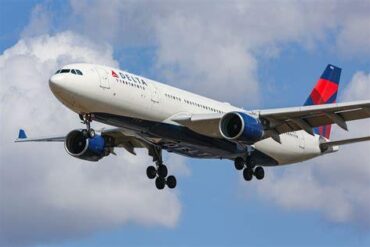
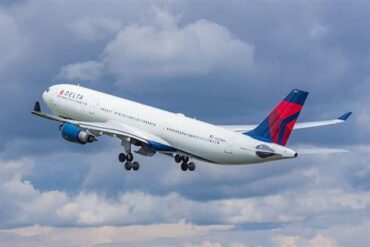
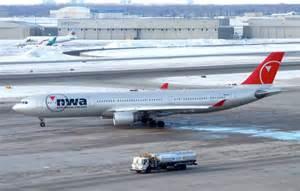
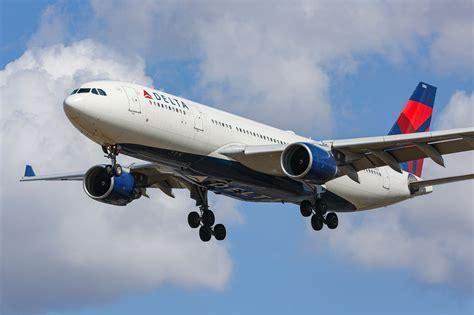
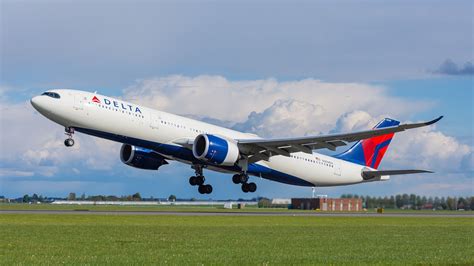
Among all inherited assets, the Airbus A330 stood out immediately. Northwest had been the world’s largest operator of this aircraft type, and with the merger, Delta suddenly found itself in possession of a fleet it had never planned for—but quickly came to appreciate.
The A330 occupies a unique niche in the widebody market. It’s not as large as a Boeing 777, nor as small as a narrowbody jet. Instead, it strikes a balance that is perfectly suited for mid-capacity, long-haul routes. This flexibility allowed Delta to deploy the aircraft across a wide range of missions, from transatlantic flights to premium domestic services.
What made the A330 particularly valuable was its ability to adapt. It could efficiently serve high-demand routes like New York (JFK) to London Heathrow (LHR) while also opening up less conventional long-haul markets such as JFK to Athens (ATH).
Why the Airbus A330 Became Delta’s Strategic Advantage
The brilliance of the A330 lies in its versatility. Delta quickly realized that this aircraft could do something few others could: bridge the gap between capacity and efficiency.
The seating configuration is a perfect example. With its 2-4-2 layout, the A330 offers a passenger-friendly cabin experience. Unlike aircraft with denser configurations, this setup minimizes middle seats and enhances comfort—an important factor for long-haul travelers.
Capacity-wise, the aircraft fits neatly into Delta’s network:
- The A330-200 offers around 223 seats, ideal for thinner long-haul routes
- The A330-300 and A330-900neo provide approximately 281–282 seats, perfect for higher-demand markets
This range allows Delta to fine-tune its capacity without overcommitting resources, a crucial advantage in an industry where margins are razor-thin.
From Inherited Asset to Fleet Backbone
What started as an inherited fleet segment soon became a strategic pillar. Delta didn’t just keep the A330—it doubled down on it. The airline placed a significant order for Airbus A330-900neo aircraft, signaling long-term confidence in the platform.
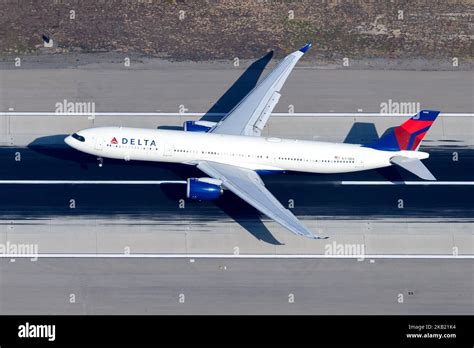
Today, the A330 serves as a workhorse across Delta’s global network. It operates high-yield transatlantic routes, connects secondary international destinations, and even handles premium transcontinental flights within the United States.
This adaptability has allowed Delta to maintain a level of network flexibility that competitors often struggle to match. Instead of relying solely on larger, less flexible aircraft, Delta can deploy the A330 to optimize both load factors and profitability.
The Broader Impact on Delta’s Global Network
While the A330 is arguably the most tangible benefit, its impact extends far beyond the aircraft itself. The flexibility it provides has enabled Delta to rethink how it structures its entire route network.
For instance, legacy Northwest hubs like Minneapolis–Saint Paul (MSP) became even more valuable when paired with A330 operations. These hubs now function as efficient connecting points, feeding passengers into long-haul flights that are perfectly matched to demand.
The result is a network that feels both expansive and precise—capable of reaching deep into international markets without overextending resources.
A Quiet Competitive Edge That Still Delivers
In the years since the merger, Delta has consistently ranked among the most profitable and operationally reliable airlines in the world. While many factors contribute to this success, the role of the A330 is often understated.
It doesn’t grab headlines like next-generation aircraft or flashy cabin innovations. Instead, it delivers something far more valuable: consistent, adaptable performance. It’s the kind of asset that quietly drives profitability while enhancing the passenger experience.
Why This Legacy Still Matters Today
More than a decade after the merger, the influence of Northwest Airlines is still embedded in Delta’s DNA. The A330 is a living example of how a single strategic asset can shape an airline’s trajectory for years to come.
In an industry obsessed with the next big thing, there’s something refreshingly pragmatic about this story. Delta didn’t just acquire an aircraft—it discovered a capability it didn’t know it needed.
And that capability continues to pay dividends every single day.
The merger may have been born out of necessity, but its greatest gift was something far more enduring: a tool that allowed Delta to operate smarter, adapt faster, and compete more effectively on a global stage.