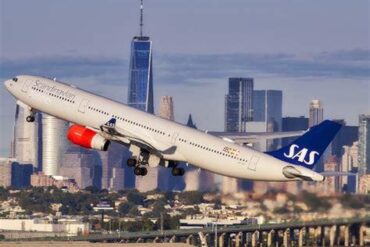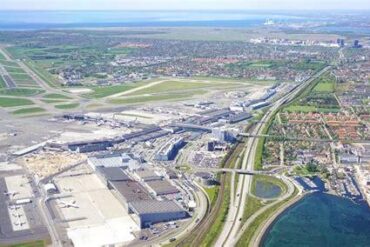
Scandinavian Airlines (SAS) is entering one of the most significant transformations in its history. After decades of operating as a three-country airline balancing the interests of Denmark, Norway, and Sweden, the carrier is now moving toward a more focused strategy built around Copenhagen Airport (CPH) as its primary international hub. This shift is closely connected to SAS’ new role inside the SkyTeam Alliance and its growing relationship with the Air France-KLM Group.
In 2024, Air France-KLM acquired a 19.9% stake in SAS as part of a major restructuring investment that injected more than $1 billion into the airline. The investment consortium also included Castlelake, a major private investment firm. The move represented a turning point for SAS, which had spent years struggling with profitability challenges caused by a fragmented network and complex ownership structure.
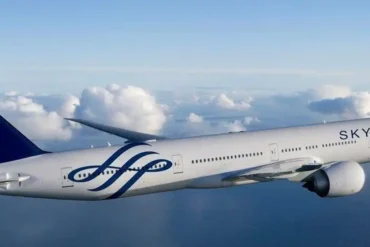
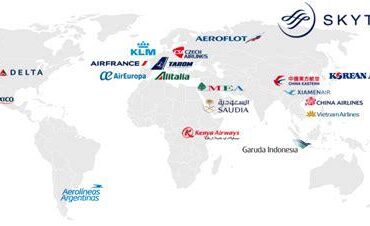
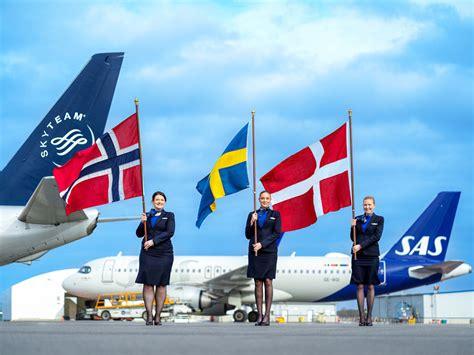
Following the investment, SAS officially left Star Alliance, an organization it helped establish in 1997, and joined SkyTeam Alliance. The change opened the door for deeper cooperation with Air France-KLM, Delta Air Lines, and other SkyTeam members. Air France-KLM has announced plans to increase its ownership stake to 60.5%, acquiring additional shares from Castlelake and other investors once regulatory approvals are completed.
The strategic goal behind this transformation is clear: SAS wants to build a stronger, more efficient global network centered around Copenhagen Airport, rather than continuing the traditional multi-hub model divided between Copenhagen, Oslo, and Stockholm.
For decades, SAS’ structure reflected political compromises between Denmark, Norway, and Sweden. The airline was created to allow three relatively small national markets to compete internationally as one carrier. While this approach helped establish SAS as a global Scandinavian brand, it also prevented the airline from fully benefiting from the operational advantages of a single powerful hub.
A concentrated hub strategy could allow SAS to improve aircraft utilization, strengthen connecting traffic, reduce operational complexity, and compete more effectively with larger European network airlines.
Why Copenhagen Airport Is Becoming SAS’ Core Global Hub
Copenhagen Airport is already one of Northern Europe’s most important aviation centers. Handling more than 32 million passengers in 2025, the airport ranked among Europe’s busiest airports. However, historically, Copenhagen has primarily functioned as a regional hub rather than a major global gateway comparable to airports such as Amsterdam Schiphol, Paris Charles de Gaulle, or Frankfurt.
SAS now sees an opportunity to change that position.
The geography of Copenhagen gives the airport a significant advantage. Located in the southern part of Scandinavia, Copenhagen provides convenient connections between Northern Europe and major international markets. Within a short flight time, passengers can reach Sweden, Norway, Finland, the Baltic states, Poland, Germany, and the Netherlands.
Unlike Oslo Gardermoen Airport or Stockholm Arlanda Airport, Copenhagen has a natural advantage as a connecting point between Scandinavia and continental Europe. Its location allows SAS to create efficient short-haul connections that feed long-haul routes.
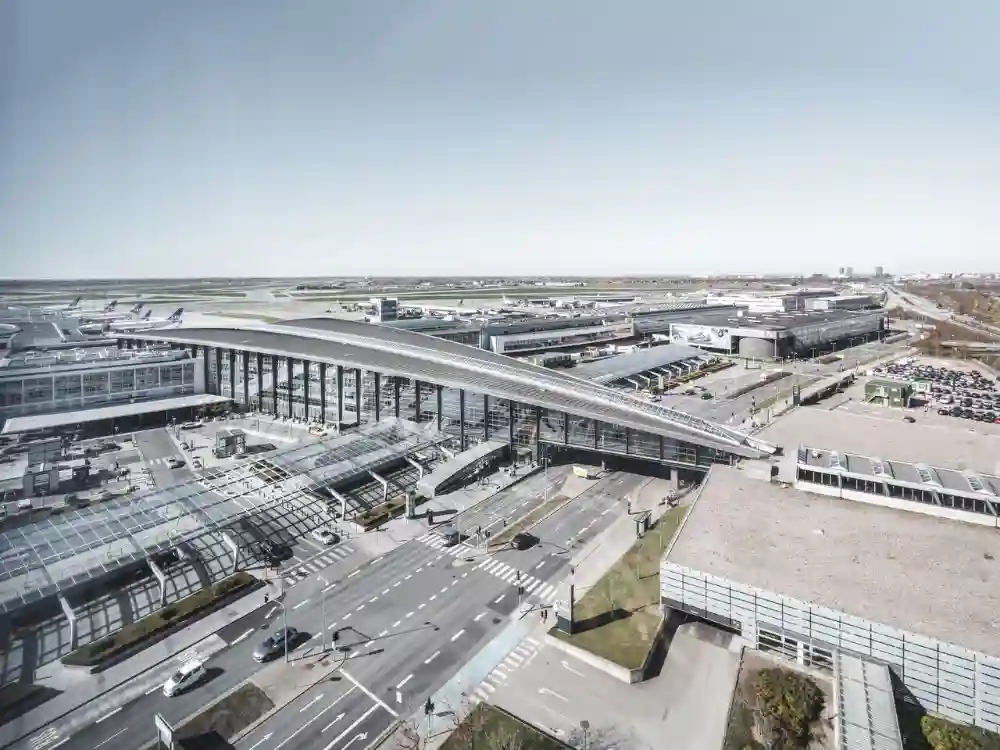
Another important factor is Copenhagen’s strong local economy. The airport benefits from a large cross-border catchment area with more than 10 million people within a four-hour drive. This includes parts of Denmark, southern Sweden, and northern Germany.
The region also produces significant premium travel demand. Scandinavia has some of the world’s highest disposable incomes and generous vacation allowances, creating strong demand for international leisure travel. At the same time, Copenhagen is home to multinational companies, research institutions, universities, and pharmaceutical businesses that generate valuable business-class traffic.
For SAS, this combination of connecting passengers, premium customers, and corporate demand creates the foundation needed for a successful European hub.
Air France-KLM’s Role in SAS’ New Direction
The relationship between SAS and Air France-KLM is more than a financial investment. It represents a strategic alignment between two European aviation groups that share similar challenges and opportunities.
Air France-KLM already operates major hubs at Paris Charles de Gaulle Airport and Amsterdam Schiphol Airport, while SAS brings a strong Scandinavian network and brand presence. By integrating SAS into its broader strategy, Air France-KLM can expand its Northern European footprint while giving SAS access to a much larger global alliance structure.
The partnership also mirrors the strategy used by other successful European airline groups. Large network carriers typically rely on one or two major hubs supported by dense regional feeder networks. For example, KLM operates an extensive short-haul network through its regional subsidiary using Embraer aircraft to connect passengers through Amsterdam.
SAS appears to be moving toward a similar model at Copenhagen.
Instead of maintaining three competing Scandinavian hubs, the airline can focus resources on creating stronger waves of arrivals and departures at Copenhagen Airport. This would improve connection opportunities and make long-haul routes more economically sustainable.
SAS’ Fleet Expansion Supports Global Hub Ambitions
A successful international hub requires more than a strategic location. It requires aircraft capacity, especially long-range aircraft capable of connecting distant markets.
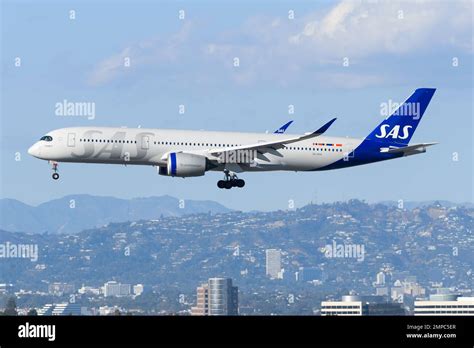
SAS has begun making one of the largest fleet investments in its history. In June 2025, the airline announced an order for up to 40 Airbus A330 aircraft, including additional A330-300 aircraft for short-term capacity needs and new-generation Airbus A330-900neo aircraft for future growth.
Combined with its existing fleet of Airbus A330-300, Airbus A350-900, and Airbus A321LR aircraft, SAS could operate a long-haul fleet of more than 40 aircraft. This would place the airline closer in size to established European long-haul operators such as Iberia and SWISS International Air Lines.
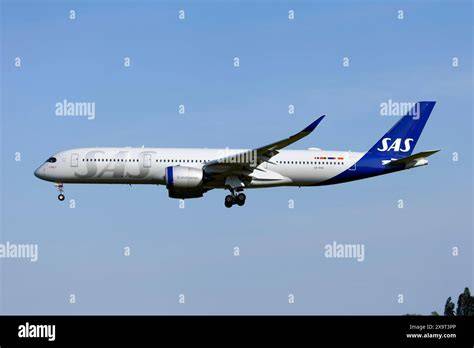
The widebody expansion is designed to support growth across North America, Asia, and the Middle East. More aircraft will allow SAS to increase frequencies on existing routes while exploring additional international destinations.
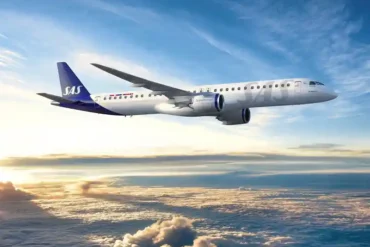
The airline is also strengthening its regional network. SAS ordered up to 55 Embraer E195-E2 aircraft, including options, for operation through its regional subsidiary SAS Link. These aircraft will play an important role in connecting smaller Scandinavian cities with Copenhagen.
The combination of regional aircraft and long-haul aircraft creates the classic hub-and-spoke model used by successful global airlines. Smaller aircraft collect passengers from regional markets, while larger aircraft transport them to international destinations.
SkyTeam Connectivity Expands Copenhagen’s Global Reach
SAS’ entry into SkyTeam has already changed Copenhagen’s position within the alliance network. The airline began strengthening cooperation with key partners even before officially joining the alliance.
One major development was the launch of SAS service between Copenhagen and Hartsfield-Jackson Atlanta International Airport, Delta Air Lines’ largest hub. The route was followed by a formal codeshare agreement between SAS and Delta after SAS became part of SkyTeam.
The cooperation expanded further in 2025 when SAS launched flights between Copenhagen and Seattle-Tacoma International Airport, while Delta introduced a new route connecting Minneapolis-St. Paul and Copenhagen.
SAS is also becoming part of the transatlantic joint venture involving Air France, KLM, Delta Air Lines, and Virgin Atlantic, giving passengers improved connectivity across Europe and North America.
Beyond the United States, Copenhagen is gaining stronger links with Asia. SAS has introduced service to Seoul Incheon International Airport, connecting Copenhagen with Korean Air’s major hub. The airline has also planned expansion to Mumbai, while increasing capacity to destinations across Asia and the Middle East.
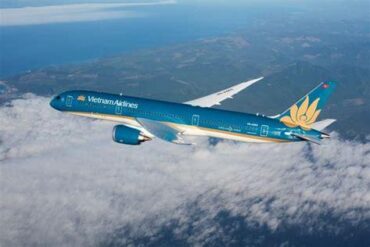
Other SkyTeam members are also adding Copenhagen routes. China Eastern Airlines now connects Copenhagen with Shanghai, while Vietnam Airlines operates flights to Ho Chi Minh City. These additions strengthen Copenhagen’s role as a meeting point between Europe and global markets.
Growing Short-Haul Opportunities Around Copenhagen
While long-haul expansion receives much attention, SAS’ regional strategy may be equally important. A global hub depends on reliable short-haul connectivity, and Copenhagen is well positioned to serve as a Northern European transfer point.
The airport’s location allows SAS to connect passengers from across Scandinavia and nearby European regions within relatively short flying times. This creates opportunities for increased frequencies rather than relying only on new destinations.
Northern Germany represents one particularly interesting growth market. Since the collapse of Air Berlin in 2017, significant capacity disappeared from Germany’s northern regions. At the same time, Lufthansa Group has increasingly concentrated operations around Frankfurt and Munich.
Copenhagen could potentially capture some demand from northern German cities, especially as transportation links improve.
A major development will be the planned high-speed railway connection between Copenhagen and Hamburg. Once completed, the journey between the two cities is expected to take less than three hours. This would effectively expand Copenhagen Airport’s catchment area into Germany.
The improved rail connection could make Copenhagen an attractive alternative for travelers who previously relied on German airports for international flights.
SAS’ New Chapter Within SkyTeam
SAS’ transformation represents more than a simple alliance change. It marks a fundamental shift in how the airline views its future.
For decades, SAS struggled with the limitations of maintaining multiple hubs across three countries. The airline’s new strategy focuses on efficiency, scale, and global connectivity by placing Copenhagen at the center of its operations.
With Air France-KLM support, a growing long-haul fleet, expanding SkyTeam partnerships, and a stronger regional network, SAS has the opportunity to become a more competitive European network carrier.
Copenhagen may not replace Europe’s largest aviation hubs overnight, but the ingredients for growth are increasingly visible. A strong geographic position, wealthy local market, expanding fleet, and deeper alliance integration give SAS a realistic path toward creating SkyTeam Alliance’s next major European gateway.
The success of this strategy will depend on execution, but for the first time in many years, SAS has a clear direction: building one powerful Scandinavian hub capable of connecting Northern Europe with the world.