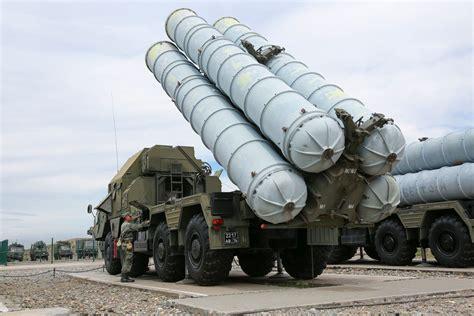
As of June 15, 2025, the Russian Federation’s strategic strike capability has reached an unprecedented threshold, with over 1,950 advanced missiles and more than 6,000 combat UAVs operationally available. This development, confirmed through a classified response by the Main Intelligence Directorate of the Ministry of Defense of Ukraine to RBC-Ukraine, indicates not just a numerical stockpile, but a strategically evolving war doctrine centered around missile saturation tactics and drone swarm warfare. The figures signal a clear shift in Russian military logistics and production resilience, despite international sanctions and ongoing conflict resource attrition.
Russia’s Expanding Missile Arsenal: A Breakdown of Strategic Threats
Russia’s missile inventory in mid-2025 reveals a multi-tiered approach to long-range precision strike capability. It consists of short-range ballistic missiles (SRBMs), cruise missiles, and hypersonic weapons, providing the Kremlin with a layered offensive architecture capable of targeting adversaries across both tactical and strategic domains.
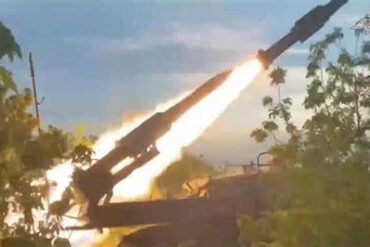
The 9M723 Iskander-M, a ballistic missile known for its evasive maneuverability and high precision, remains a core battlefield weapon. With up to 500 units in active service, it’s a formidable system against fixed infrastructure and mobile targets within a 500-kilometer range.
The cruise missile fleet, however, paints a far more threatening portrait. Ukraine’s military intelligence indicates:
- Up to 300 9M728/9M729 Iskander-K cruise missiles, land-based and suitable for deep-penetration strikes.
- Up to 260 Kh-101 cruise missiles, launched primarily from Tu-95MS and Tu-160 Blackjack strategic bombers. These missiles are stealthy, low-flying, and optimized for precision.
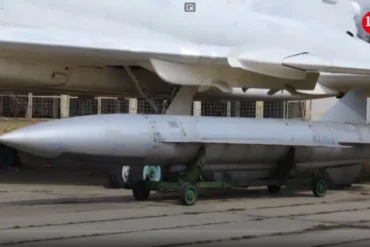
- Up to 280 Kh-22/Kh-32 missiles, variants that carry high-explosive or nuclear payloads and are deployed by Tu-22M3 Backfire bombers.
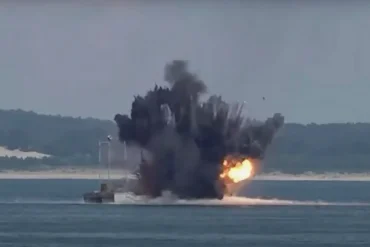
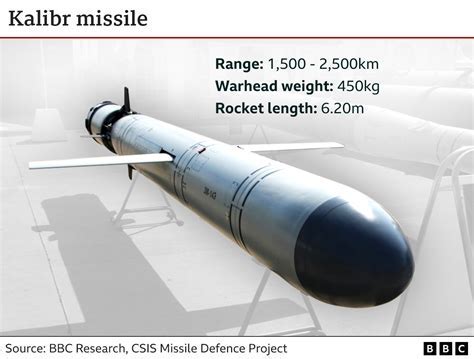
- Over 400 3M-14 Kalibr cruise missiles, Russia’s naval strike workhorse, which gained notoriety in operations across Syria and Ukraine.
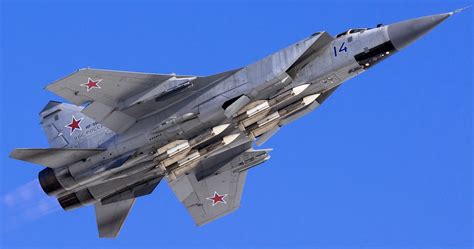
- Up to 150 Kh-47M2 Kinzhal missiles, hypersonic air-launched ballistic missiles capable of evading most known missile defense systems, deployed aboard MiG-31K interceptor aircraft.
- Up to 60 KN-23 ballistic missiles — of North Korean origin, reportedly acquired to mitigate domestic production bottlenecks.
The total missile count — exceeding 1,950 units — reflects not only battlefield readiness but also a strategic deterrent posture aimed at NATO’s eastern flank.
Monthly Missile Production Capacity: High-Speed Replenishment Cycle
Equally concerning is Russia’s missile replenishment capability, which sustains prolonged conflict through aggressive domestic manufacturing. As of June 2025, Russian state and private defense factories reportedly produce up to 195 missiles monthly, broken down as follows:
- Up to 60 Iskander-M SRBMs
- Up to 20 Iskander-K cruise missiles
- Up to 60 Kh-101 air-launched cruise missiles
- Up to 10 upgraded Kh-32 variants
- Up to 30 Kalibr naval cruise missiles
- Up to 15 Kinzhal hypersonic missiles
These figures suggest that Russia can regenerate a significant portion of its stockpile within 10–12 months, even under sustained usage. Ukrainian sources emphasize that despite wartime industrial stress, defense production has not significantly slowed — instead, Moscow has restructured its military-industrial complex to support a long war.
6,000+ Combat Drones: Shaheds, Harpys, and Ghost Fleets
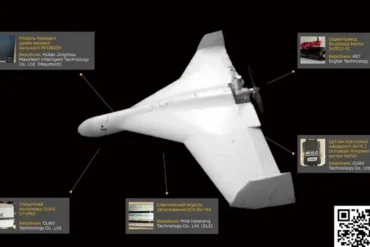
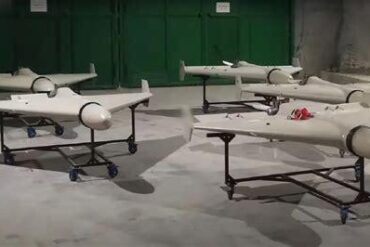
While missiles represent high-value, low-quantity strike platforms, combat drones (UAVs) form the backbone of Russia’s asymmetric warfare. Ukrainian military intelligence confirms that Russia holds more than 6,000 combat drones, with the majority comprising Shahed-136 (Geran-2) models. These Iranian-origin kamikaze drones, rebranded locally, are mass-deployed to overwhelm Ukrainian air defenses and destroy fixed assets.
Other variants such as the Harpy-A1, modeled on Israeli loitering munitions, offer autonomous target-seeking capabilities. In parallel, Russia has deployed over 6,000 decoy drones, notably the Gerbera series, to deplete Ukrainian air defense interceptors and mask real drone swarms.
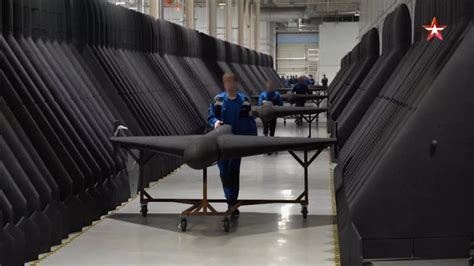
The total operational UAV count — combat and decoy combined — exceeds 12,000 units, a testament to the scale and scope of Russia’s unmanned warfare doctrine. Intelligence reports underline that these drones are not simply tools of attrition but are now embedded in combined-arms operations, working alongside artillery, EW, and reconnaissance units.
Russian Drone Production: 170 Units Daily, Rising to 190
Even more significant than the stockpile is the production velocity of UAVs. Ukrainian sources estimate that Russia is currently manufacturing up to 170 drones per day, a figure expected to rise to 190 per day by the end of 2025. This includes:
- Strike drones (e.g., Geran-2)
- Loitering munitions (e.g., Harpy-A1)
- Decoys and electronic warfare UAVs (e.g., Gerbera)
This rapid production cycle — nearly 5,100 drones per month — is made possible through semi-automated assembly lines, decentralized parts manufacturing, and technology transfers from foreign allies. Intelligence assessments warn that this could allow Moscow to maintain a consistent drone presence along the 1,000-kilometer front line in Ukraine.
Strategic Implications: Mass Strike and Exhaustion Doctrine
The dual buildup of missiles and drones signals a refined Russian military strategy centered on mass saturation, multi-vector attacks, and attrition of air defenses. Rather than relying solely on precision strike success, Russia increasingly favors overwhelming target areas with sheer volume — using drones to force detection and early response, followed by missiles to destroy compromised nodes.
This “exhaustion doctrine” is particularly evident in daily Ukrainian reports of wave-based drone assaults during nighttime hours, often combined with cruise missile barrages at dawn. The aim: wear down critical infrastructure defenses and exploit gaps in radar coverage.
Moreover, the missile buildup serves as a strategic hedge against NATO’s involvement. The deployment of air-launched Kinzhal and Kh-series missiles across Belarus, Crimea, and the Black Sea region widens Russia’s strike envelope deep into Europe, increasing pressure on Poland, Romania, and the Baltic states.
Supply Chain & Foreign Partnerships: Sanctions Circumvention Tactics
Despite Western embargoes and export controls, Russia’s military stockpile growth remains robust — largely due to an intricate network of sanctions evasion mechanisms. Ukrainian intelligence and Western analysts have documented the sourcing of critical components such as microprocessors, optics, and avionics from third-party suppliers in Asia, the Middle East, and Africa.
Further, technical cooperation agreements with North Korea, Iran, and China have enabled Russia to access drone blueprints, missile guidance systems, and even ready-made UAV components. The presence of KN-23 missiles from Pyongyang in Russian arsenals represents a new level of military entanglement with rogue states.
Future Projections: 2025 and Beyond
By the end of 2025, the Kremlin’s goal appears to be a fully industrialized warfare ecosystem, where munitions production becomes self-sustaining, scalable, and integrated with battlefield needs in near real time. Should production targets be met, Russia could possess by year’s end:
- 2,800+ missiles (assuming current production levels and partial battlefield expenditure)
- 15,000+ drones, including decoys
Such a posture would further solidify Moscow’s capacity to wage continuous, long-range hybrid war well into 2026.
Conclusion: An Industrial War Machine Resurrected
Russia’s June 2025 arsenal metrics — 1,950+ missiles and 6,000+ drones — reveal not just numbers, but intent. Moscow is betting on volume, redundancy, and technological proliferation to break the will of adversaries. Ukrainian intelligence assessments suggest a painful truth: the conflict is shifting from a war of maneuver to a war of factories.
With rising missile production, daily drone swarms, and continued external sourcing, Russia’s strategic strike capabilities are escalating. This raises critical questions for NATO and regional allies: how to counter not only the weapons but the resilient industrial apparatus that now underpins them.