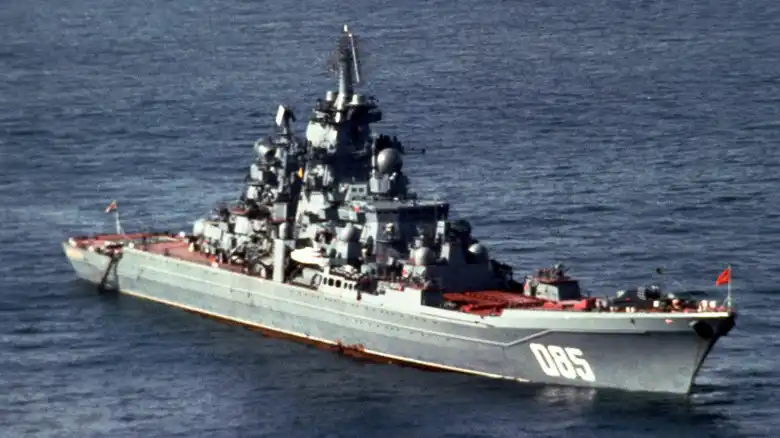
The Russian Navy’s Admiral Nakhimov, one of the most powerful surface warships ever constructed, is moving closer to operational service after a historic modernization project that lasted nearly three decades. The nuclear-powered Kirov-class battlecruiser was recently observed conducting sea trials in Kola Bay, marking a major milestone for a vessel that has spent most of the modern era sitting inactive in a shipyard.
The return of the 28,000-ton warship represents one of the largest naval refurbishment efforts Russia has ever attempted. Estimated to have cost around $5 billion, the project transformed the aging Cold War-era cruiser into a heavily upgraded missile platform designed to serve as a flagship for Russia’s Northern Fleet. The scale of the work was extraordinary, with the ship remaining unavailable for combat operations for approximately 27 years.
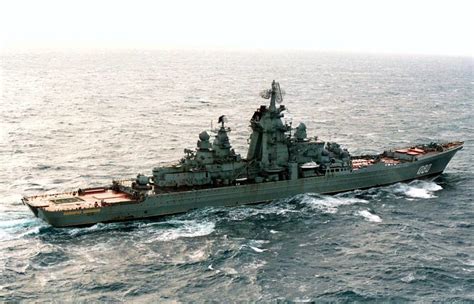
Originally commissioned in 1988 as the Kalinin, the vessel was renamed Admiral Nakhimov in 1992 following the collapse of the Soviet Union. At 823 feet long, it remains one of the largest surface combatants in the world and is unique because it is one of the only nuclear-powered surface warships ever built outside the aircraft carrier category.
Admiral Nakhimov’s Long Journey From Cold War Giant To Modern Missile Cruiser
After entering service at the end of the Soviet period, Admiral Nakhimov quickly became a symbol of Moscow’s ambition to challenge Western naval power. However, financial difficulties and changing strategic priorities following the Soviet collapse severely affected Russia’s ability to maintain its massive fleet. By 1997, the cruiser was removed from active duty and eventually moved to the Sevmash shipyard in Severodvinsk.
For years, the ship remained largely untouched. The modernization plan was officially revived in 2014, initially appearing to be a relatively straightforward upgrade program. Russian officials originally expected the work to be completed within only a few years, but technical challenges, funding issues, and the complexity of rebuilding such a large nuclear-powered warship caused repeated delays.
The project eventually became far more ambitious than originally planned. Instead of simply repairing existing systems, Russia decided to completely transform the ship’s combat capabilities. The result is effectively a new-generation missile cruiser built on a Cold War foundation.
The modernization also reflects Russia’s desire to preserve large surface combatants at a time when many naval forces are shifting toward smaller, more distributed platforms. By returning Admiral Nakhimov to service, Moscow gains a powerful long-range weapons platform capable of operating across vast maritime regions.
Massive Firepower: Why Admiral Nakhimov Is Considered The Most Heavily Armed Warship
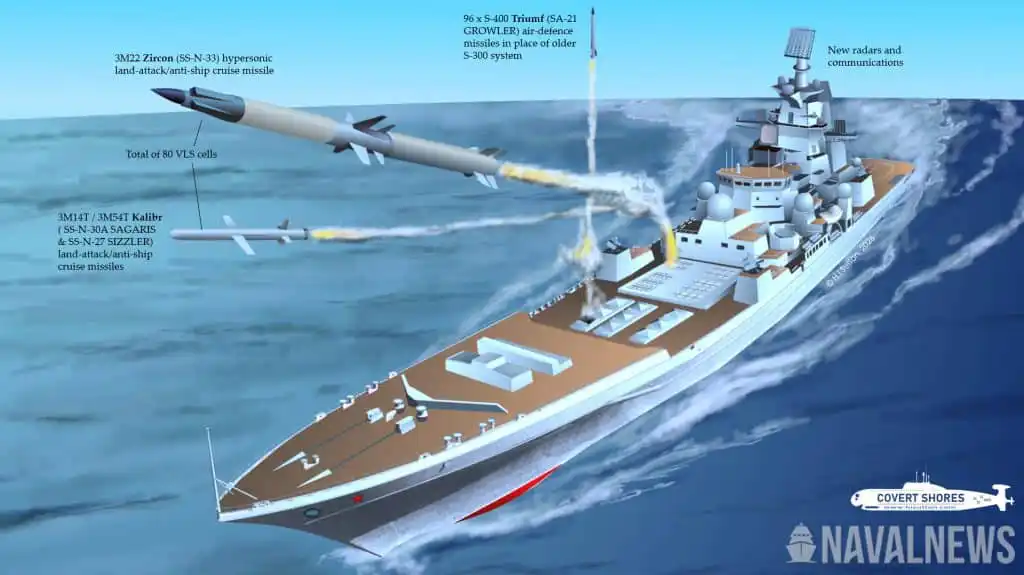
The greatest transformation occurred in the cruiser’s weapons systems. The original P-700 Granit anti-ship missile system, which defined the ship’s Cold War role, was removed during the refit. It has been replaced by modern universal vertical launch systems capable of carrying a much wider range of missiles.
The upgraded ship reportedly features 80 UKSK vertical launch cells arranged through ten eight-cell launch modules. These systems allow Admiral Nakhimov to deploy different types of Russian missiles, including anti-ship weapons, land-attack missiles, and anti-submarine systems.
Among the most significant additions is support for the 3M22 Zircon hypersonic missile, one of Russia’s most advanced missile programs. The weapon is designed to travel at extremely high speeds, creating additional challenges for existing naval defense systems.
Beyond offensive weapons, the cruiser has also received upgraded radar equipment, improved sensors, and enhanced air-defense capabilities. These changes are intended to make the ship more effective in modern naval environments where detection, electronic warfare, and missile defense are increasingly important.
Nuclear Power Gives Admiral Nakhimov Global Reach
One of the defining characteristics of Admiral Nakhimov is its nuclear propulsion system. The cruiser is powered by two pressurized water reactors capable of producing approximately 140,000 horsepower, allowing it to reach speeds of around 32 knots.
During modernization, the reactors were not replaced but underwent refurbishment and refueling. Both nuclear reactors were reportedly restored to operational condition by February 2025, allowing the massive warship to regain one of its greatest advantages: long endurance without dependence on conventional fuel supplies.
This capability gives Admiral Nakhimov the ability to operate over enormous distances, an important factor for Russia’s Northern Fleet. Unlike conventional surface ships that require frequent logistical support, nuclear propulsion provides greater flexibility for extended missions.
A Powerful Northern Fleet Asset In A Changing Naval Battlefield
Once operational, Admiral Nakhimov is expected to become a flagship of Russia’s Northern Fleet, which plays a central role in protecting the country’s strategic submarine forces. The fleet operates around the Barents Sea and supports Russia’s nuclear deterrent by protecting ballistic missile submarines.
The cruiser’s combination of speed, range, advanced sensors, and missile capacity makes it a valuable addition to this defensive strategy. Its long-range strike capability could allow Russia to threaten targets far beyond coastal waters while supporting other naval forces.
However, the ship’s return also raises questions about whether traditional large warships remain dominant in modern naval warfare. The battlefield has changed dramatically since Admiral Nakhimov was first designed during the Soviet era.
The rise of drone warfare, particularly after recent conflicts involving naval drones, has challenged the idea that massive surface ships can operate without significant risk. Smaller, cheaper unmanned systems have demonstrated the ability to threaten much larger and more expensive platforms.
This creates a strategic dilemma for Admiral Nakhimov. The cruiser carries enormous firepower, but concentrating so many weapons and capabilities into one vessel also creates a potential vulnerability. Modern naval planners increasingly focus on distributed forces, where multiple smaller platforms reduce the risk of losing a single high-value asset.
The Future Role Of Russia’s Revived Battlecruiser
Admiral Nakhimov’s return is both a technological achievement and a reminder of Russia’s continued investment in large naval power. After decades of delays, the cruiser represents one of the most ambitious warship modernization programs of the 21st century.
Whether the vessel becomes a dominant force at sea or a symbol of a changing era remains uncertain. Its advanced missiles, nuclear propulsion, and upgraded electronics make it one of the most formidable surface warships ever created. Yet modern conflicts have shown that even the largest ships must adapt to new threats.
The Admiral Nakhimov is returning to the ocean as a powerful reminder of Cold War naval engineering combined with modern missile technology. Its future missions will reveal whether a heavily armed battlecruiser can remain relevant in an age increasingly shaped by drones, precision weapons, and distributed naval operations.