Just one day after a telecommunications failure disrupted air traffic across the U.S. Northeast, the Trump administration is seeking another $30 billion for aviation infrastructure and air traffic control modernization, putting the aging U.S. aviation network back at the center of a national funding debate. Transportation Secretary Sean Duffy said on September 22 that the additional money would support air traffic control towers, telecommunications and software, and airport infrastructure, expanding on the $12.5 billion Congress already approved for the Federal Aviation Administration’s modernization program.
The timing is difficult to overlook. On September 21, a telecommunications failure at Philadelphia TRACON caused widespread restrictions at major airports including Newark Liberty International Airport, New York JFK, LaGuardia and Philadelphia International Airport. The problem began with a failure in a primary telecommunications circuit, while a backup route was also unavailable after a fiber-optic cable in New Jersey was accidentally severed. Reuters reported that roughly 9,500 flights were delayed or canceled, with more than 100 diversions, before service was restored.
For airlines and passengers, the incident demonstrated how a relatively localized infrastructure problem can spread through one of the country’s most concentrated airspace networks. Newark was particularly affected because the Philadelphia facility handles important airspace serving the airport. Once controllers could not reliably use the necessary communications infrastructure, restrictions quickly extended beyond the original facility, creating delays that continued even after the technical problem itself had been repaired.

What the New $30 Billion ATC Funding Request Would Cover
Duffy’s proposal would divide the new money into three broad areas. Approximately $10 billion would go toward replacing aging air traffic control towers and related facilities, another $10 billion would support telecommunications and other ATC technology, and a further $10 billion would be directed toward airport improvements. That makes the proposal broader than a pure ATC replacement program because a significant portion would be spent on airport infrastructure rather than directly on controller systems.
The request would come on top of the $12.5 billion appropriated in 2025 for the FAA’s Brand New Air Traffic Control System, or BNATCS. That earlier funding included $9 billion for ATC systems modernization and $3.5 billion for facilities construction. If Congress approves the full new request, the two appropriations would represent approximately $42.5 billion in combined federal investment in ATC and airport modernization, although the entire amount would not be devoted exclusively to air traffic control systems.
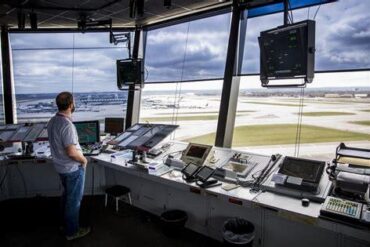
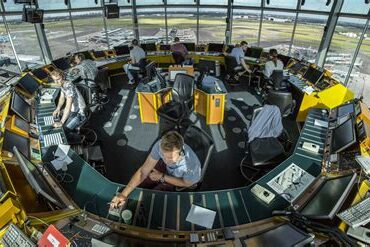
The size of the program reflects the age and complexity of the infrastructure being replaced. The FAA’s modernization plans include thousands of communications connections, radios, digital voice switches and radar systems. The agency is also deploying new surface surveillance equipment, electronic information displays and other technologies intended to give controllers more reliable and comprehensive information about aircraft and airport movements.
The Northeast Outage Exposed a Redundancy Problem
The September 21 disruption was particularly significant because it involved two layers of telecommunications vulnerability. A primary circuit failed at Philadelphia TRACON at roughly the beginning of the morning disruption. When controllers attempted to move to the backup system, they found that a fiber-optic cable in New Jersey had also been severed.
The result was not simply a communications problem at one airport. FAA operational advisories show that equipment and automation problems at Philadelphia TRACON continued to affect traffic strategies, while ground stops and delay programs were implemented for airports including Philadelphia and Newark. At one point, the FAA recorded a Newark ground stop specifically attributed to an equipment outage, with cumulative delays continuing to increase.
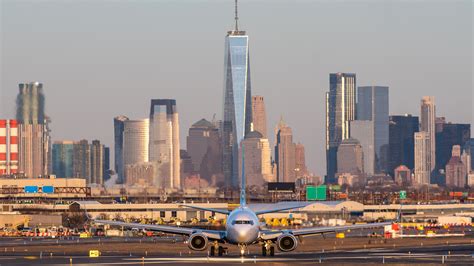
That vulnerability explains why the administration is emphasizing multiple telecommunications routes in the replacement architecture. Duffy said the new system is intended to eliminate single and dual points of failure by providing FAA facilities with more independent communications paths. In practical terms, that means an individual damaged cable should not be capable of removing an entire facility’s ability to communicate with aircraft and other parts of the national airspace system.
The disruption also illustrates a characteristic problem with aviation infrastructure: repairing the original fault does not immediately restore normal operations. Aircraft, crews and passengers have already been displaced, flights have been canceled, and airport capacity has been consumed by arriving and departing traffic that no longer matches the original schedule. A telecommunications outage lasting several hours can therefore create operational consequences lasting much longer.
FAA Has Already Started Replacing Old Infrastructure
The additional funding request does not mean modernization has been standing still. The FAA has already been replacing portions of its aging telecommunications network, including old copper infrastructure with fiber-optic connections. According to the Government Accountability Office, the FAA reported that 2,560 of 5,170 old copper communications connections had been replaced with high-speed fiber as of May 2026.
The agency has also been replacing radio systems and deploying surface-awareness technologies. These projects are intended to improve reliability while giving controllers better information and more modern tools. FAA Administrator Bryan Bedford has said the agency expects obsolete copper telecommunications wiring to be eliminated by September 2027, accelerating a transition that has been discussed for years.
The challenge is that modernization itself is a huge logistical project. The FAA cannot simply switch off the existing national system and install a new one overnight. New equipment has to be installed at operating facilities, tested, integrated with other systems and brought online without compromising the continuous flow of commercial and general aviation traffic.
Why $12.5 Billion Was Not the End of the Bill
The original $12.5 billion appropriation was designed to accelerate the first phase of BNATCS, but government oversight has already identified additional requirements. A September 2026 GAO review found that Phase 2 systems modernization is expected to require approximately $10.2 billion, excluding facilities costs. Phase 2 is intended to introduce new automation systems for tracking aircraft and optimizing traffic, but the FAA has not established a firm start or completion date for that phase.
GAO also identified a significant planning challenge: the FAA does not yet have a comprehensive lifecycle cost estimate for BNATCS or an integrated master schedule covering the modernization effort. Instead, the agency is coordinating thousands of individual project schedules. GAO warned that moving quickly without sufficiently integrated cost and schedule planning could increase the risk of cost overruns, implementation problems and disruptions to ATC operations.
That uncertainty matters because the latest $30 billion request is arriving before the full cost of the modernization program is known. The FAA has already reported rising telecommunications costs, with estimates increasing substantially from earlier projections. GAO’s findings suggest that the eventual cost of replacing the nation’s ATC infrastructure could continue to evolve as individual projects move from planning into implementation.
The New System Is Also Becoming More Digital
Modernization is not limited to cables, radar antennas and concrete control towers. The FAA is increasingly looking toward software and data-driven tools to manage traffic more efficiently.
On September 21, the same day the Northeast telecommunications failure occurred, the FAA began limited operations of SMART, an AI-supported platform designed to combine roughly 200 data streams and help identify congestion, weather impacts and capacity constraints before they become larger operational problems. FAA officials have said expanded modernization funding could help broaden the platform’s use.
That creates an interesting contrast. The FAA is simultaneously introducing more sophisticated digital capabilities while replacing infrastructure that in some cases dates back decades. The long-term objective is not merely to make today’s ATC network faster, but to create an architecture capable of supporting a much more complex aviation environment.
Future Air Traffic Will Put More Pressure on the FAA
The urgency extends beyond Monday’s outage. The FAA expects commercial flights to increase by more than 40% by 2046, while the national airspace system will also have to accommodate expanding drone operations, commercial space activity and emerging aircraft technologies.
That means the modernization program has to solve two problems at once. It must replace infrastructure that is increasingly difficult to maintain, while also building enough capacity and resilience for an aviation system that will handle substantially more traffic.
The September 21 outage provided a highly visible example of what happens when that resilience is missing. A damaged fiber line and a failed primary telecommunications route were enough to disrupt major airports across the Northeast and generate thousands of delayed or canceled flights. The immediate problem was eventually repaired, but the broader infrastructure question remains.
The administration’s $30 billion proposal therefore represents more than a response to a single outage. It is the latest expansion of a modernization effort that was already backed by $12.5 billion in congressional funding and that GAO says still lacks a complete lifecycle cost estimate. Congress will now have to consider the proposed additional spending alongside the FAA’s existing modernization commitments, Phase 2 requirements and the broader infrastructure needs of the U.S. aviation system.
For passengers, the significance is straightforward: reliable ATC infrastructure is largely invisible when it works, but its importance becomes impossible to ignore when it fails. The September 21 disruption showed how quickly a communications problem at one control facility can ripple through some of the busiest airports in the country. The next stage of America’s ATC modernization effort will determine whether those vulnerabilities are gradually engineered out—or remain part of the system for years to come.