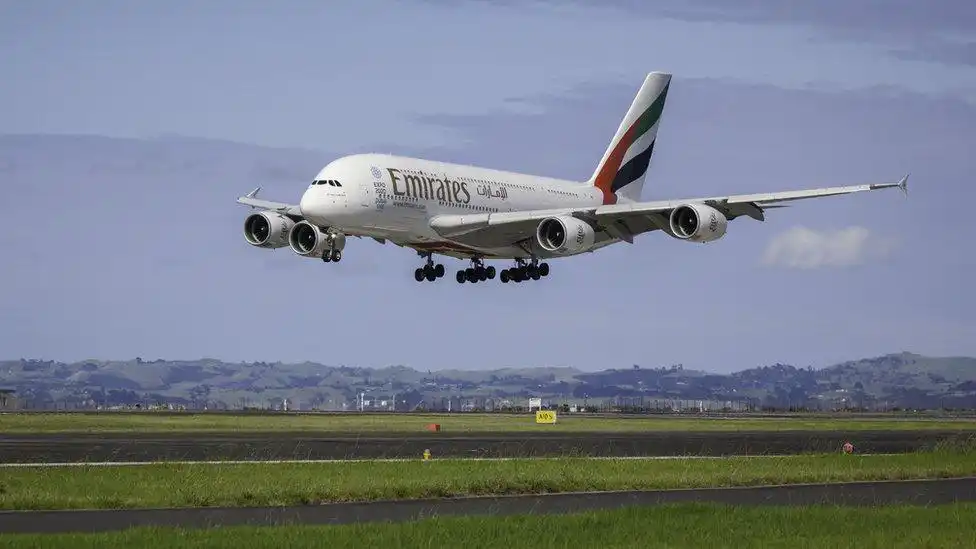
Emirates operates one of the world’s most fascinating long-haul networks, connecting cities that often have little direct geographic relationship with one another. Perhaps no route demonstrates this strategy better than the airline’s ultra-long-haul service between Dubai and Auckland. Covering approximately 8,810 miles, the flight is among the longest in the carrier’s network and represents a remarkable feat of modern aviation. Yet despite linking the United Arab Emirates with New Zealand, the route’s success is tied closely to two completely different markets: the United Kingdom and India.
Rather than relying primarily on travelers flying between Dubai and Auckland, Emirates has built the route around its powerful hub-and-spoke model. Thousands of passengers begin their journeys in London, Manchester, Birmingham, Mumbai, Delhi, Bengaluru, and numerous other cities before connecting through Dubai and continuing onward to New Zealand. The result is a route that functions as much as a UK–New Zealand and India–New Zealand service as it does a UAE–New Zealand connection.
This strategy highlights why Emirates has become one of the world’s most influential airlines. By transforming Dubai into a global crossroads, the carrier has created demand where traditional point-to-point airlines often struggle, enabling routes such as Auckland to thrive despite the enormous distance involved.
The Hub-And-Spoke Formula That Changed Global Aviation
The foundation of Emirates’ success lies in its ability to leverage the geographic advantages of Dubai. Situated between Europe, Asia, Africa, and Oceania, Dubai International Airport serves as an ideal transfer point for long-distance travel.
Unlike airlines that depend heavily on local traffic, Emirates has perfected a model built around connecting passengers. According to industry data, approximately two-thirds of Emirates travelers use Dubai as a transfer hub rather than their final destination. This means the airline’s network operates as a giant interconnected system, with passengers flowing between dozens of origins and destinations every day.
For travelers heading to New Zealand, Dubai serves as a bridge linking major population centers across Europe, South Asia, Africa, and the Middle East. Instead of relying solely on demand between Auckland and Dubai, Emirates pools passengers from dozens of cities into a single departure.
This approach creates economies of scale that make extremely long routes financially viable. Without large volumes of connecting passengers, operating a near-9,000-mile flight would be considerably more challenging.
Why The United Kingdom Is Emirates’ Most Important Market
Few international markets are as important to Emirates as the United Kingdom. The airline’s presence in Britain has grown steadily over decades, turning the country into the carrier’s largest market by capacity outside the UAE.
Today, Emirates serves eight UK gateways and operates as many as 20 daily flights during peak schedules. London remains the centerpiece of these operations, with services spread across Heathrow, Gatwick, and Stansted airports. Additional destinations include Manchester, Birmingham, Newcastle, Edinburgh, and Glasgow.
The scale of these operations reflects the tremendous demand for connectivity between Britain and the wider world. While some passengers are traveling directly to Dubai, a significant percentage continue onward to destinations throughout Asia, Africa, Australia, and New Zealand.
For New Zealand-bound travelers, Emirates provides a convenient alternative to traditional routing options through East Asia or North America. A passenger departing Manchester can connect seamlessly in Dubai before boarding an Auckland-bound service, often enjoying a consistent onboard experience throughout the journey.
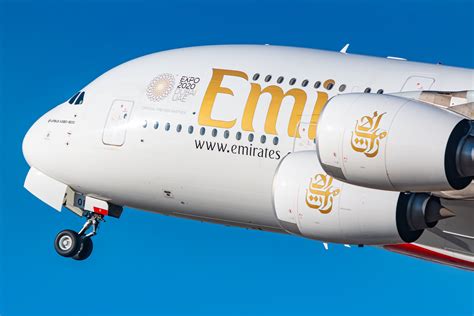
The airline’s deployment of flagship aircraft such as the Airbus A380 on multiple UK routes further strengthens its competitive position. Spacious cabins, premium amenities, and extensive scheduling flexibility make Emirates particularly attractive to long-haul travelers heading to the South Pacific.
London’s Massive Contribution To Auckland Traffic
London deserves special attention because of its outsized role within Emirates’ network. The British capital alone receives multiple daily Emirates departures from Dubai, creating one of the airline’s most significant long-haul corridors.
With millions of residents and a large business community, London generates substantial demand for travel to Australia and New Zealand. While nonstop flights exist on certain routes, many passengers continue to choose Emirates because of competitive fares, premium service, and flexible connection options.
The sheer volume of London-originating passengers helps fill seats on long-haul flights throughout Emirates’ Australasian network. As a result, a traveler boarding in Heathrow may become just as important to the economics of the Auckland flight as someone beginning their trip in Dubai itself.
India’s Growing Influence Across Emirates’ Global Network
If the United Kingdom represents Emirates’ largest capacity market, India stands firmly as one of its most strategically important.
The airline serves nine Indian destinations and operates more than twenty daily flights between Dubai and major Indian cities. These include Delhi, Mumbai, Bengaluru, Hyderabad, Chennai, Ahmedabad, Cochin, Kolkata, and Trivandrum.
India’s importance stems from several overlapping factors. First, the country has one of the world’s largest populations and a rapidly growing middle class. Second, millions of Indian expatriates live and work throughout the Gulf region. Third, demand for international travel continues to expand as economic development increases.
These dynamics generate enormous passenger flows into Dubai, creating an ideal source of connecting traffic for Emirates’ long-haul routes.
Unlike the UK market, which often generates travelers destined for leisure or business destinations around the world, India contributes a mix of labor traffic, family visits, tourism, education travel, and corporate travel. This diversity helps stabilize demand across seasons.
Why Indian Travelers Help Fill The Auckland Flight
At first glance, routing Indian passengers through Dubai to reach New Zealand may appear inefficient. However, the reality of international aviation makes the strategy surprisingly logical.
Direct air links between India and New Zealand remain limited compared to connections available through major Gulf hubs. As a result, many travelers find Emirates’ extensive schedule attractive.
A passenger departing Bengaluru or Mumbai can reach Auckland through Dubai with relatively short connection times and access to premium facilities during transit. Because Emirates operates multiple daily departures from many Indian cities, travelers also enjoy greater scheduling flexibility than they might receive elsewhere.
This flexibility becomes especially valuable for business travelers and families planning long international journeys. Instead of being restricted to a handful of weekly flights, passengers can often choose from several departure options every day.
Consequently, Indian-origin traffic has become an increasingly important contributor to New Zealand-bound services across the Emirates network.
Auckland: One Of Emirates’ Most Remarkable Destinations
Auckland occupies a special position within Emirates’ route map. Located near the edge of the airline’s operational reach, the city represents one of the longest destinations served from Dubai.
Historically, Emirates has used both Airbus A380 and Boeing 777 aircraft on ultra-long-haul services to New Zealand. Operating such flights requires meticulous planning involving fuel loads, crew scheduling, weather monitoring, and aircraft utilization.
Despite the distance, Auckland remains strategically important because New Zealand is a high-value market with strong demand from Europe, South Asia, and the Middle East.
Rather than depending on relatively modest UAE–New Zealand travel volumes, Emirates aggregates demand from dozens of countries. The result is a passenger mix that may include British tourists, Indian students, Australian business travelers, South African families, and Middle Eastern residents all sharing the same flight.
This diverse customer base significantly reduces risk and strengthens route sustainability.
Australia’s Role In Supporting New Zealand Operations
The wider Australasian region also contributes to the success of Emirates’ Auckland service.
The airline serves major Australian cities including Sydney, Melbourne, Brisbane, Perth, and Adelaide. These routes create additional opportunities for network integration, allowing passengers to connect between Australia and New Zealand while remaining within the Emirates ecosystem.
One notable example is the airline’s service linking Sydney and Christchurch under fifth-freedom rights. This arrangement allows Emirates to carry passengers between Australia and New Zealand despite neither country being the airline’s home market.
Such network flexibility increases aircraft utilization and broadens revenue opportunities. More importantly, it reinforces Emirates’ position as a comprehensive provider of travel throughout the Australasian region.
Rather than viewing Auckland as an isolated endpoint, the airline treats it as part of a much larger interconnected network stretching from Europe and India to Oceania.
Premium Products Help Attract Connecting Travelers
While geography provides Emirates with a significant advantage, location alone does not explain the airline’s success.
The carrier has invested heavily in product quality, recognizing that passengers willing to endure lengthy journeys often place substantial value on comfort and service.
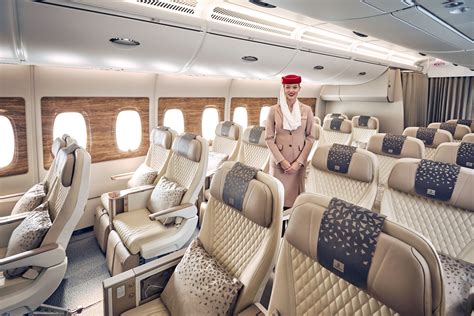
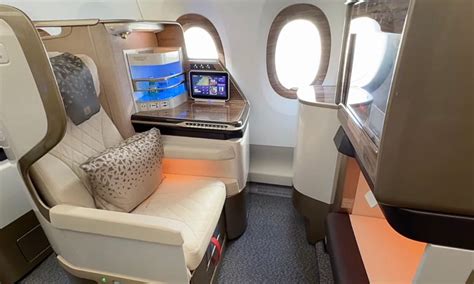
Its ongoing multibillion-dollar cabin retrofit program has transformed a large portion of the fleet. Refreshed interiors, upgraded entertainment systems, redesigned cabins, and expanded premium economy offerings have improved consistency across the network.
These enhancements are particularly important on ultra-long-haul routes where passengers may spend more than twenty hours traveling, including connections.
For travelers flying from the UK or India to New Zealand, the onboard experience can heavily influence airline choice. Emirates’ investment in premium products helps convince passengers that a one-stop journey through Dubai can be preferable to alternative routings.
Fleet Expansion Will Strengthen Long-Haul Connectivity
Emirates’ future growth plans suggest that routes such as Dubai–Auckland could become even more important.
The airline already operates a fleet exceeding 270 widebody aircraft and has more than 350 additional aircraft on order. Central to this expansion is the Boeing 777-9 program, which Emirates expects to become a cornerstone of its future long-haul operations.
Although certification delays have postponed the aircraft’s arrival, the airline continues preparing for growth through fleet modernization initiatives.
The Airbus A350 is also becoming an increasingly important component of the network. Equipped with Emirates’ latest cabin products from delivery, these aircraft help improve operational efficiency while maintaining high passenger satisfaction standards.
As newer aircraft enter service, Emirates will gain additional flexibility to expand frequencies, open new destinations, and strengthen existing routes across Australasia.
Dubai World Central Could Transform Emirates’ Future
One of the most significant developments in Emirates’ long-term strategy involves the expansion of Al Maktoum International Airport, commonly known as Dubai World Central.
Dubai International Airport has served as the airline’s home for decades and remains one of the world’s busiest international hubs. However, continued growth is gradually pushing the airport toward its capacity limits.
To address this challenge, Dubai is investing heavily in a new mega-hub capable of handling vastly greater passenger volumes. Upon completion, the expanded airport is expected to accommodate more than 260 million passengers annually, making it one of the largest aviation facilities ever constructed.
For Emirates, this project represents far more than additional terminal space. It provides the infrastructure necessary to support future fleet growth, larger passenger volumes, and expanded route networks.
As more aircraft join the fleet and global demand continues rising, the airline will be positioned to strengthen connections between key feeder markets such as the UK and India and distant destinations including Auckland.
Why Dubai–Auckland Is Much More Than A UAE–New Zealand Route
Viewed on a map, Emirates’ Dubai–Auckland service appears to be a straightforward link between the Middle East and New Zealand. In reality, the route functions as a crucial connector for travelers originating thousands of miles away in Britain and India.
The airline’s hub-and-spoke strategy enables Emirates to consolidate demand from multiple markets into a single ultra-long-haul operation. British passengers heading to New Zealand, Indian travelers seeking better connectivity, and countless others all contribute to the route’s viability.
This ability to combine traffic flows from different regions is one of the defining strengths of Emirates’ business model. It transforms routes that might otherwise struggle into highly strategic network assets.
As fleet modernization continues, new aircraft arrive, and Dubai develops its next-generation aviation hub, the importance of these global passenger flows will only increase. The 8,810-mile Dubai–Auckland flight may connect two cities, but its success ultimately depends on the vast web of travelers beginning their journeys far beyond the UAE—particularly in the United Kingdom and India.