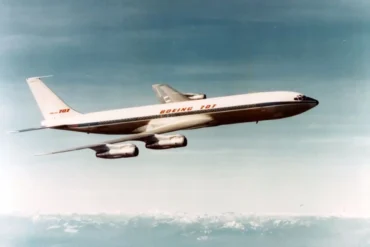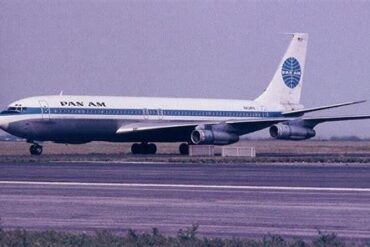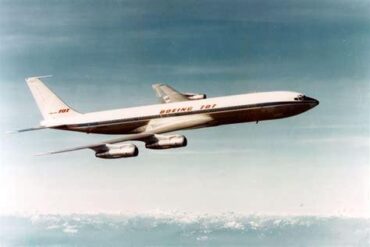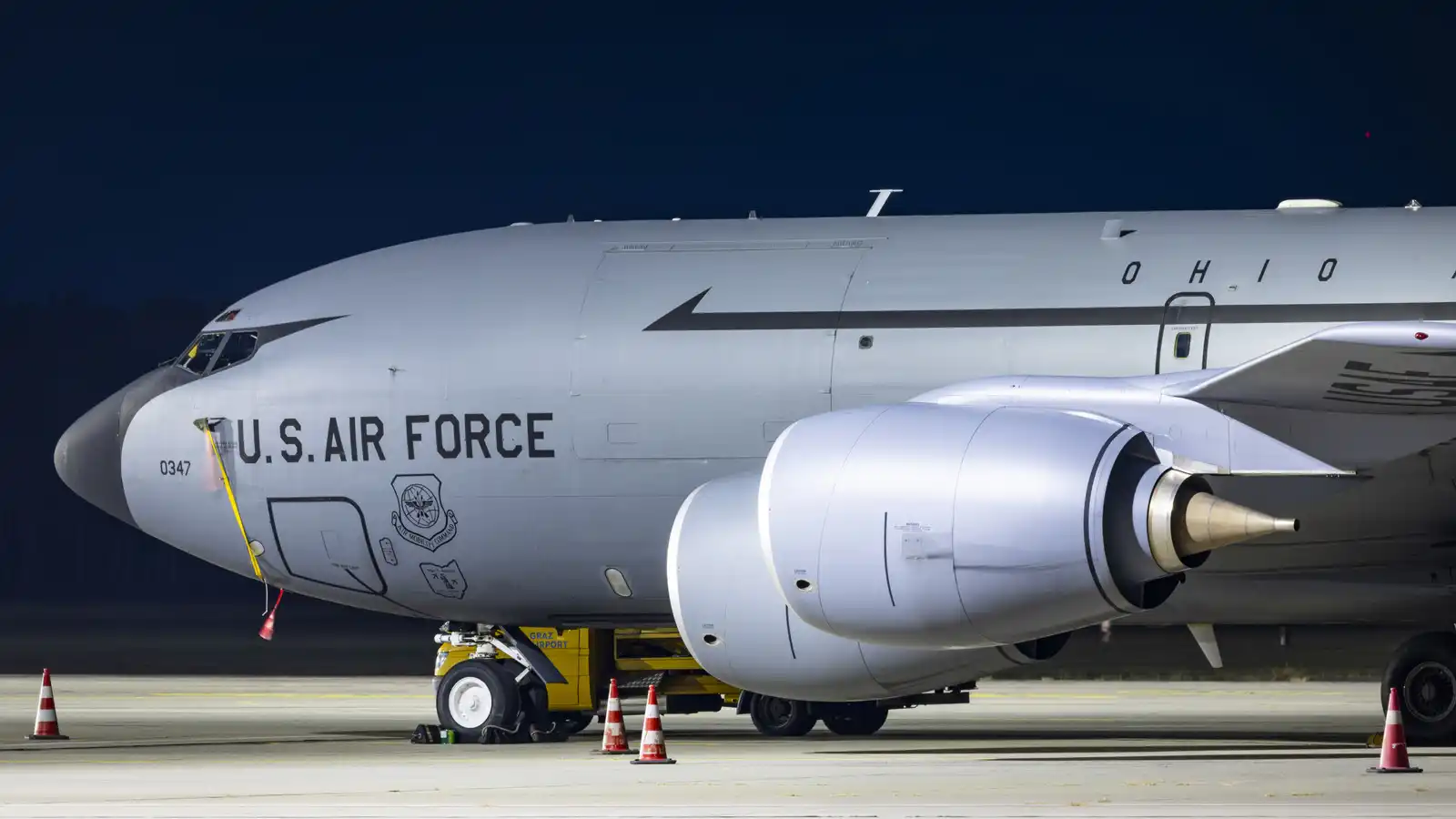
The story of the Boeing 707 is often told as a tale of commercial aviation triumph—a sleek, pioneering jet that ushered in the age of mass air travel. Yet, in 2026, long after its retirement from airline service, the aircraft’s DNA continues to shape global military power. In the United States Air Force, a fleet of 707-derived aircraft remains not only operational but indispensable, forming the backbone of aerial refueling, airborne command, and intelligence gathering.
This enduring reliance is not an accident of history. It is the result of a complex convergence of strategic necessity, technological adaptability, and fiscal reality. While cutting-edge stealth aircraft and next-generation systems dominate headlines, the quiet persistence of these aging platforms reveals a deeper truth: in modern warfare, proven capability often outweighs theoretical superiority.
The Boeing 707’s Military Evolution: From Jetliner to Strategic Asset
The Boeing 707 was never designed to be a war machine. Introduced in the late 1950s, it revolutionized commercial flight with speed, range, and reliability. However, its robust airframe and adaptable design quickly caught the attention of military planners during the height of the Cold War.
From this foundation emerged a family of specialized aircraft that would redefine aerial warfare. The KC-135 Stratotanker, E-3 Sentry, and RC-135 Rivet Joint all trace their lineage to the same engineering blueprint, yet each serves a dramatically different purpose. Together, they form a triad of capabilities that underpin U.S. global military operations.
These aircraft were built in an era when durability and overengineering were strategic priorities. Designed to withstand the pressures of prolonged global conflict, they were constructed with margins of strength and flexibility rarely seen in modern cost-optimized platforms. Decades later, those design choices continue to pay dividends.
Why the Air Force Still Flies 707-Based Aircraft in 2026
The continued operation of these aircraft is not driven by nostalgia—it is dictated by necessity. Despite rapid advancements in aerospace technology, no complete, scalable replacement exists for the combined roles these platforms fulfill.
The challenge lies not just in building a better aircraft, but in replicating the entire ecosystem of capabilities they provide. Each platform has evolved through continuous upgrades, integrating modern avionics, sensors, and communication systems while retaining their original structural integrity.
This hybrid of old and new creates a paradox: while the airframes are decades old, their mission systems are often cutting-edge. Replacing them requires not just technological innovation, but massive financial investment and long-term strategic commitment.
The Cost Barrier: Modernization vs. Replacement
Replacing hundreds of aircraft is not a simple procurement decision—it is a generational undertaking. Programs like the KC-46 Pegasus and the E-7 Wedgetail represent significant steps toward modernization, yet their rollout has been slow and costly.
The financial burden is compounded by competing priorities. Advanced fighter programs, stealth bombers, and next-generation dominance initiatives demand enormous funding. As a result, legacy platforms remain in service longer than originally planned, bridging the gap between capability and affordability.
This balancing act defines modern defense strategy. Rather than pursuing wholesale replacement, the Air Force has opted for incremental modernization, extending the life of proven systems while gradually introducing new ones.
The KC-135 Stratotanker: The Backbone of Global Air Power
Among all 707-derived aircraft, the KC-135 Stratotanker stands as the most critical. Aerial refueling is the lifeblood of modern air operations, enabling fighters, bombers, and reconnaissance aircraft to operate far beyond their natural range.
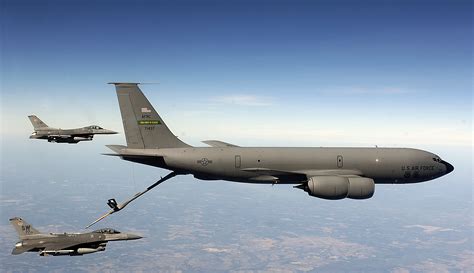
With hundreds still in service, the KC-135 continues to perform this mission with remarkable reliability. Its importance cannot be overstated—without it, the global reach of the U.S. military would be dramatically constrained.
Despite its age, the Stratotanker remains highly effective. Upgrades to engines, avionics, and structural components have kept it relevant, even as newer aircraft enter the fleet. However, the transition to its successor has been slower than anticipated.
The KC-46 Pegasus, intended to replace the Stratotanker, has faced technical challenges and certification delays. While it offers improved efficiency and versatility, it has yet to fully match the operational flexibility of its predecessor.
As a result, the KC-135 continues to shoulder the majority of the refueling burden. Its longevity is a testament to both its original design and the adaptability of the Air Force’s maintenance and upgrade programs.
The RC-135 Rivet Joint: Eyes and Ears in the Sky
If the KC-135 represents physical endurance, the RC-135 Rivet Joint embodies informational dominance. These aircraft specialize in signals intelligence, intercepting and analyzing electronic emissions from adversaries.
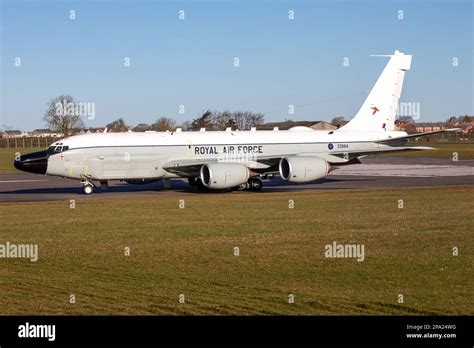
In an era defined by data and digital warfare, the value of such capabilities has only increased. The Rivet Joint monitors communications, radar signals, and electronic activity, providing critical insights into enemy operations.
What makes the RC-135 unique is its ability to transform raw data into actionable intelligence in real time. This information informs everything from tactical decisions on the battlefield to strategic planning at the highest levels of government.
Despite its age, there is no direct replacement for the Rivet Joint. Its mission is too specialized, and its systems too deeply integrated into broader intelligence networks. As electronic warfare becomes more complex, the demand for its capabilities continues to grow.
The absence of a successor underscores its importance. Rather than being phased out, the RC-135 is likely to remain in service well into the mid-21st century, evolving alongside the threats it monitors.
The E-3 Sentry: Airborne Command and Control
The E-3 Sentry occupies a unique position within the 707 family. Equipped with a massive radar dome, it functions as a flying command center, coordinating air operations across vast مناطق.
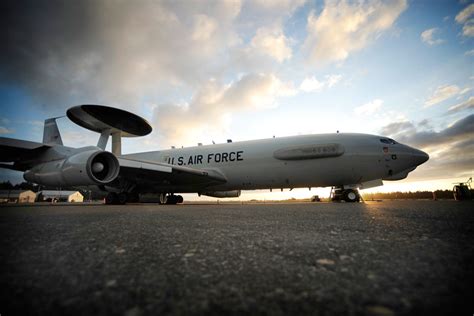
From its vantage point in the sky, the E-3 can track aircraft, manage engagements, and provide situational awareness to forces on the ground and in the air. It acts as the central nervous system of aerial combat operations.
However, unlike the KC-135 and RC-135, the E-3 faces a more defined path to retirement. Advances in radar technology and networked warfare have outpaced its capabilities, making modernization increasingly impractical.
The E-7 Wedgetail is poised to take its place, offering a leap forward in sensor performance and operational efficiency. Yet, until sufficient numbers are deployed, the E-3 remains an essential asset.
This transitional period highlights a recurring theme: even when replacements exist, the scale and cost of implementation ensure that legacy systems remain in service far longer than expected.
Cold War Engineering Meets Modern Warfare
The endurance of 707-based aircraft can be traced back to their origins in the Cold War. Built during a time of existential geopolitical tension, these aircraft were designed with longevity and resilience in mind.
The collapse of the Soviet Union reduced the urgency for rapid technological turnover. Without a clear near-peer adversary, defense spending priorities shifted, delaying the development of next-generation systems.
In recent years, the re-emergence of global competition has renewed interest in modernization. However, the gap between ambition and execution remains significant. Developing and fielding new platforms takes time—often decades.
In the meantime, legacy aircraft continue to fill critical roles. Their presence is not a sign of stagnation, but of strategic pragmatism.
The Maintenance Challenge: Keeping Aging Aircraft Airworthy
Operating aircraft that are more than half a century old presents significant challenges. Structural fatigue, outdated components, and rising maintenance costs all threaten long-term sustainability.
Yet, the Air Force has developed sophisticated maintenance programs to address these issues. Through regular inspections, component replacements, and structural reinforcements, these aircraft remain safe and effective.
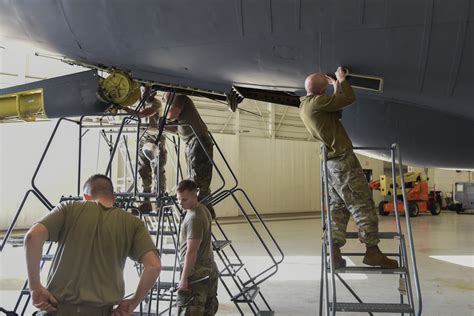
This effort requires a highly skilled workforce and a robust supply chain. In many cases, parts must be custom-fabricated, as original manufacturers no longer produce them.
Despite these challenges, the cost of maintaining existing aircraft is often lower than developing and procuring new ones. This economic reality reinforces their continued use.
Strategic Flexibility: The Hidden Advantage of Legacy Platforms
One of the most overlooked strengths of 707-based aircraft is their flexibility. Over decades of service, they have been adapted to meet evolving mission requirements.
This adaptability is not easily replicated in newer platforms, which are often designed for specific roles. The ability to modify and upgrade existing aircraft provides a level of operational agility that is difficult to achieve with entirely new systems.
In a rapidly changing threat environment, this flexibility is invaluable. It allows the Air Force to respond to emerging challenges without waiting for new programs to come online.
The Future: Gradual Transition, Not Sudden Replacement
The eventual retirement of 707-based aircraft is inevitable. Airframes have finite lifespans, and technological progress will continue to drive change. However, this transition will be gradual rather than abrupt.
Programs like the KC-46 and E-7 will expand, gradually assuming the roles currently filled by their predecessors. At the same time, new concepts—such as unmanned systems and distributed networks—may redefine how these missions are performed.
Yet, even as new technologies emerge, the legacy of the Boeing 707 will endure. Its influence can be seen not only in the aircraft that replaced it, but in the very structure of modern air power.
Conclusion: Capability Over Age
The continued reliance on Boeing 707-derived aircraft in 2026 is not a contradiction—it is a reflection of strategic reality. These platforms persist because they work, because they have been continuously improved, and because replacing them is neither simple nor cheap.
In an era obsessed with innovation, they serve as a reminder that effectiveness is not solely determined by age. Sometimes, the most advanced solution is the one that has already proven itself over decades of service.
As the Air Force navigates the complexities of modernization, these venerable aircraft remain steadfast—silent guardians of capability in an increasingly uncertain world.