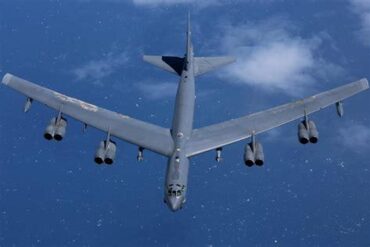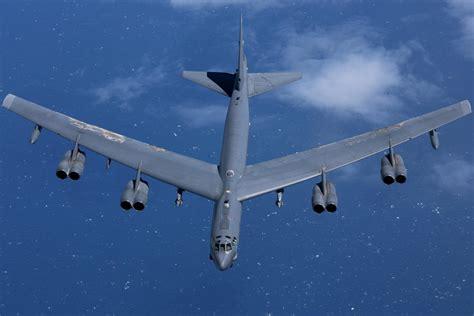
The continued reliance on the B-52 Stratofortress by the United States Air Force is not a story of nostalgia or institutional inertia—it is a calculated, strategic decision rooted in cost-efficiency, adaptability, and unmatched payload capability. In an era defined by stealth fighters, hypersonic weapons, and digital warfare, the presence of a bomber designed in the early Cold War might seem paradoxical. Yet the B-52 persists not as a relic, but as a critical backbone of American airpower, filling roles that newer, more advanced aircraft cannot economically or effectively replace.
What makes the B-52 remarkable is not just its longevity, but its evolution alongside changing doctrines of warfare. Originally conceived to deliver nuclear payloads deep into Soviet territory, it has transformed into a versatile platform capable of launching precision-guided munitions, cruise missiles, and emerging hypersonic weapons. Its ability to adapt to shifting military needs has ensured that it remains relevant even as newer bombers like the B-2 Spirit and B-21 Raider enter the fleet.
The logic behind its continued service becomes clearer when examining the interplay between mission requirements, operational costs, and strategic flexibility. While stealth bombers excel at penetrating heavily defended airspace, they are expensive and limited in number. The B-52, by contrast, operates as a high-capacity missile carrier, able to deliver overwhelming firepower from safe distances.
A Legacy Born from World War II Strategic Bombing Doctrine
The origins of the B-52 trace back to the strategic bombing philosophy of World War II, where aircraft like the B-17 Flying Fortress and B-29 Superfortress were designed to overwhelm enemy defenses through sheer numbers and resilience. The B-52 represents the final and most advanced evolution of this lineage, transitioning from piston-driven bombers to a jet-powered strategic platform capable of intercontinental reach.
When the B-52 first flew in 1952, it embodied the belief that bombers would need to penetrate deep into enemy territory, absorb damage, and still complete their missions. Its large airframe, eight-engine configuration, and defensive armaments reflected this expectation. During the Vietnam War, particularly in Operation Linebacker II, the aircraft demonstrated both its strengths and vulnerabilities, sustaining losses while delivering devastating bombardments.
Over time, however, the nature of air defense changed dramatically. The rise of surface-to-air missiles (SAMs) and advanced radar systems rendered traditional high-altitude bombing increasingly dangerous. The B-52’s lack of stealth and agility became apparent, forcing a shift in how it would be used rather than leading to its retirement.
From Speed and Stealth to Stand-Off Dominance
As Cold War tensions intensified, the U.S. Air Force experimented with alternatives to the B-52’s vulnerability. Aircraft like the B-58 Hustler and the experimental XB-70 Valkyrie sought to survive by flying faster and higher than enemy defenses. These efforts ultimately proved unsustainable, as missile technology advanced faster than aircraft speed capabilities.
The introduction of the B-1B Lancer marked another attempt to address survivability through low-altitude penetration and reduced radar visibility. While effective in concept, the B-1B’s design imposed significant stress on its airframe, leading to high maintenance costs and reduced service life.
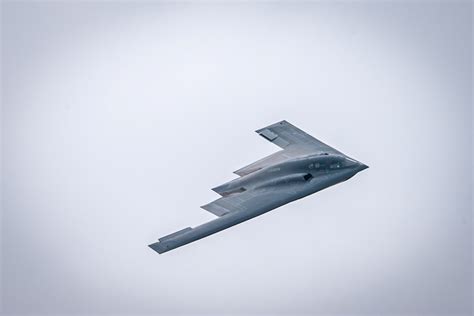
Meanwhile, the B-2 Spirit introduced stealth as the ultimate solution, allowing aircraft to evade detection entirely. Yet stealth came at a steep price—limited production numbers and extremely high operating costs. The Air Force could not procure enough B-2s to fully replace older bombers, leaving a capability gap that the B-52 continues to fill.
The Enduring Advantage of Payload Capacity
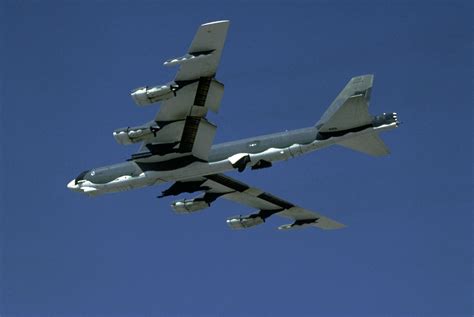
One of the most compelling reasons for the B-52’s continued relevance is its extraordinary payload capacity, capable of carrying up to 70,000 pounds of ordnance. This allows it to function as a “missile truck,” delivering large volumes of weapons in a single sortie.
Unlike stealth bombers, which must carry weapons internally to maintain low observability, the B-52 can mount munitions on external pylons, dramatically increasing its carrying capacity. This makes it uniquely suited for missions requiring sustained firepower rather than surgical precision alone.
In modern warfare, this translates into the ability to deploy:
- Long-range cruise missiles
- Joint Air-to-Surface Standoff Missiles (JASSM)
- Precision-guided bombs
- Future hypersonic weapons
This capability allows the B-52 to remain outside heavily defended airspace while still delivering decisive strikes, effectively sidestepping its lack of stealth.
Cost-Effectiveness in an Era of Expensive Airpower
Modern military aviation is defined by escalating costs. Stealth bombers like the B-2 and B-21 represent cutting-edge technology, but they are also extraordinarily expensive to build, maintain, and operate. The B-52, by contrast, offers a relatively low cost per flight hour, making it an attractive option for sustained operations.
This cost advantage becomes particularly significant in prolonged conflicts, where the ability to generate sorties at scale can determine operational success. The B-52’s simpler design and decades of maintenance experience contribute to its high availability rates, ensuring that it can be deployed when needed without excessive logistical strain.
In essence, the B-52 provides a high-volume, low-cost complement to the Air Force’s limited fleet of high-end stealth bombers. This balance allows the United States to maintain both precision strike capability and overwhelming firepower without overextending its defense budget.
Airframe Longevity and Structural Resilience
Perhaps the most surprising aspect of the B-52 is its exceptional structural longevity. Unlike the B-1B, which experiences significant stress from low-altitude flight, the B-52 operates primarily at higher altitudes and more stable flight profiles. This reduces wear and tear, allowing its airframes to remain viable for decades.
Many of the B-52s in service today were built in the late 1950s and early 1960s, yet they still have substantial usable flight hours remaining. This durability has enabled the Air Force to extend their service life far beyond initial expectations, with projections suggesting they could remain operational into the 2050s or even 2060s.
A Distinct Role in the Modern Bomber Fleet
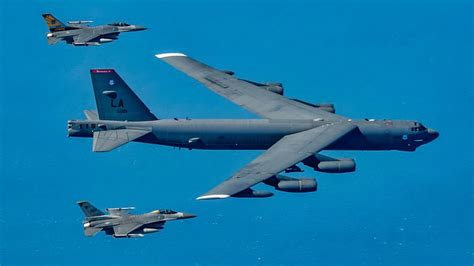
The B-52 occupies a unique niche within the U.S. bomber fleet, complementing rather than competing with newer aircraft. While the B-21 Raider is designed for stealth penetration and high-value target elimination, the B-52 excels in stand-off strike missions and large-scale ordnance delivery.
This division of labor reflects a broader strategic philosophy:
- Stealth bombers act as precision instruments, penetrating defended airspace to neutralize critical targets.
- The B-52 operates from safer distances, delivering sustained and overwhelming firepower.
This complementary relationship ensures that each platform is used where it is most effective, maximizing overall operational efficiency.
The Power of Stand-Off Munitions
The development of advanced stand-off weapons has fundamentally reshaped the role of the B-52. Instead of flying directly over targets, the aircraft can now launch missiles from hundreds or even thousands of kilometers away.
This capability transforms the B-52 from a vulnerable bomber into a strategic launch platform, capable of influencing battles without entering contested airspace. It also aligns with modern warfare trends, where range and precision are often more valuable than speed or stealth alone.
However, this approach is not without limitations. Stand-off munitions are expensive, and their effectiveness depends on accurate intelligence and targeting data. Nevertheless, the B-52’s ability to carry large quantities of these weapons ensures that it remains a force multiplier in any conflict.
Modernization: The B-52J Transformation
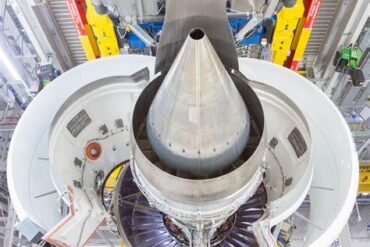
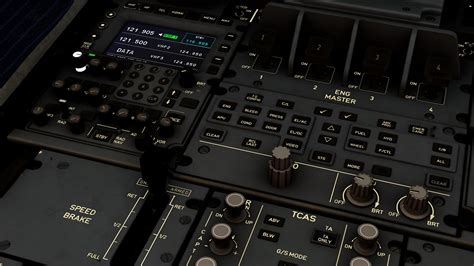
To maintain its relevance, the Air Force is undertaking a comprehensive upgrade program, transforming the current fleet into the B-52J standard. This modernization includes the installation of new Rolls-Royce engines, improved avionics, and enhanced communication systems.
These upgrades are expected to deliver several key benefits:
- Improved fuel efficiency and range
- Reduced maintenance requirements
- Enhanced integration with modern weapon systems
While the program has faced delays and cost overruns, its successful implementation will ensure that the B-52 remains a viable and effective platform for decades to come.
Strategic Flexibility in Diverse Conflict Scenarios
The versatility of the B-52 allows it to operate across a wide range of conflict scenarios, from high-intensity warfare to counterinsurgency operations. In permissive environments where air superiority is established, it can deliver direct bombardment using conventional munitions. In more contested settings, it relies on stand-off weapons to maintain effectiveness.
Recent conflicts have demonstrated that there are still situations where the B-52 can operate closer to the battlefield, particularly when enemy air defenses are degraded. However, future conflicts against near-peer adversaries are likely to limit such opportunities, reinforcing the importance of its stand-off capabilities.
The Numbers Problem: Why Quantity Still Matters
A critical factor in the B-52’s continued service is the limited number of advanced bombers available to the Air Force. With only a small fleet of B-2s and a gradually expanding number of B-21s, the United States cannot rely solely on stealth platforms to meet global operational demands.
The B-52 helps bridge this gap by providing numerical strength, ensuring that the Air Force can maintain a credible bomber presence across multiple theaters simultaneously. Its ability to carry large payloads further amplifies its impact, allowing fewer aircraft to achieve greater results.
A Future That Extends Beyond a Century
The prospect of the B-52 remaining in service for nearly a century is not just remarkable—it is unprecedented. No other combat aircraft has demonstrated such longevity combined with continued operational relevance.
This endurance is a testament to the aircraft’s robust design and adaptability, as well as the strategic foresight of continually upgrading its capabilities. While newer platforms will increasingly take on frontline roles, the B-52 is poised to remain an indispensable component of the Air Force’s arsenal.
Conclusion: The Strategic Logic Behind Longevity
The continued reliance on the B-52 is not an accident of history but a reflection of clear strategic logic. Its combination of payload capacity, cost-effectiveness, durability, and adaptability ensures that it remains uniquely suited to modern warfare requirements.
Far from being obsolete, the B-52 has evolved into a high-capacity, long-range strike platform that complements the strengths of newer, more advanced aircraft. As long as the need exists for affordable, scalable firepower, the Stratofortress will continue to play a central role in U.S. military strategy—proving that sometimes, the most enduring solutions are also the most effective.