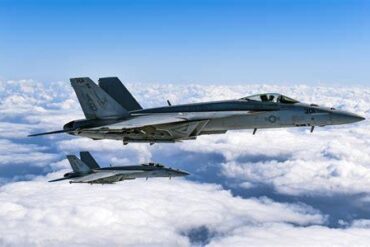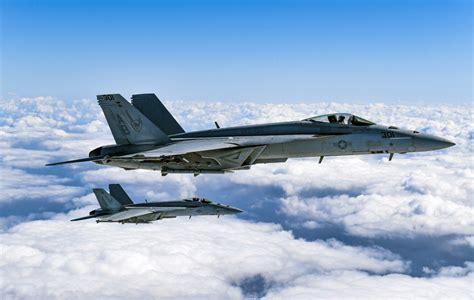
The debate between the F/A-18 Super Hornet and the F-35C Lightning II often gets framed as a generational clash—4th-generation reliability versus 5th-generation stealth dominance. But inside the operational calculus of the U.S. Navy, the reality is far more nuanced. The decision to deploy one aircraft over the other is not about superiority in a vacuum. It is about precision alignment between mission demands, fleet readiness, cost efficiency, and battlefield context.
What emerges is a surprisingly pragmatic doctrine: the Navy does not choose between these aircraft—it orchestrates them. And yet, in many scenarios, the older, less glamorous Super Hornet continues to take center stage.
The Backbone of Carrier Aviation: Why the Super Hornet Still Dominates Deck Space
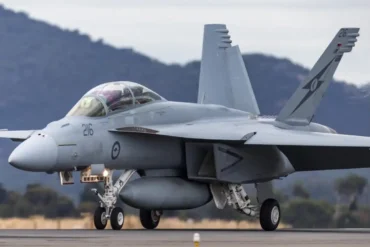
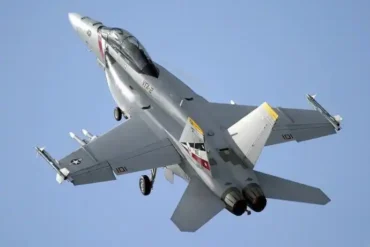
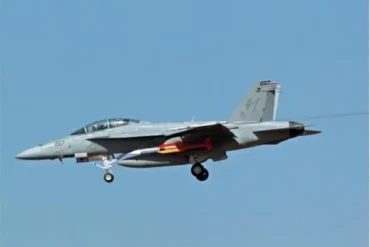
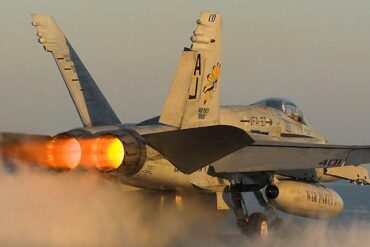
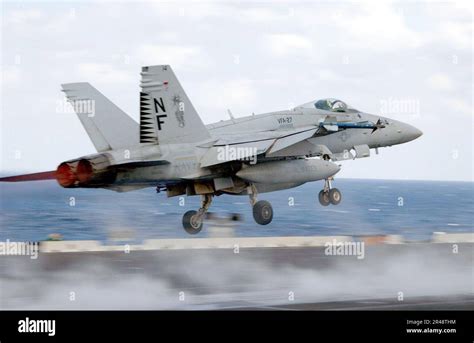
The F/A-18 Super Hornet is not simply a legacy platform lingering in service—it is the structural backbone of U.S. Navy carrier air wings. With over 550 aircraft in operation, supported by more than 150 EA-18G Growler electronic warfare variants, it represents the most numerous and operationally flexible fighter in the fleet.
Unlike newer platforms still refining their logistics pipelines, the Super Hornet benefits from decades of combat-proven reliability, streamlined maintenance cycles, and deep integration across naval aviation doctrine. Its systems are mature, its crews are extensively trained, and its supply chains are optimized.
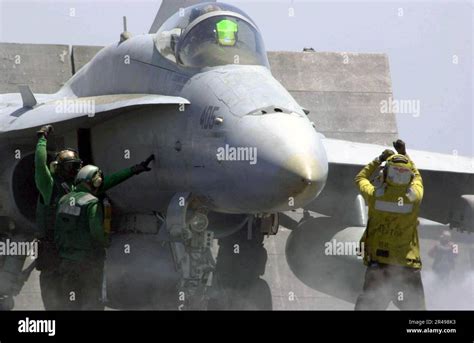
This matters more than it sounds. On a carrier deck, where every sortie counts and turnaround time can define mission success, the ability to launch, recover, refuel, rearm, and relaunch quickly is not a luxury—it is a necessity. The Super Hornet delivers this consistency with remarkable efficiency.
The Hidden Constraint: Not Every Carrier Can Handle the F-35C
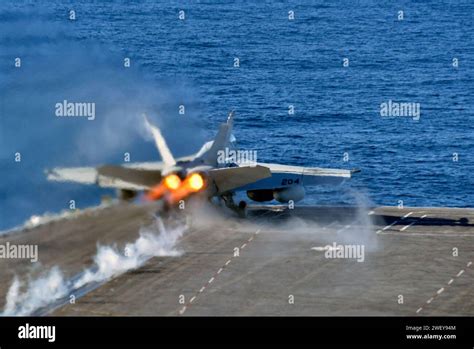
One of the least discussed but highly influential factors shaping deployment decisions is carrier compatibility. The F-35C, with its advanced stealth coatings and powerful engine exhaust, imposes unique operational demands on flight decks.
Not all carriers are fully equipped to handle these requirements.
For example, the USS Gerald R. Ford—the Navy’s most advanced aircraft carrier—was initially delivered without full F-35C certification, due to the evolving nature of the aircraft’s operational specifications during its construction. Retrofitting carriers to support the F-35C involves heat-resistant deck modifications, specialized maintenance infrastructure, and updated support systems.
As a result, while several carriers are now certified, a portion of the fleet still relies heavily on the Super Hornet simply because it can operate everywhere without restriction.
This creates a logistical reality: when a carrier is not fully optimized for the F-35C, the Super Hornet becomes the default—and often the only—viable option.
Payload Power: The Super Hornet as the Navy’s “Bomb Truck”
In modern warfare, stealth is not always the deciding factor. Once enemy air defenses are degraded, the emphasis shifts toward sustained strike capacity and payload delivery.
Here, the Super Hornet excels.
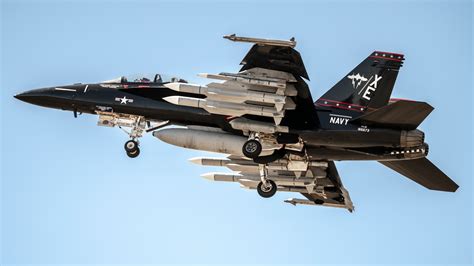
With 11 hardpoints and a maximum external payload exceeding 17,000 pounds, it functions as a highly effective “bomb truck”, capable of delivering a wide array of munitions across multiple targets in a single sortie. While the F-35C can match or exceed this payload in its non-stealth “beast mode,” doing so negates its low-observable advantages.
The Super Hornet, by contrast, operates without such trade-offs. It is built for visible dominance, not invisibility, making it ideal for missions where stealth is unnecessary.
Consider scenarios like maritime strike operations, close air support, or suppression of residual threats after initial penetration. In these cases, deploying a stealth fighter would be operational overkill and economically inefficient.
Cost Efficiency and Operational Tempo: The Economics of Airpower
The financial dimension cannot be ignored. The cost per flight hour of the F-35C remains significantly higher than that of the Super Hornet. Maintenance complexity, stealth coating upkeep, and advanced avionics all contribute to a more resource-intensive operational profile.
In contrast, the Super Hornet offers:
- Lower acquisition and sustainment costs
- Faster maintenance turnaround
- Higher sortie generation rates
This translates into a simple but powerful advantage: the Navy can fly more missions, more frequently, at a lower cost.
In prolonged operations—where endurance matters more than initial shock value—the Super Hornet becomes the workhorse that sustains pressure on the battlefield.
The Right Tool for the Right Job: Mission Profiles That Favor the Super Hornet
Despite the technological leap represented by the F-35C, not every mission demands stealth or sensor fusion at that level. In fact, many missions are better served by an aircraft that is robust, flexible, and operationally forgiving.
The Super Hornet is routinely favored in missions such as:
- Maritime patrols where visibility acts as deterrence
- Low-threat strike environments
- Escort and presence operations
- Rapid-response sorties with minimal preparation time
In one notable 2026 incident, a Super Hornet disabled an Iranian tanker using machine gun fire—a task where deploying a stealth fighter would have been excessive and tactically unnecessary.
This illustrates a broader truth: not all missions are high-end, contested airspace penetrations. Many are routine, reactive, or symbolic—and the Super Hornet handles them with unmatched efficiency.
Stealth Isn’t Always an Advantage: When Being Seen Matters
In certain geopolitical scenarios, visibility is a strategic asset.
When U.S. Navy aircraft patrol contested regions, their presence is often meant to send a message rather than avoid detection. Flying a stealth aircraft in such contexts defeats the purpose.
The Super Hornet, equipped with active transponders and operating in full visibility, becomes a tool of strategic signaling. It demonstrates presence, asserts control, and deters escalation—all without escalating to stealth-based aggression.
The F-35C’s Role: A Force Multiplier, Not a Replacement
The F-35C Lightning II was never intended to fully replace the Super Hornet. Instead, it serves as a force multiplier, enabling and enhancing the effectiveness of 4th-generation platforms.
Its strengths lie in:
- Stealth penetration of contested airspace
- Advanced sensor fusion and battlefield awareness
- Electronic warfare and targeting support
- First-day strike capabilities
In practice, this means the F-35C often operates at the front edge of the battlespace, identifying threats, suppressing defenses, and feeding real-time data to other aircraft.
The Super Hornet then follows, leveraging this intelligence to deliver massed firepower with precision.
This synergy transforms the question from “which aircraft is better” to “how do they work together most effectively?”
Range and Reach: Where the F-35C Takes the Lead
There are scenarios where the F-35C clearly outperforms the Super Hornet. One of the most critical is combat radius.
With an unrefueled range exceeding 600 nautical miles, the F-35C allows carriers to operate further from hostile shorelines, enhancing their survivability. The Super Hornet, with a shorter range, may struggle in such extended operations without aerial refueling.
This difference becomes increasingly relevant in potential conflicts involving peer adversaries with advanced anti-access/area-denial (A2/AD) capabilities.
Fleet Composition Reality: Numbers Still Matter
As of 2026, the numerical disparity between the two aircraft remains significant. The Navy operates hundreds more Super Hornets than F-35Cs, and production of the former continues until 2027.
This imbalance ensures that, for the foreseeable future, the Super Hornet will remain indispensable.
Even as the Navy transitions toward next-generation platforms like the F/A-XX, the Super Hornet is expected to remain in service well into the 2050s, bridging the gap between eras of airpower.
Real-World Combat Dynamics: Lessons from Recent Operations
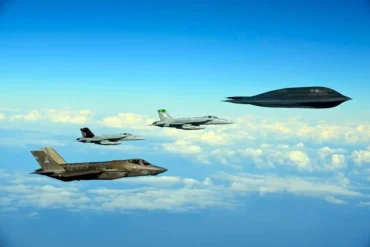
Recent conflicts have reinforced the complementary roles of these aircraft. In high-intensity campaigns, stealth platforms such as the F-35C and B-2 Spirit typically initiate operations, dismantling enemy defenses.
Once the airspace is sufficiently degraded, the focus shifts to volume, persistence, and flexibility—domains where the Super Hornet thrives.
This phased approach ensures that high-value stealth assets are preserved for critical tasks, while more economical platforms carry the operational burden over time.
The Future Balance: Super Hornet, F-35C, and Beyond
Looking ahead, the Navy’s strategy is not to replace the Super Hornet outright but to evolve its air wing into a layered, integrated system.
The upcoming F/A-XX program will introduce a new generation of capabilities, but its integration will take decades. In the meantime, the Super Hornet continues to provide:
- Operational continuity
- Cost-effective firepower
- Mission flexibility across the spectrum of conflict
The F-35C, meanwhile, expands the Navy’s reach into high-threat environments, ensuring dominance where it matters most.
Conclusion: The Real Reason the Super Hornet Still Flies
The continued reliance on the F/A-18 Super Hornet is not a compromise—it is a deliberate strategic choice.
In an era obsessed with next-generation technology, the Navy understands a critical truth: capability without context is meaningless. The Super Hornet remains relevant because it aligns perfectly with the real-world demands of naval warfare—where flexibility, availability, and efficiency often outweigh raw technological superiority.
The F-35C may represent the future, but the Super Hornet continues to win the present.