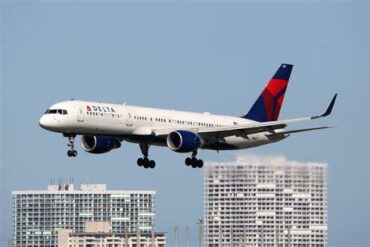
United Airlines’ continued reliance on the Boeing 767 fleet might seem, at first glance, like a stubborn attachment to aging hardware. In an era where fuel efficiency, passenger comfort, and cutting-edge design dominate airline marketing narratives, keeping aircraft that average nearly three decades in age appears counterintuitive. Yet beneath the surface lies a far more calculated and disciplined strategy—one that blends economics, network design, and industry realities into a surprisingly effective formula.
The truth is simple but often overlooked: United is not holding onto the 767 out of necessity alone—it is doing so because the aircraft still makes money. And in aviation, profitability has a way of overriding sentiment, aesthetics, and even technological progress.
To understand why the Boeing 767 remains indispensable, it is necessary to move beyond age and examine the structural forces shaping United’s long-haul strategy today.
The Boeing 787 Delays That Changed Everything
The most immediate and unavoidable factor behind the 767’s extended lifespan is the persistent delay of Boeing 787 Dreamliner deliveries. United Airlines has placed one of the largest orders for the 787 globally, positioning the aircraft as the cornerstone of its future long-haul operations. However, production bottlenecks, certification issues, and supply chain disruptions have slowed deliveries to a crawl.
Between early 2023 and late 2024, United experienced an astonishing 20-month gap without receiving a single new 787. For an airline planning a large-scale fleet renewal, that gap is not just inconvenient—it is operationally disruptive.
Without the expected influx of new aircraft, United faced a stark choice: reduce capacity and risk losing market share, or extend the life of its existing fleet. The airline chose the latter, and the 767 became the natural candidate to bridge the gap.
This decision is not a temporary patch but a strategic adjustment. Even as deliveries resume—with around 20 Dreamliners expected in 2026—the backlog ensures that the transition will take years, not months. Until then, the 767 continues to serve as a critical pillar of operational stability.
A Fully Paid Asset That Keeps Printing Cash
If the 787 represents the future, the 767 represents something equally powerful: low ownership cost. Most of United’s 767 aircraft are fully paid off and heavily depreciated. This dramatically reduces their financial burden compared to newer aircraft, which come with high acquisition and financing costs.
While it is true that the 767 consumes more fuel and requires more maintenance than modern jets, those disadvantages are often offset by its minimal capital cost. In practical terms, this means the aircraft can still generate strong margins, especially on routes where pricing power is high.
Airlines do not operate aircraft based solely on efficiency metrics—they operate them based on total economic performance. And in that equation, the 767 continues to outperform expectations.
There’s a certain irony here: the very age that makes the 767 seem obsolete is also what makes it financially attractive. It is no longer a cost burden—it is a revenue-generating asset with limited downside risk.
The Transatlantic Strategy Built Around Frequency
United Airlines has built a transatlantic network that prioritizes frequency over sheer capacity. Instead of deploying massive aircraft with hundreds of seats, the airline often opts for smaller widebodies that can operate more flights per day.
This is where the Boeing 767 excels.
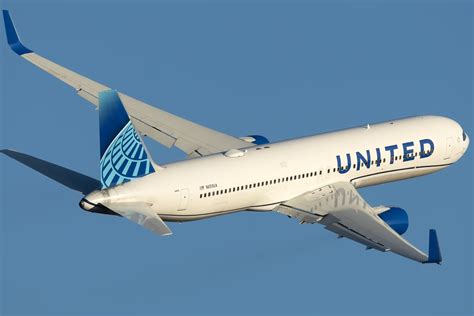
Its size allows United to serve major European destinations—such as London, Paris, Frankfurt, and Amsterdam—with multiple daily departures rather than a single high-capacity flight. This flexibility is particularly valuable in corporate travel markets, where passengers prioritize schedule convenience over aircraft size.
Frequent departures also strengthen United’s competitive position against both legacy carriers and low-cost entrants. More flights mean more options, and more options translate directly into higher market share.
In this context, replacing the 767 with larger aircraft like the 787-10 could actually be counterproductive. Bigger planes require higher load factors to remain profitable, increasing the risk of overcapacity. The 767, by contrast, allows United to fine-tune supply to match demand.
The Power of Premium-Heavy Configurations
Perhaps the most fascinating aspect of United’s 767 strategy is its premium-heavy cabin configuration, often referred to as “high-J.” These aircraft sacrifice economy seating in favor of a significantly larger business class cabin.
Some 767-300ER variants feature:
- 46 Polaris business class seats
- 22 premium economy seats
- Fewer than 100 economy seats
This is a radical departure from traditional airline layouts, but it aligns perfectly with United’s goal of maximizing revenue per seat rather than simply filling planes.
Premium cabins generate disproportionately high margins. By increasing the number of business class seats, United effectively transforms the 767 into a high-yield revenue machine, especially on routes with strong corporate demand.
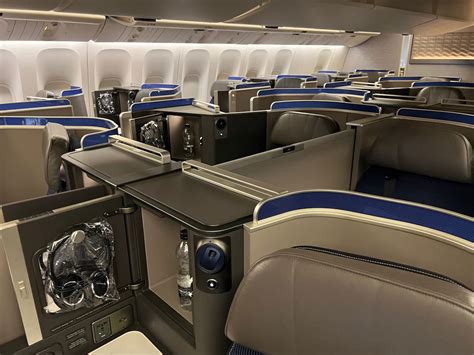
Routes like Newark to London Heathrow, Zürich, and Frankfurt are ideal candidates for this configuration. Even more surprising is the deployment on niche destinations like Marrakesh, where premium demand remains robust despite lower overall passenger volume.
The result is a network that prioritizes quality of revenue over quantity of passengers—a subtle but powerful shift in airline economics.
Perfect for “Boutique” Long-Haul Routes
Not every international route can support a large widebody aircraft. Many destinations fall into a category often described as “thin” or “boutique” markets—routes with steady but limited demand.
Examples include:
- Split, Croatia
- Bari, Italy
- Palermo, Italy
These destinations are highly attractive but lack the passenger volume required to sustain larger aircraft like the 787 or 777. The 767 fills this gap perfectly.
Its smaller capacity allows United to operate these routes profitably, opening up new markets without the risk of overextending capacity. This capability is a significant competitive advantage, enabling the airline to expand its network in ways that larger aircraft simply cannot support.
In many cases, the 767 is not just the best option—it is the only viable option.
Fleet Composition and Operational Reality
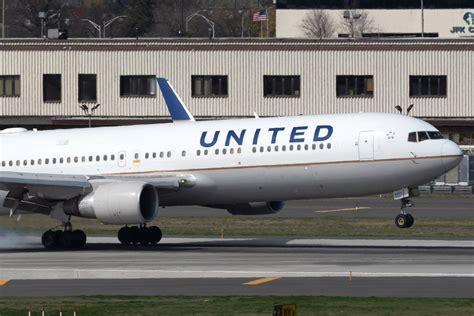
As of 2026, United operates 53 Boeing 767 aircraft, consisting of:
- 37 Boeing 767-300ERs
- 16 Boeing 767-400ERs
The fleet has an average age of approximately 28.5 years, with some aircraft exceeding 35 years in service. Despite this, the fleet remains fully integrated into United’s long-haul operations.
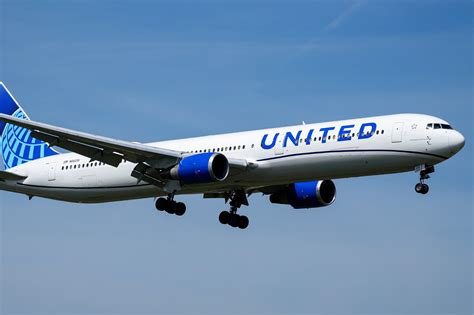
The 767-400ER, inherited from Continental Airlines, offers higher capacity and is often deployed on routes requiring a balance between size and efficiency. Meanwhile, the 767-300ER provides flexibility, particularly in its premium-heavy configuration.
This diversity within the sub-fleet allows United to match aircraft type to route characteristics with precision, maximizing both efficiency and profitability.
Beyond Europe: Versatility Across the Network
While the 767 is primarily associated with transatlantic routes, its role extends far beyond Europe. The aircraft is also deployed on:
- Long-haul domestic routes to Hawaii
- Flights to Brazil from Houston and Washington Dulles
- Services to San Juan from Newark
These routes highlight the aircraft’s versatility. It is capable of operating long distances while maintaining the right balance of capacity and cost.
The 767’s ability to serve both international and domestic long-haul markets reinforces its value as a multi-purpose asset within United’s fleet.
Why the Boeing 787 Isn’t a Perfect Replacement
It might seem logical to assume that the Boeing 787 Dreamliner will seamlessly replace the 767. In reality, the transition is far more complex.
The 787 is larger, more efficient, and technologically superior—but it is not a one-to-one replacement. On many routes, especially those with limited demand, the 787’s size becomes a disadvantage.
Operating a larger aircraft on a thin route can dilute profitability, even if the aircraft itself is more efficient. This is why United is exploring alternatives like the Airbus A321XLR, which offers long-range capability with significantly lower capacity.
The future fleet will likely be a combination of:
- Boeing 787s for high-demand routes
- A321XLRs for niche markets
Until that transition is complete, the 767 remains the bridge between two strategic eras.
The Bigger Picture: A Fleet in Transition
United Airlines’ long-haul fleet tells a story of gradual evolution rather than abrupt change. With over 1,100 aircraft in total and nearly 300 in long-haul service, the airline operates one of the most complex fleets in the world.
A significant portion of this fleet—including the 757 and 777-200—also exceeds 20 years in age. This underscores a broader reality: fleet renewal is a long-term process, not a quick upgrade.
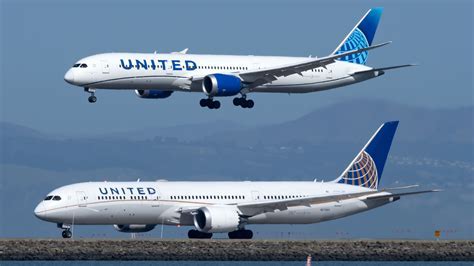
The airline’s future clearly revolves around the 787 family, yet uncertainties remain. The long-delayed Airbus A350 order, repeatedly modified and postponed, adds another layer of complexity. As of now, it appears increasingly unlikely that the A350 will play a meaningful role in United’s fleet.
In this environment, the 767 provides something invaluable: stability.
The Real Reason United Won’t Let Go
Strip away the technical details, and the reasoning becomes clear. United Airlines is holding onto the Boeing 767 because it delivers a rare combination of advantages:
- Low ownership costs
- High revenue potential in premium markets
- Flexibility across a wide range of routes
- Strategic alignment with a frequency-driven network
The aircraft may be old, but it is far from obsolete. In fact, it is uniquely suited to the airline’s current needs.
Retiring the 767 prematurely would create gaps in the network, reduce flexibility, and potentially weaken profitability. Until new aircraft arrive in sufficient numbers—and alternative solutions prove themselves—the 767 remains exactly where it needs to be: in active service.
There is a quiet pragmatism in this decision. While the aviation world often celebrates innovation, United’s approach is a reminder that smart strategy sometimes means sticking with what already works.