The Boeing 737 is one of the most remarkable success stories in aviation history. More than half a century after its introduction, the aircraft remains a dominant force in global commercial aviation, carrying millions of passengers every year across virtually every continent. What makes the 737 particularly fascinating is not merely its longevity, but the fact that several of its most important design features have remained fundamentally unchanged since the first Boeing 737-100 entered service in 1967.
In an industry where technological advancement is relentless and aircraft generations often introduce revolutionary changes, the Boeing 737 stands apart as a masterclass in evolutionary engineering. Beneath the sophisticated avionics, advanced flight management systems, digital displays, and modern engines of today’s Boeing 737 MAX lies a structural philosophy deeply rooted in the mid-1960s. Many of the aircraft’s defining characteristics continue to reflect decisions made by engineers who designed the original jet during an era when commercial aviation was still transitioning into the jet age.
The persistence of these legacy design elements is not accidental. Boeing deliberately preserved them to maintain fleet commonality, reduce training costs, and ensure operational familiarity for airlines around the world. Yet these same design choices have also created engineering challenges as the aircraft has been adapted repeatedly to meet modern efficiency, environmental, and regulatory requirements.
The result is an aircraft that simultaneously represents the future and the past—a modern airliner carrying the DNA of an engineering philosophy conceived nearly sixty years ago.
The most significant example of this continuity is the Boeing 737’s fuselage cross-section.
For decades, passengers boarding a 737 have stepped into a cabin whose basic dimensions trace their origins to an entirely different generation of aircraft. Rather than creating an all-new fuselage for the original 737 program, Boeing chose to inherit major structural dimensions from the Boeing 707 and Boeing 727. This decision dramatically reduced development costs and accelerated production because the company could reuse existing tooling, manufacturing techniques, and structural concepts.
The fuselage width established during the 1960s remains one of the defining characteristics of every 737 flying today. Despite countless upgrades and improvements, a modern Boeing 737 MAX still utilizes the same fundamental 148-inch fuselage width established during the aircraft’s earliest development phase.
This decision delivered enormous advantages at the time. Airlines already operating Boeing jetliners found the new aircraft familiar, while maintenance personnel benefited from structural commonality across multiple Boeing models. Pilots transitioning between aircraft families encountered cockpit layouts and visibility characteristics that felt familiar compared to other contemporary aircraft.
The strategy also allowed Boeing to introduce six-abreast seating into a relatively compact narrow-body aircraft. During an era when many regional airliners offered fewer seats per row, the 737 delivered higher passenger capacity while maintaining operational flexibility.

Even today, traces of the original design remain visible in subtle ways. The distinctive cockpit window geometry, nose contours, and forward fuselage architecture still reflect engineering decisions made during the Johnson administration. Although the famous eyebrow windows eventually disappeared from production aircraft, much of the surrounding structural framework remains rooted in the original design.
However, what was once considered spacious has become comparatively narrow by modern standards. Competing aircraft developed decades later benefited from clean-sheet designs that prioritized passenger comfort and cabin flexibility. The Airbus A320 family, for example, features a wider fuselage that many travelers perceive as roomier.
Yet Boeing repeatedly concluded that the benefits of maintaining commonality outweighed the costs of redesigning the fuselage. Altering the cross-section would have triggered massive manufacturing changes, extensive certification efforts, and the loss of compatibility that had become one of the aircraft’s greatest commercial strengths.
Perhaps the most visually distinctive unchanged feature is hidden beneath the aircraft.
Unlike most modern commercial jets, the Boeing 737 flies with its main landing gear wheels partially exposed after retraction. Observant passengers seated near the wings can often spot this unusual characteristic during flight. While aircraft such as the Airbus A320, Boeing 787, and Airbus A350 conceal their landing gear behind large doors, the 737 leaves portions of its wheels visible.
This feature dates directly back to the original 1967 design philosophy.
Engineers sought simplicity, reliability, and low maintenance requirements. The aircraft was intended to operate from smaller airports where sophisticated maintenance facilities might not always be available. By eliminating large landing gear doors and the associated mechanical systems, Boeing reduced aircraft weight, simplified maintenance procedures, and removed potential failure points.
The design represented a practical engineering compromise. While exposed wheels generate slightly more drag than fully enclosed gear bays, Boeing mitigated these aerodynamic penalties through streamlined wheel covers and carefully engineered seals surrounding the landing gear openings.
The result was a system that proved remarkably reliable throughout decades of service.
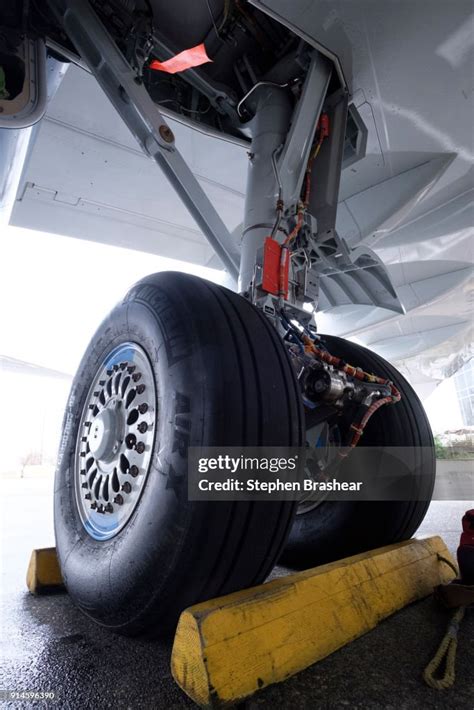
This seemingly minor design choice also contributed to another defining characteristic of the aircraft: its exceptionally low stance.
The Boeing 737 sits noticeably closer to the ground than many competing airliners. During the 1960s, this offered significant operational advantages. Ground crews could load baggage, perform inspections, and access critical systems without relying heavily on specialized airport equipment.
For airlines serving remote destinations and underdeveloped airports, the low-slung design translated into faster turnarounds and reduced infrastructure requirements. These benefits helped establish the 737 as an attractive option for operators around the world.
Yet the advantages of the original configuration eventually evolved into one of Boeing’s greatest engineering constraints.
As turbofan engines became larger and more fuel-efficient, ground clearance emerged as a growing challenge. Modern high-bypass engines require significantly larger fan diameters than the powerplants installed on early 737 variants. Because the aircraft sat so close to the ground, engineers had limited space available beneath the wings.
Rather than redesigning the entire landing gear architecture, Boeing pursued increasingly creative solutions.
The most recognizable outcome was the flattened lower section of the engine nacelles introduced on later generations. Instead of perfectly circular engine housings, many modern 737 variants feature nacelles with distinctly flattened bottoms. This unusual appearance is not a stylistic decision but rather a direct consequence of preserving the original landing gear geometry.
As newer generations arrived, Boeing moved engines higher and farther forward on the wing to create additional clearance. These modifications allowed the aircraft to accommodate more efficient engines while retaining the fundamental architecture established decades earlier.
The landing gear therefore represents far more than a structural component. It serves as a physical reminder of how a decision made in the 1960s continues to influence engineering choices in the 2020s.
The Boeing 737’s flight control philosophy provides another remarkable example of continuity.
Modern aviation increasingly relies on sophisticated computer systems to interpret pilot inputs and manage aircraft behavior. Many contemporary airliners utilize fly-by-wire technology, replacing direct mechanical linkages with electronic signals and computer-controlled flight surfaces.
The Boeing 737 took a different path.
While modern variants incorporate extensive digital systems and advanced automation, the aircraft continues to rely on a fundamentally mechanical flight control architecture supported by hydraulic power assistance. When pilots move the control yoke, their inputs travel through a network of cables and mechanisms connected to hydraulic actuators.
This creates a direct physical relationship between pilot and aircraft.
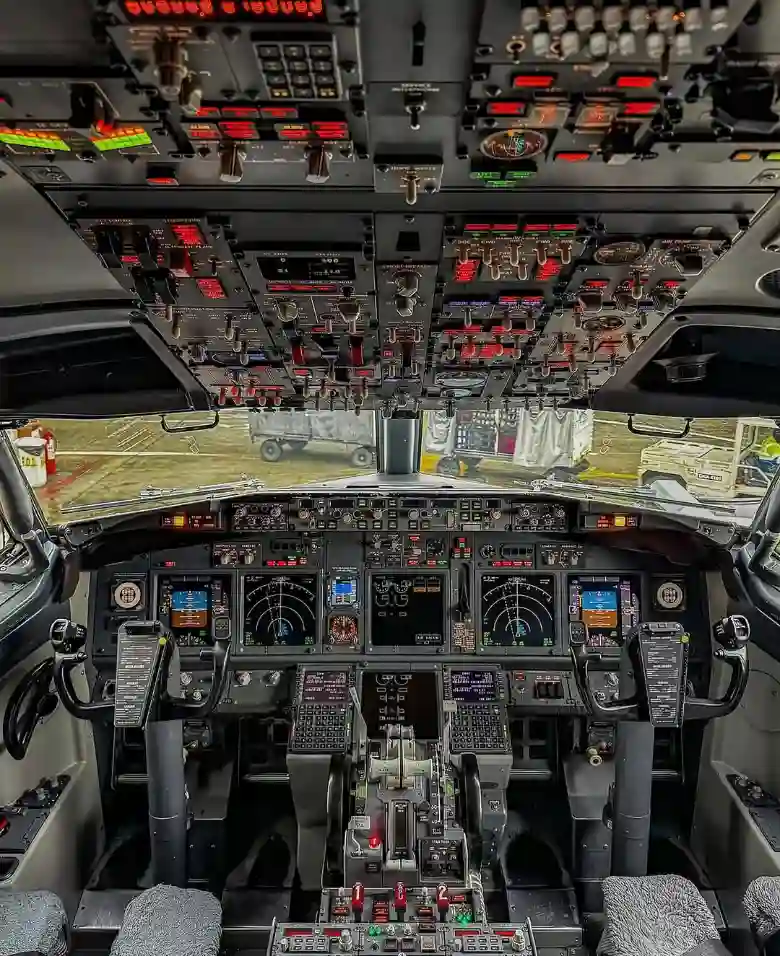
Advocates of the system often describe the experience as more tactile and intuitive than purely electronic alternatives. Pilots receive physical feedback that reflects aerodynamic forces acting on the aircraft, preserving a traditional flying experience increasingly rare in modern aviation.
Maintaining this philosophy across generations offered substantial benefits for Boeing and its airline customers. Pilots transitioning between different 737 variants encountered familiar handling characteristics, reducing training complexity and preserving fleet flexibility.
The strategy aligned perfectly with Boeing’s long-standing emphasis on continuity. Rather than forcing operators to adapt to entirely new control philosophies, the company evolved the aircraft while preserving its fundamental flying qualities.
However, this approach also imposed limitations.
Fly-by-wire aircraft can integrate sophisticated envelope protection systems that prevent pilots from inadvertently exceeding operational limits. They can optimize control surface movements, reduce pilot workload, and enhance efficiency through software-driven refinements.
Integrating similar capabilities into a largely mechanical architecture requires significantly greater engineering complexity. Modern 737 variants therefore represent a delicate balance between traditional mechanical systems and advanced digital augmentation technologies.
Few features illustrate this philosophy more dramatically than the famous manual trim wheel.
Located beside the pilots’ seats, the trim wheel remains one of the most iconic elements of the Boeing 737 cockpit. While many modern aircraft rely heavily on electronic trim systems, the 737 retains a large mechanical wheel connected directly to the stabilizer trim mechanism.
The wheel serves as a crucial backup system, allowing pilots to manually adjust aircraft trim if automated or electrical systems become unavailable.
Its operation remains fundamentally similar to the mechanism installed in the earliest 737s.
The trim wheel provides more than redundancy. It also offers immediate visual and auditory awareness of aircraft behavior. When trim adjustments occur, pilots can see and hear the wheel moving, creating an additional layer of situational awareness that purely electronic systems often lack.
In emergency situations, pilots can physically crank the wheel to reposition the stabilizer. The process can require considerable effort under certain conditions, but it preserves a direct mechanical pathway between crew and aircraft.

For many aviators, the trim wheel symbolizes the broader philosophy underlying the entire 737 program. It represents a belief that pilots should retain direct access to fundamental flight controls regardless of automation levels or system complexity.
This philosophy has helped shape the aircraft’s identity across generations.
The cumulative effect of these unchanged features reveals a broader truth about the Boeing 737’s extraordinary success.
Rather than repeatedly reinventing the aircraft, Boeing pursued a strategy of incremental evolution. Each generation introduced improvements in performance, efficiency, avionics, and passenger experience while preserving enough continuity to protect the value of existing fleets.
Airlines embraced this approach because it minimized disruption. Pilots required less retraining, maintenance organizations leveraged existing expertise, and operators could integrate new aircraft without fundamentally restructuring their operations.
Few commercial products in any industry have achieved such sustained continuity while remaining commercially relevant.
Yet every advantage carries a corresponding tradeoff.
As the aviation industry advances toward the next generation of narrow-body aircraft, the physical limitations of the original design become increasingly apparent. The fuselage width, landing gear geometry, engine installation constraints, and mechanical control architecture all impose boundaries on future development.
Many industry observers believe the Boeing 737 MAX represents the final major evolution of the original airframe. The platform has been refined, optimized, and modernized to an extraordinary degree, but the opportunities for additional transformation are becoming increasingly limited.
Future Boeing narrow-body aircraft will likely adopt wider cabins, advanced fly-by-wire systems, taller landing gear, and entirely new structural architectures designed specifically for emerging propulsion technologies and efficiency requirements.
When that successor eventually enters service, it will mark the end of one of aviation’s most remarkable engineering journeys.
Until then, every Boeing 737 departing a runway anywhere in the world carries with it a collection of design decisions made nearly six decades ago. Its fuselage, landing gear philosophy, mechanical flight controls, low stance, and manual trim systems remain living artifacts from an earlier era of aerospace engineering.
Far from being outdated relics, these features demonstrate the extraordinary durability of sound engineering principles. They helped transform the Boeing 737 into one of the most successful commercial aircraft ever built, proving that sometimes the most powerful innovation is not constant reinvention, but the ability to evolve a fundamentally excellent design across generations.