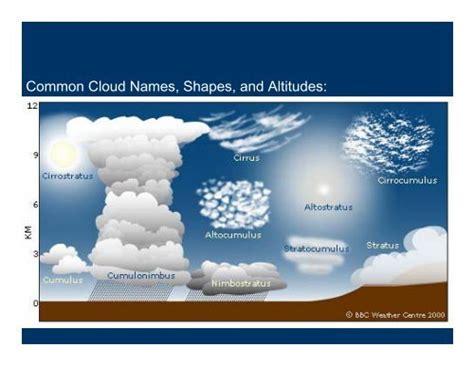
Understanding cloud ceilings is critical to safe aviation, especially for student pilots and those navigating under Visual Flight Rules (VFR). Unlike everyday weather terminology, the concept of a cloud ceiling plays a significant role in how a pilot perceives and interacts with the sky. It represents not just visibility but operational feasibility. In meteorological terms, a cloud ceiling is defined as the height of the lowest cloud layer that covers more than half of the sky, measured above ground level (AGL). This layer must be classified as broken (BKN) or overcast (OVC) to qualify as a ceiling. Anything below these thresholds, such as scattered (SCT) or few clouds (FEW), does not represent a formal ceiling, despite possibly impacting visibility.
Understanding and correctly interpreting ceilings becomes a matter of flight safety, especially when cloud cover begins to obscure critical airspace, such as the traffic pattern altitude. For VFR pilots, these reports indicate whether a flight is feasible or if it must be postponed due to reduced clearance.
How Cloud Ceilings Are Measured and Reported
To assess ceiling data accurately, aviation professionals and meteorological systems rely on a combination of instrumental and observational techniques:
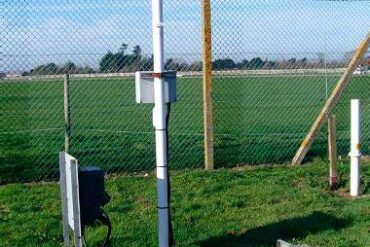
- Laser Ceilometers: These high-precision tools emit laser beams vertically. When the beam hits a cloud layer, part of the light scatters back to the sensor. By measuring the time delay, the device computes the cloud base altitude.
- Ceiling Balloons: Though older and less common today, these helium-filled balloons ascend at a constant rate. Observers track them visually to estimate the height at which they disappear into the clouds.
- Pilot Reports (PIREPs): Real-time data from airborne pilots is invaluable. These observations capture cloud type, altitude, and even turbulence or icing conditions, feeding this data to nearby aircraft and ATC.
- Optical Drum Ceilometers: Utilizing focused light and rotating mirrors, these devices estimate the cloud height over a wide area.
- Human Observers: Trained meteorologists still play a role, especially in complex or ambiguous cloud formations. Although subjective, these estimates are grounded in years of pattern recognition and climatological knowledge.
Each method has strengths, but ceilometers—especially laser-based—are considered the gold standard for automated, continuous cloud height monitoring.
Cloud Ceiling vs. Cloud Base: What’s the Difference?
At first glance, cloud ceiling and cloud base may seem interchangeable, as both refer to cloud altitude. However, the distinction lies in coverage and context:
- Cloud Base: The lowest visible portion of any cloud layer observed from the surface.
- Cloud Ceiling: The base of the lowest cloud layer that covers more than 5/8ths of the sky (i.e., BKN or OVC). This definition filters out sparse cloud layers from regulatory significance.
For VFR pilots, this difference is crucial. A sky with scattered clouds at 1,000 feet may not have a ceiling, but one with broken coverage at that altitude most certainly does—and that ceiling may restrict flight.
How to Read Cloud Ceilings in METAR Reports
METARs (Meteorological Aerodrome Reports) are the primary source of aviation weather reporting. These concise statements use coded language to convey real-time weather, including ceilings. Consider the following example:
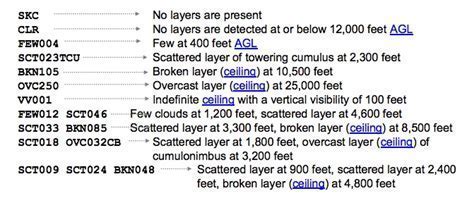
METAR: KIAH 152333Z 27008KT 3SM RA BR FEW006 BKN013 OVC025 18/17 A3013 RMK AO2 P0002 T01780167
From this, we can extract:
- FEW006: Few clouds at 600 feet AGL (not a ceiling)
- BKN013: Broken clouds at 1,300 feet AGL (lowest ceiling)
- OVC025: Overcast deck at 2,500 feet AGL
Thus, the ceiling for this METAR is 1,300 feet AGL, based on the lowest BKN or OVC layer.
Cloud Ceilings in Terminal Aerodrome Forecasts (TAFs)
TAFs offer forecasted weather conditions over a 24–30-hour period. Unlike METARs, which are real-time, TAFs predict ceiling trends, aiding preflight decision-making. Let’s examine a portion of a TAF:
TAF Segment: FM161000 35007KT 6SM BR VCSH BKN009 BKN015
This translates to:
- From 1000 UTC, expect broken clouds at 900 and 1,500 feet AGL
- Ceiling: 900 feet AGL (lowest broken layer)
TAFs not only show ceilings but also highlight their evolution, which is critical for route planning under VFR or IFR regulations.
Ceilings and VFR Minimums: Regulatory Implications
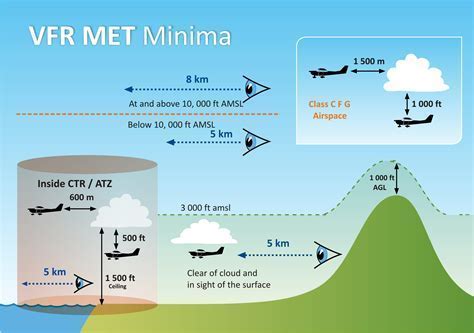
Cloud ceilings directly influence whether a flight may legally operate under VFR. Per FAA guidelines, basic VFR minimums require:
- Day VFR (Class G): 1,000 feet ceiling and 3 miles visibility
- Night VFR (Class G): 1,000 feet ceiling and 5 miles visibility
When the ceiling drops below these thresholds, Instrument Flight Rules (IFR) must be filed, assuming the pilot is rated and the aircraft equipped. In marginal conditions, a cloud ceiling just above 1,000 feet may tempt pilots, but it allows little buffer for error.
Pilots must exercise caution, especially when terrain or controlled airspace elevates the minimum required altitudes. Low ceilings can also impact:
- Departure and arrival procedures
- Holding pattern altitudes
- Minimum vectoring altitudes (MVA)
Terrain Awareness and Visual References
Pilots often use terrain-based references to visually estimate cloud ceilings. For instance, if a known hill or tower at 1,200 feet is barely visible due to cloud cover, the ceiling is approximately that height. While useful, these are rough estimations and should always be verified against METAR or TAF data.
In mountainous regions, cloud layers hugging ridges present significant dangers. Winds may force clouds into valleys, reducing visibility and obscuring escape routes. Flying in such environments demands accurate forecasting, or better, IFR flight planning.
Ceilings in IFR vs. VFR Decision-Making
Even for IFR-certified pilots, low ceilings can complicate approaches. Most approach plates dictate minimums, often called Decision Altitude (DA) or Minimum Descent Altitude (MDA). If the ceiling prevents visual contact with the runway at these altitudes, a missed approach is mandatory.
VFR pilots, on the other hand, must weigh ceilings against airspace limitations and personal proficiency. Many opt for conservative personal minimums, e.g., flying only when ceilings exceed 3,000 feet AGL.
Moreover, unexpected ceiling changes—due to localized fog, rapid moisture influx, or mechanical lift—can trap VFR aircraft above the clouds, forcing emergency diversions or dangerous scud running.
Advanced Ceiling Awareness: Technology and Training
Modern tools such as ForeFlight, Garmin Pilot, and ADS-B weather overlays provide real-time and forecasted ceiling depictions. These graphical interfaces help pilots visualize trends, spot gaps in cloud cover, and plan safer routes.
Equally important is training. Pilots must routinely practice reading weather charts, interpreting METARs and TAFs, and correlating what they read with what they see. Flight instructors emphasize these skills from day one, embedding weather literacy into the core of pilot culture.
The Importance of Cloud Ceilings in Preflight Briefings
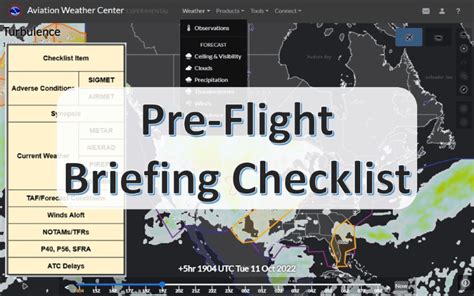
Every preflight briefing should include:
- Current and forecasted ceilings at departure and destination
- Ceilings along the en route corridor
- Trends indicating possible improvement or deterioration
- Alternate airport conditions and diversion options
Low ceilings can delay takeoffs, force route detours, or alter fuel planning. Planning for contingencies—extra fuel, updated charts, alternates—is standard protocol when ceilings hover near VFR minimums.
Conclusion: A Sky-High Priority in Flight Safety
Cloud ceilings may appear as abstract meteorological data on a screen, but for pilots, they represent operational limits, regulatory thresholds, and life-or-death decisions. Whether visualizing mist clinging to hillsides or interpreting complex forecasts, understanding ceilings ensures we respect the sky’s boundaries.
This respect forms the foundation of safe aviation. As flight training advances and cockpit technology evolves, one principle remains: the atmosphere tells us everything—we only need to listen.