The Boeing 737-700 occupies a unique place in aviation history. While it rarely grabs headlines like the latest ultra-long-haul widebody or the newest generation of fuel-efficient narrowbodies, its influence runs deep within airline fleet planning. Introduced as the launch member of the Boeing 737 Next-Generation (NG) family, the aircraft quietly redefined what airlines expected from a short- and medium-haul jet. Even in 2026, long after the first aircraft entered service, the operational logic behind the -700 continues to guide how airlines design networks, train pilots, and allocate aircraft across routes.
The enduring relevance of the 737-700 concept is not simply a matter of nostalgia. Instead, it reflects a design philosophy that combined operational simplicity, powerful performance margins, and remarkable versatility in a single airframe. Airlines discovered that this balance allowed them to deploy one aircraft type across a wide range of missions without sacrificing efficiency. The result was a narrowbody jet that could handle regional shuttle flights in the morning and longer transcontinental sectors in the afternoon, all while maintaining industry-leading reliability.
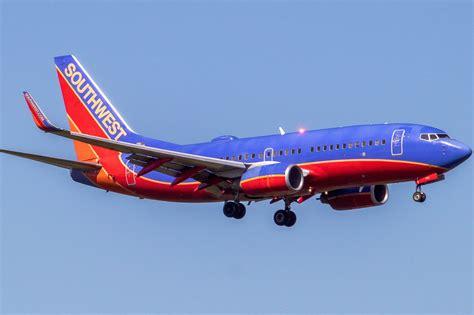
More importantly, the -700 became the architectural blueprint for modern low-cost carrier operations. Airlines such as Southwest Airlines demonstrated that by centering their fleet strategy around this highly adaptable aircraft, they could streamline training, maintenance, scheduling, and route planning. The ripple effects of that philosophy now extend far beyond the United States, influencing carriers from Europe to Asia and shaping the development of newer aircraft generations.
The Aircraft That Redefined the Boeing 737 Platform
When Boeing launched the 737 Next-Generation program in the mid-1990s, the goal was far more ambitious than simply modernizing the aging 737 Classic series. The manufacturer needed to respond to the rapidly expanding capabilities of the Airbus A320 family while preserving the operational familiarity airlines loved about the 737 platform. The 737-700 became the spearhead of this transformation.
Replacing the widely used 737-300, the -700 delivered dramatic improvements in both range and aerodynamic efficiency. Engineers introduced an entirely redesigned wing that increased surface area by roughly 25 percent, allowing the aircraft to carry more fuel while generating greater lift. This redesign alone expanded the jet’s mission capability significantly, enabling airlines to operate routes that previously required larger aircraft.
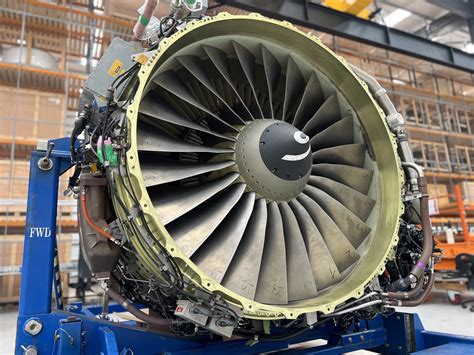
The CFM56-7B engines further elevated performance. These high-bypass turbofans offered greater thrust while maintaining the excellent fuel economy that operators demanded. Paired with the new wing structure, the engines allowed the aircraft to travel approximately 50 percent farther than its predecessor while cruising at higher speeds.
Airlines quickly realized that the aircraft could bridge a critical gap between regional jets and larger narrowbodies. Routes that once struggled to fill larger aircraft could now be served profitably with the compact yet powerful 737-700, allowing airlines to open so-called “long-thin” routes that connected secondary cities without passing through major hubs.
Glass Cockpits and the Rise of Fleet Commonality
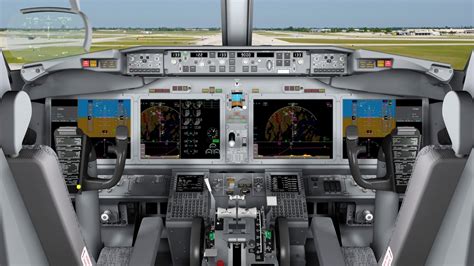
Another quiet revolution brought by the 737-700 was its modern cockpit architecture. Earlier generations of the 737 relied heavily on analog instruments and mechanical gauges. The Next-Generation family introduced large LCD flight displays, digital flight management systems, and integrated avionics, marking a major technological leap for narrowbody aircraft.
For airlines, the real value of this upgrade was pilot commonality. Boeing designed the cockpit so that pilots could easily transition between the 737-700, 737-800, and 737-900 with minimal additional training. This philosophy significantly reduced training costs and simplified crew scheduling.
Such standardization became a cornerstone of airline efficiency. Rather than managing multiple pilot pools for different aircraft types, airlines could operate a single fleet ecosystem where pilots moved seamlessly between aircraft variants. Maintenance crews benefited as well, since most systems remained consistent across the entire 737 NG lineup.
This level of interchangeability is widely credited with helping airlines scale operations rapidly. Once an airline invested in the 737-700 platform, expanding into larger variants required far less operational disruption than introducing a completely new aircraft family.
High-Altitude Performance That Changed Operational Economics
One of the most defining technical achievements of the 737-700 is its certified service ceiling of 41,000 feet. While this specification may appear modest on paper, it had profound implications for airline operations.
Flying at higher altitudes provides multiple advantages. Air density decreases significantly, which reduces aerodynamic drag. With less resistance acting on the aircraft, engines require less fuel to maintain cruise speed, improving overall efficiency. For airlines operating thousands of flights each year, these savings accumulate into substantial cost reductions.
Higher cruising altitudes also allow aircraft to avoid congested flight levels typically occupied by older jets and regional aircraft. This opens opportunities for more direct routing and smoother air, improving passenger comfort while reducing flight times.
During early demonstration flights in 1997, the aircraft showcased remarkable climb performance, reaching altitude levels rarely achieved by aircraft in its size category. This capability made the jet particularly attractive to high-frequency carriers operating within crowded airspaces such as the United States Northeast Corridor.

The Southwest Airlines Effect
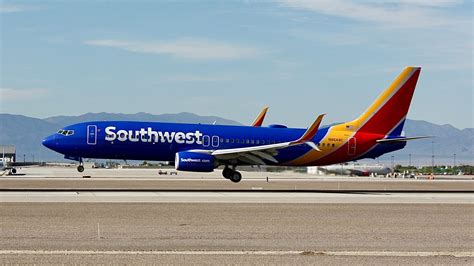
Any discussion of the 737-700’s legacy inevitably leads to Southwest Airlines, the carrier that arguably shaped the aircraft’s destiny. Southwest had already built its identity around operating an all-737 fleet, but the introduction of the -700 elevated this strategy to a new level.
For nearly two decades, the 737-700 served as the backbone of Southwest’s fleet, allowing the airline to scale its network while maintaining extraordinary operational consistency. With every aircraft sharing similar cockpit systems, maintenance procedures, and spare parts inventories, the airline dramatically reduced complexity across its entire organization.
The benefits extended far beyond the maintenance hangar. Southwest became famous for its rapid aircraft turnarounds, often completing gate operations in under an hour. This efficiency allowed aircraft to spend more time flying and less time sitting idle at airports.
The strategy worked so well that it became a global template for low-cost carrier operations. Airlines around the world studied Southwest’s model, recognizing that fleet simplicity could translate directly into lower operating costs and greater schedule reliability.
Designed for the World’s Toughest Airports
While many narrowbody aircraft are optimized for typical hub-and-spoke airports, the 737-700 was built with performance margins that allowed it to thrive in more demanding environments. Its high thrust-to-weight ratio gives the aircraft excellent short-field capability, enabling operations from runways that might be unsuitable for larger jets.
This strength becomes particularly important in “hot and high” airports, where thin air reduces engine thrust and wing lift. Cities located at high elevations or in extreme climates often impose severe performance penalties on aircraft. Yet the -700’s robust powerplant allows it to maintain respectable payload levels even under these challenging conditions.
Airlines operating in regions such as the Andes Mountains, western China, and parts of Central Asia have taken advantage of this performance margin. In some cases, the aircraft can depart from shorter runways or climb more aggressively over mountainous terrain than competing aircraft in the same category.
These characteristics make the 737-700 more than just a standard narrowbody. It becomes a strategic enabler, opening routes that might otherwise remain inaccessible to jet service.
Why Airlines Are Extending the Life of the 737-700
In theory, the Boeing 737 MAX 7 was designed to replace the -700 seamlessly. The newer aircraft promises improved fuel efficiency thanks to its LEAP-1B engines, aerodynamic refinements, and advanced winglets. However, certification delays and production challenges have slowed the transition.
As a result, many airlines have found themselves extending the operational life of their 737-700 fleets. Aircraft originally scheduled for retirement are now undergoing engine overhauls, avionics upgrades, and cabin refurbishments to remain competitive.
The situation has unexpectedly highlighted the durability of the airframe. Even after decades of high-cycle service, many aircraft maintain dispatch reliability rates approaching 99 percent, a figure that remains the gold standard in commercial aviation.
For airlines facing uncertain delivery timelines for new aircraft, the -700 has become a valuable stopgap solution that keeps networks running smoothly while the industry waits for next-generation replacements.
A Thriving Second Life in the Global Aviation Market
As large airlines gradually transition toward newer aircraft families, the secondhand market for 737-700s has become increasingly active. Emerging carriers in Southeast Asia, Africa, and South America are acquiring these aircraft to launch or expand their operations.
The appeal is clear. The aircraft offers proven reliability, global maintenance support, and well-understood operating costs. Unlike newer aircraft that may require extensive technical support infrastructure, the -700 benefits from decades of accumulated industry knowledge.
For startup airlines operating on tight budgets, this combination represents a rare opportunity to obtain a capable aircraft without the massive capital investment required for factory-fresh jets.
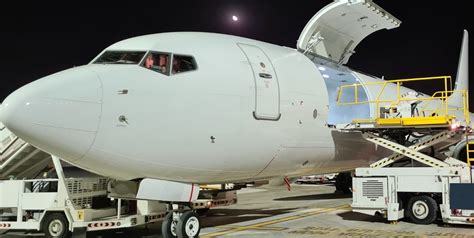
Meanwhile, cargo operators are also discovering the platform’s potential. With the rapid growth of e-commerce logistics, many passenger aircraft are being converted into dedicated freighters through passenger-to-freighter (P2F) conversion programs.
The Benchmark That Still Guides Aircraft Design
Perhaps the most remarkable aspect of the Boeing 737-700 is how its design philosophy continues to influence modern aircraft development. The jet proved that operational simplicity, robust engineering, and broad mission capability could outweigh flashy technological breakthroughs.
Aircraft manufacturers today still measure new narrowbody designs against the efficiency standards established by the -700. Engineers analyze whether new aircraft can match its climb performance, dispatch reliability, and route flexibility before declaring them successful.
In many ways, the aircraft represents the minimum viable product for profitable narrowbody operations. It demonstrated that an airliner does not need to dominate a single category if it can perform consistently across multiple missions.
As aviation moves toward more sustainable propulsion systems and new aerodynamic concepts, the lessons of the 737-700 remain surprisingly relevant. Airlines continue to prioritize fleet commonality, reliability, and versatility, the very principles that defined the aircraft from the moment it first lifted off the runway.
Even as passenger service gradually declines in the coming decade, the legacy of the 737-700 concept will persist in cargo fleets, specialized mission aircraft, and the operational philosophies of airlines worldwide. The aircraft may eventually fade from passenger terminals, but the strategic ideas it introduced will continue shaping fleet planning for years to come.