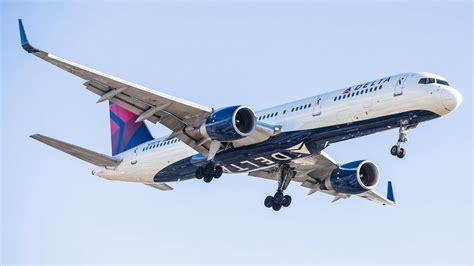
Commercial aviation rarely allows aircraft to remain relevant for more than a few decades. Technology evolves quickly, passenger expectations change, and operating costs constantly push airlines toward newer, more efficient jets. Yet one aircraft continues to defy that pattern: the Boeing 757. First introduced in the early 1980s and officially discontinued in 2004, the narrow-body jet still serves critical roles across the fleets of major American carriers.
Despite the arrival of modern aircraft like the Airbus A321neo, Boeing 737 MAX, and upcoming long-range narrow-body variants, the Boeing 757 remains deeply embedded in airline operations. Carriers such as Delta Air Lines and United Airlines continue to deploy the aircraft on high-demand domestic routes and niche international services. Cargo giants including FedEx Express and UPS Airlines also operate large fleets of the type.
The persistence of the Boeing 757 is not merely a result of slow fleet renewal. Instead, it reflects a unique combination of performance capability, operational versatility, and economic practicality that has proven difficult for newer aircraft to replicate exactly.
By examining the aircraft’s design strengths, operational advantages, and the strategic needs of airlines, it becomes clear why the Boeing 757 still plays a crucial role in modern aviation.

A Narrow-Body Aircraft That Redefined Capability
When Boeing introduced the 757 program, the goal was to replace aging Boeing 727 tri-jets with a more efficient twin-engine aircraft capable of handling medium-haul routes. However, the final design exceeded expectations in several key areas.
The aircraft combined narrow-body economics with wide-body performance characteristics, creating a category of its own. With powerful engines, advanced aerodynamics, and an extended wingspan, the Boeing 757 could operate from relatively short runways while still carrying a significant payload over long distances.
The most common variant, the Boeing 757-200, typically seats between 180 and 235 passengers, depending on the cabin configuration. Airlines often configured it with two or three classes, allowing flexibility between high-density leisure routes and premium business corridors.
The later 757-300 variant expanded capacity even further. With seating for up to 289 passengers, it became one of the highest-capacity narrow-body jets ever produced.
Yet capacity alone does not explain the aircraft’s longevity. The real advantage lies in its performance envelope, which enables airlines to operate routes that fall into a unique gap between smaller single-aisle jets and larger wide-body aircraft.
Exceptional Range and Power
One defining characteristic of the Boeing 757 is its unusually high thrust-to-weight ratio. Engines such as the Rolls-Royce RB211 and Pratt & Whitney PW2000 deliver remarkable power for a narrow-body jet.
This engine capability gives the aircraft several operational advantages:
- Short runway performance, allowing operations at constrained airports
- High climb rates, improving fuel efficiency during ascent
- Long-range capability, enabling transatlantic flights
The 757-200, for example, has a range of roughly 3,900 nautical miles. That range allows airlines to connect secondary North American hubs with destinations across the Atlantic.
This ability has made the aircraft particularly valuable for routes linking cities that cannot support wide-body aircraft but still require transoceanic service.

United Airlines has long used the 757 to serve destinations such as Reykjavik, Tenerife, and smaller European gateways from hubs like Newark Liberty International Airport. These routes rely on the aircraft’s ability to combine long range with moderate capacity.
Few other narrow-body aircraft historically offered the same balance.
The Ideal Aircraft for High-Demand Domestic Routes
While the Boeing 757’s long-range capability receives significant attention, the aircraft is equally valuable on busy domestic corridors within the United States.
Major airlines often deploy the jet on routes connecting large hubs with high-traffic airports, where passenger demand exceeds the capacity of smaller narrow-body aircraft but does not justify a wide-body jet.
Delta Air Lines, one of the largest passenger operators of the Boeing 757, frequently uses the aircraft on domestic services linking major hubs such as:
- Atlanta
- New York JFK
- Detroit
- Los Angeles
- Seattle
These routes require aircraft capable of carrying large passenger loads while maintaining high frequency. The Boeing 757 delivers precisely that balance.
Delta’s fleet alone includes 64 Boeing 757-200 aircraft and 16 757-300 variants, making it the world’s largest passenger operator of the type.
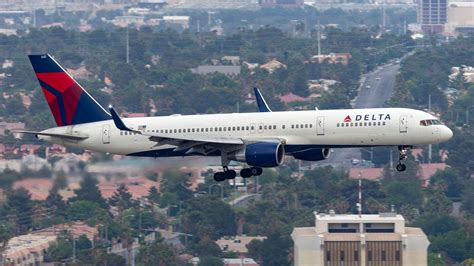
On these routes, the aircraft’s large passenger capacity and strong climb performance help airlines maintain operational efficiency even at busy airports with slot constraints.
In many cases, replacing the 757 with smaller aircraft would require additional flights, increasing costs and airport congestion.
Fleet Commonality With the Boeing 767
Another factor that helped the Boeing 757 remain relevant for decades is its close relationship with the Boeing 767 wide-body aircraft.
When Boeing designed the two jets, the company intentionally created significant cockpit and system commonality. Both aircraft share similar flight decks, avionics, and handling characteristics.
For airlines, this design strategy created substantial operational benefits.
Pilots can transition between the 757 and 767 with minimal additional training, allowing airlines to schedule crews more efficiently. Maintenance teams also benefit from shared systems and components, simplifying logistics and reducing costs.
This synergy encouraged airlines to operate the two aircraft together for many years. Carriers such as Delta Air Lines and United Airlines built large combined fleets of 757s and 767s, using them to cover a wide spectrum of routes.
The result was a flexible fleet structure where narrow-body and wide-body aircraft could operate interchangeably across certain missions.
A Workhorse for the Global Cargo Industry
While passenger airlines receive most of the attention, the cargo industry represents another major reason the Boeing 757 remains active today.
Two of the world’s largest cargo carriers—FedEx Express and UPS Airlines—operate large fleets of the aircraft.
FedEx alone flies approximately 90 Boeing 757 freighters, while UPS operates around 75 examples.
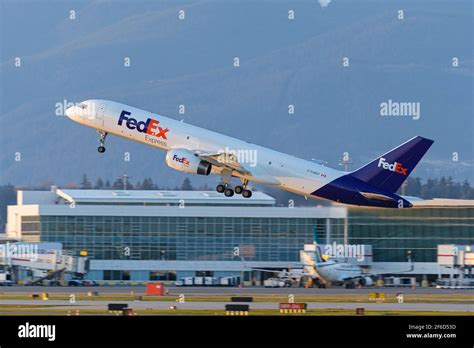
The cargo variant offers several features that make it particularly attractive for freight operations. The aircraft can accommodate 15 cargo container positions and carry a maximum payload of around 86,900 pounds.
This capacity fills an important gap between smaller cargo aircraft and larger wide-body freighters.
For example:
- UPS Boeing 757F – 15 container positions
- Airbus A300-600F – 29 container positions
- Boeing 747-8F – 46 container positions
The 757’s moderate capacity allows cargo operators to serve medium-volume routes efficiently without deploying oversized aircraft.
Interestingly, FedEx introduced the Boeing 757 into its fleet in 2008, four years after Boeing ended production of the aircraft. The company acquired used passenger jets and converted them into freighters, replacing older Boeing 727 aircraft.
Compared with the 727, the 757 offered 36% lower fuel consumption and roughly 20% more cargo capacity, making it a significant operational upgrade.
The Absence of a True Replacement
Perhaps the most important reason the Boeing 757 continues flying today is the lack of a direct modern replacement.
Although aircraft manufacturers have introduced numerous narrow-body jets over the past two decades, few match the exact combination of range, capacity, and runway performance offered by the 757.
For years, Boeing focused on developing the 737 MAX family rather than building a successor to the 757. While the MAX aircraft are efficient, they lack the payload and range needed for certain missions that the 757 handles easily.
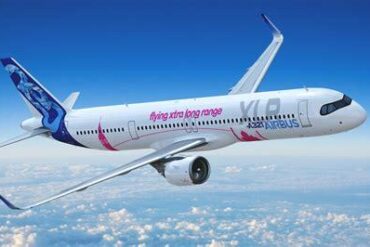
Airbus has come closer with the A321XLR, a long-range narrow-body jet designed specifically to serve routes traditionally flown by the 757.
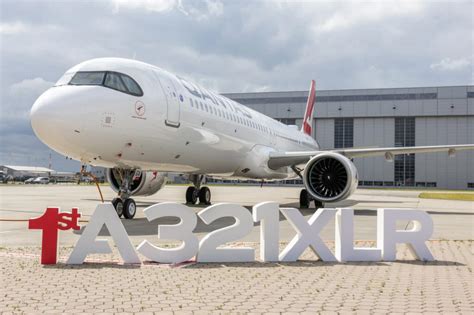
The A321XLR boasts an impressive range of approximately 4,700 nautical miles, significantly exceeding the 757-200’s typical range. However, the aircraft’s additional fuel tanks reduce seating capacity to roughly 206 passengers, depending on configuration.
This means the Airbus jet does not perfectly replicate the 757’s ability to carry larger passenger loads over long distances.
Even so, airlines are increasingly turning to the A321XLR as the closest available alternative.
United Airlines has ordered 50 A321XLR aircraft to gradually replace portions of its aging 757 fleet.
Operational Economics Still Make Sense
Despite its age, the Boeing 757 continues to deliver acceptable economics for airlines that already own the aircraft.
Several factors contribute to this continued viability.
First, most existing 757 aircraft are fully paid off, meaning airlines do not face the high acquisition costs associated with new jets.
Second, the aircraft’s reliability remains strong. Decades of operational experience have given airlines deep knowledge of maintenance requirements and performance characteristics.
Third, the aircraft fills a unique operational niche that newer aircraft sometimes struggle to match.
For example, on routes requiring a combination of high passenger capacity, strong runway performance, and long range, airlines often find that the Boeing 757 still performs competitively.
As long as maintenance costs remain manageable, keeping the aircraft in service can be financially sensible.
Signs of Aging Are Becoming Impossible to Ignore
While the Boeing 757 continues to perform effectively, the aircraft is undeniably showing its age.
Many of the jets currently in service are approaching 25 to 30 years of operation. For example, the average age of United Airlines’ 757-200 fleet exceeds 29 years, while its 757-300 aircraft average more than 23 years.
Older aircraft require increasingly frequent maintenance checks, which can lead to operational disruptions.
At times, multiple aircraft may be temporarily removed from service for inspections or component replacements. Data from fleet tracking sources has shown that a significant portion of some 757 fleets can be parked at any given time for maintenance reasons.
Additionally, passenger expectations have evolved. Newer aircraft offer quieter cabins, larger overhead bins, improved humidity levels, and modern in-flight entertainment systems.
While airlines can retrofit older aircraft with updated interiors, the underlying structure still reflects technology developed decades ago.
The Gradual End of an Iconic Aircraft
Although the Boeing 757 remains in service today, its retirement is steadily approaching.
In the mid-2020s, more than 500 aircraft were still active worldwide, operated by dozens of airlines. By 2026, that number has already declined significantly as carriers begin replacing the type with newer aircraft.
Several airlines have already announced retirement timelines.
United Airlines is expected to phase out its Boeing 757 fleet in the near future as the A321XLR enters service. Other carriers are following similar paths as new aircraft deliveries accelerate.
However, Delta Air Lines plans to keep many of its 757 aircraft flying well into the 2030s, demonstrating the continued value the aircraft provides in certain operational roles.
Cargo operators may extend the aircraft’s life even further. Freight carriers often operate aircraft for decades longer than passenger airlines, especially when conversion costs remain relatively low.
A Legacy of Versatility and Innovation
The enduring presence of the Boeing 757 reflects one of the most successful aircraft designs in commercial aviation history.
With 1,050 aircraft produced, the model bridged the gap between narrow-body and wide-body capabilities in a way few aircraft have matched.
It introduced new standards for fuel efficiency, operational flexibility, and long-range narrow-body travel at a time when such capabilities were rare.
For airlines, the aircraft has served as a reliable workhorse across countless missions—from transcontinental flights within the United States to transatlantic services connecting secondary cities.
Even as newer aircraft gradually replace it, the Boeing 757’s influence remains visible across modern aircraft design.
Its combination of power, range, and versatility reshaped airline route planning and opened new possibilities for global connectivity.
As the remaining aircraft slowly retire from passenger service, the Boeing 757 will leave behind a legacy not simply as a successful jet, but as one of the most innovative and adaptable aircraft ever built.