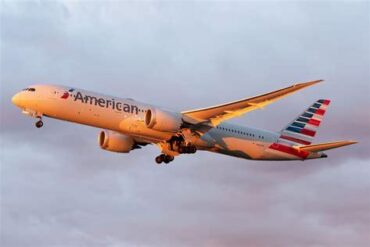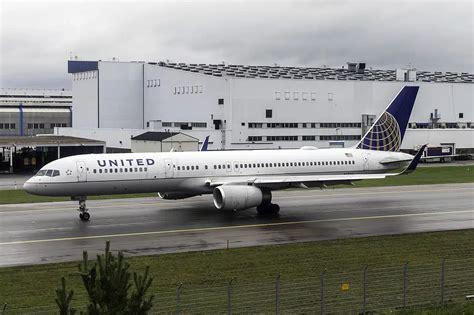
United Airlines is steadily scaling back the long-haul role of its aging Boeing 757-200 fleet, marking another significant shift in the carrier’s international network strategy. While the narrowbody aircraft remains an important part of United’s operations, especially on thinner transatlantic routes, newly published scheduling data for the third quarter of 2026 reveals a notable contraction in usage across several international markets.
According to data from aviation analytics firm Cirium, United will operate 2,763 long-haul Boeing 757 flights during Q3 2026, compared to 3,291 during the same period last year. Using routes longer than 3,000 miles as the benchmark, the decline represents a 16% year-over-year reduction in long-haul 757 activity.
The cuts underline a broader industry transition away from older narrowbody aircraft on intercontinental routes, particularly as airlines continue modernizing fleets with more fuel-efficient widebody and next-generation narrowbody jets.
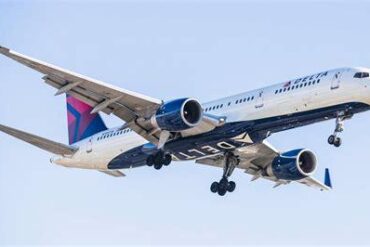
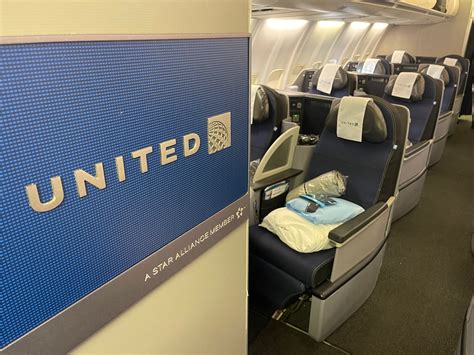
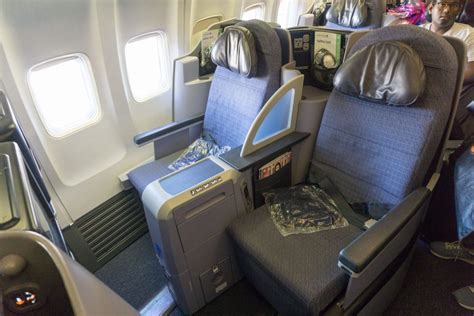
United remains one of the world’s largest Boeing 757 operators. The airline currently maintains a fleet of 40 Boeing 757-200s alongside 21 Boeing 757-300s, according to fleet data from ch-aviation. However, only the 757-200 variant is used on these long-haul sectors. These aircraft are configured with 16 Polaris lie-flat business class seats and 160 economy seats, giving the aircraft a premium-heavy setup optimized for transatlantic missions.
Despite the aircraft’s strong reputation for range and performance, particularly on “long and thin” routes that cannot support larger aircraft, United is gradually reducing its dependence on the type.
After decades of service, the Boeing 757 is increasingly becoming a niche tool rather than a backbone aircraft for international expansion.
Newark Sees The Largest Boeing 757 Route Reductions
The most substantial reductions are concentrated around United’s Newark Liberty International Airport hub, historically the airline’s most important Boeing 757 gateway for Europe-bound operations.
Among the largest cuts is the route between Newark and Edinburgh, which will see 85 fewer rotations during Q3 2026 compared to the previous year. The reduction signals weaker seasonal demand expectations or an ongoing fleet reallocation strategy favoring larger aircraft.
Another major decrease affects the Houston to Lima route, where United has cut 69 rotations, leaving just 23 scheduled services for the quarter. The reduction is especially notable given Lima’s importance as a major South American gateway.
Several other European leisure-focused destinations are also experiencing reduced frequencies. Routes from Newark to Bilbao, Faro, Malaga, and Porto each lost one regular 757 rotation in the upcoming Q3 schedule.
The cuts are not limited to Europe. United’s available seat miles on long-haul 757 operations are also down by approximately 16.5%, slightly outpacing the reduction in total flights. This indicates that the airline is trimming both frequencies and overall capacity simultaneously.
For years, the Boeing 757 occupied a unique space in United’s network strategy. The aircraft’s combination of narrowbody economics and transatlantic capability allowed the carrier to profitably connect secondary European cities with US hubs. Yet rising maintenance costs and increasing competition from newer aircraft are reshaping those economics.
Several Strategic Boeing 757 Routes Remain Untouched
While the overall trend points toward contraction, United is not abandoning the Boeing 757 entirely. In fact, multiple routes have retained identical capacity levels compared to 2025.
From Newark, routes to Dublin, Faro, Lima, and Shannon continue operating with unchanged Boeing 757 schedules. Similarly, United has preserved stable 757 operations between Chicago and Edinburgh, as well as from Washington Dulles to Dublin and Edinburgh.
The aircraft also continues serving important domestic long-haul sectors. United’s flights from Denver to Honolulu and Denver to Lihue remain unchanged, reflecting the 757’s ongoing value on high-demand leisure routes to Hawaii.
Shannon Airport in Ireland continues to maintain particularly close ties with United Airlines. Airport Director Niall Kearns recently emphasized the long-standing importance of United’s transatlantic presence for western Ireland’s economy and tourism industry.
These retained routes demonstrate that the Boeing 757 still fills operational gaps where demand remains too small for larger widebody aircraft yet too important to abandon entirely.
Denver To Kona Emerges As A Rare Growth Market
Amid widespread reductions, one route stands out as a surprising expansion opportunity for the Boeing 757 fleet.
United is significantly increasing service between Denver and Kona, Hawaii, transforming the route into a daily Boeing 757 operation for Q3 2026. The airline plans 92 departures this year, more than doubling the 43 departures operated during the same period in 2025.
The expansion highlights how United still sees strategic value in the aircraft on certain long-range domestic routes. Denver’s high-altitude environment and growing passenger demand to Hawaii make the Boeing 757 particularly useful due to its strong takeoff performance and operational flexibility.
The route also illustrates how the aircraft’s future may increasingly shift toward specialized leisure and domestic missions instead of traditional transatlantic flying.
United Completely Removes Boeing 757 Service From Two International Routes
Two long-haul routes are losing Boeing 757 service entirely during Q3 2026: Newark to Brussels and Newark to Stockholm.
The Stockholm route faces the most severe change, as United will suspend the service altogether during the third quarter.
Brussels, however, will continue receiving United service despite the Boeing 757 withdrawal. Previously, the airline operated two daily Newark-Brussels flights, with one served by a Boeing 757-200 and the other by a Boeing 787-10 Dreamliner.
In Q3 2026, the Dreamliner will assume full responsibility for the route while maintaining daily connectivity between Newark and the Belgian capital.
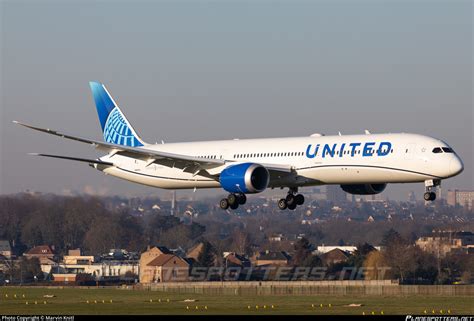
The transition reflects United’s broader fleet modernization strategy as the airline prepares for the eventual retirement of its iconic Boeing 757 fleet. Although the aircraft continues serving select markets effectively, its long-haul footprint is clearly shrinking as newer-generation aircraft gradually take over international operations.