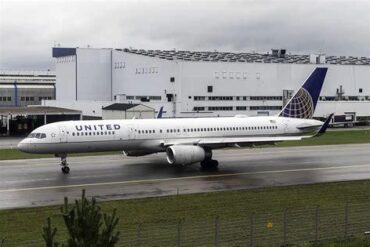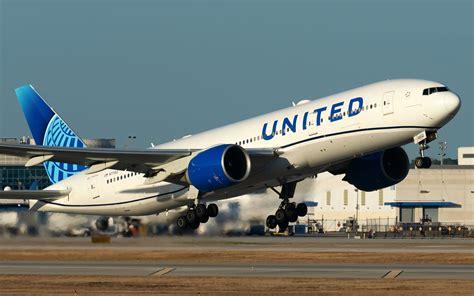
United Airlines is scaling back its Boeing 777 operations in December, marking one of its lightest schedules for the widebody type since 2018. The adjustment reflects a combination of fleet aging, shifting international demand patterns, and increased deployment of newer and more efficient aircraft across its global network.
The airline currently operates 96 Boeing 777s across multiple variants, forming a core component of its long-haul and high-density domestic markets. December’s schedule shows 126 daily 777 movements, a 7% year-over-year reduction according to Cirium Diio data. While far from catastrophic, the decrease reveals how United is rebalancing capacity during a transitional moment in its widebody strategy.
United’s 777-200 and 777-300ER subfleets have become especially complex to manage as their roles diverge. The non-ER 777-200, configured with 364 seats in a dense layout, has experienced the steepest decline in activity. Flights for this variant are down by 14% compared with last December, primarily due to aircraft retirements and seasonal route adjustments.
The non-ER 777-200 is the last of the original 777 generation, and only a small number remain in commercial service worldwide. United still holds 19 frames on the books, though six are currently parked. These aircraft serve as high-capacity workhorses on leisure-heavy routes where volume matters more than premium yield.
Fleet-tracking data shows multiple recent withdrawals: aircraft N777UA and N775UA were flown to Victorville for storage, joining other long-cycled frames such as N214UA and N219UA. United is unlikely to reactivate all of them, especially as newer 787 variants expand their footprint.
Despite their age, the high-density 777-200s remain economically attractive on the right routes. Their paid-off status keeps operating costs low, and those 364 seats help counterbalance softer winter demand cycles. But as December approaches, their schedule tightens more than any other United widebody.
Reduced 777-300ER Usage Reflects Strategic Route Shifts
The 777-300ER, United’s flagship long-haul aircraft and a powerhouse for belly cargo, is also seeing a 7% decline in December activity. This variant has been pulled from several major markets it served last year, including Sydney, Brisbane, and Beijing Capital. These withdrawals are not necessarily permanent but reflect seasonal demand, long-haul cost pressures, and network rebalancing.
One notable change is the reallocation of the 777-300ER to the Newark–Dubai route. The aircraft began flying this sector in March as part of a cooperation agreement with Emirates. The 300ER’s cargo-hauling ability and strong range performance make it well suited for this high-demand international corridor.
Where United’s Domestic 777-200s Will Fly in December
United’s dense-seat 777-200s will operate 18 domestic routes and two international routes in December, only slightly fewer than last year. However, some markets lose the aircraft entirely. Fort Lauderdale and San Diego drop from the schedule, while Orlando receives only a single round-trip on December 1 after a year of daily service.
The most interesting development is the aircraft’s temporary deployment to Las Vegas, a sign that United uses the 364-seat configuration to absorb holiday travel surges. Between December 2 and 17, the carrier rotates the type on Denver and Washington Dulles connections to LAS, using the variant’s large capacity to soak up seasonal demand.
Denver Remains the Power Center for United’s Domestic 777 Operations
With 45% of all non-ER 777 activity, Denver remains the hub most deeply linked to this high-capacity variant. It will see nine routes in December, spanning everything from Honolulu to Cancun to Kona. Unlike other hubs cutting back their 777 service, Denver’s flying on the 364-seat aircraft actually increases by 7% year-over-year.
Chicago O’Hare, once a major center for the type, experiences the sharpest decline. Its use of the domestic 777 drops by 50%, shedding destinations like Fort Lauderdale, Houston Intercontinental, and Orlando. The pattern suggests that United is consolidating these older frames in hubs that can sustain high-density operations without cannibalizing yields.
Why United Is Making These Adjustments Now
December’s schedule highlights several unmistakable trends. The aging 777-200 non-ER fleet is entering its twilight phase as maintenance costs rise and the more efficient 787-9 and 787-10 assume long-haul dominance. The 777-300ER still plays a crucial role, but seasonal shifts and international demand patterns dictate more targeted deployment.
United’s December reductions reflect a broad strategy: trim capacity where the 777 is no longer optimal, redeploy where the aircraft still excels, and gradually prepare for a long-term shift toward next-generation widebodies. The outcome is a smaller but more intentionally structured 777 footprint — one that still supports the holiday surge but avoids unnecessary overcapacity.
The real story behind the cuts is not retreat but reshaping. As the 777 family enters its next chapter, United’s winter schedule provides a clear preview of how its widebody network will evolve in the coming years.