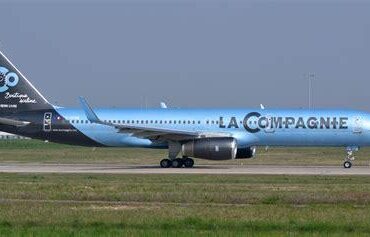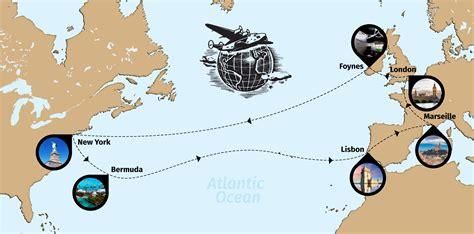
The Boeing 757 occupies a rare and increasingly valuable niche in modern aviation—a narrowbody aircraft capable of stretching across the Atlantic while maintaining economic viability on routes too thin for widebody jets. In 2026, despite the arrival of next-generation aircraft, the 757 continues to serve as a strategic backbone for transatlantic connectivity, particularly for U.S. carriers seeking to link secondary cities without sacrificing profitability or frequency.
What makes the 757 remarkable is not just its longevity, but its adaptability. Designed decades ago, it now performs missions that newer aircraft are only beginning to replicate. Its ability to connect mid-sized American hubs with less congested European destinations has allowed airlines to expand networks in ways that would have been impractical using larger aircraft.
The Strategic Importance of “Long and Thin” Transatlantic Routes
Transatlantic aviation is no longer dominated solely by major city pairs like New York–London or Los Angeles–Paris. Instead, airlines are increasingly targeting “long and thin” routes—city pairs with moderate demand but strong seasonal or niche travel patterns. These routes thrive on efficiency, not volume.
The Boeing 757 is uniquely suited to this environment. With a range approaching 4,000 nautical miles and a seating capacity around 180 passengers, it strikes a balance that neither regional jets nor widebody aircraft can match. It allows airlines to:
- Launch nonstop services between secondary cities
- Avoid the financial risk of underfilled widebodies
- Increase frequency in niche markets
- Optimize seasonal demand without overcapacity
This capability has reshaped transatlantic travel patterns, giving passengers direct access to destinations that once required inconvenient connections.
United Airlines: The Undisputed Leader in 757 Transatlantic Operations
No U.S. airline leverages the Boeing 757 across the Atlantic as extensively as United Airlines. With a fleet of 61 aircraft, United has built an intricate network centered primarily around Newark, complemented by operations from Chicago O’Hare and Washington Dulles.
From Newark, United reaches deep into Europe’s secondary markets—places that are culturally rich, economically vibrant, yet often underserved by large aircraft. Destinations include Porto, Bilbao, Faro, and Malaga, alongside more established cities like Dublin and Edinburgh.
This network is not just broad—it is highly strategic. Newark’s geographic position on the U.S. East Coast minimizes flight distances, allowing the 757 to operate comfortably within its range while maximizing payload efficiency. The result is a dense web of routes that would otherwise struggle to exist.
Among United’s most notable services:
- Washington Dulles to Dublin stands out with over 500 annual flights
- Newark to Porto sees frequent seasonal peaks with multiple daily rotations
- Chicago to Reykjavik and Edinburgh provides vital Midwest-Europe links
Each route reflects a deliberate balance between demand, distance, and aircraft capability.
Route Diversity and Seasonal Precision
United’s transatlantic 757 network is not static—it evolves dynamically with seasonal demand. Summer sees a surge in leisure destinations such as Faro, Malaga, and Reykjavik, while year-round routes like Dublin and Edinburgh maintain consistent business and tourism traffic.
This flexibility is one of the aircraft’s greatest strengths. Airlines can scale operations without committing to oversized capacity, ensuring that load factors remain healthy even in fluctuating markets.

Shorter transatlantic sectors, particularly those under 3,500 miles, are where the 757 truly excels. Flights to Iceland, Ireland, and the UK fall squarely within its optimal performance envelope, allowing airlines to maximize efficiency while maintaining competitive flight times.
Passenger Experience: Narrowbody Aircraft, Widebody Expectations
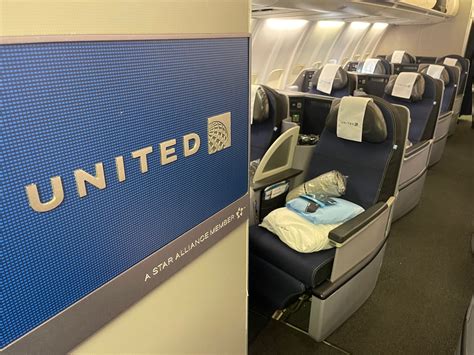
Flying across the Atlantic on a single-aisle aircraft might seem unconventional, yet the onboard experience has evolved significantly. United’s Boeing 757-200s feature Polaris business class cabins with lie-flat seating, bringing long-haul comfort to a narrowbody platform.
The Polaris cabin, arranged in a two-two configuration, offers:
- Fully flat beds for overnight flights
- Direct aisle access for most passengers
- Premium dining and lounge access
For economy passengers, the experience remains consistent with international standards, offering respectable seat pitch and inflight entertainment. Economy Plus provides additional legroom, catering to travelers seeking extra comfort without upgrading to business class.
However, the aircraft’s single-aisle design introduces certain trade-offs. Boarding and deplaning are slower, and inflight service can feel more constrained compared to widebody aircraft. Yet for many passengers, the convenience of a nonstop flight outweighs these limitations.
Delta Air Lines: A Targeted, Seasonal Approach
While United has embraced the 757 as a cornerstone of its transatlantic strategy, Delta Air Lines has taken a more selective approach. Despite operating the world’s largest 757 fleet, Delta limits its transatlantic use of the aircraft to just two seasonal routes—both connecting U.S. hubs to Reykjavik.
These routes, from Minneapolis and Detroit, are carefully timed to align with peak summer travel demand. Unlike United’s Polaris-equipped aircraft, Delta deploys domestically configured 757s on these flights, offering recliner-style premium seating rather than lie-flat beds.
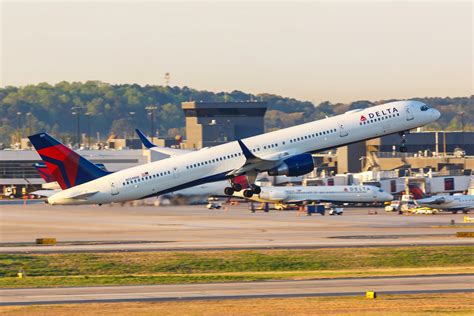
This approach reflects a different philosophy. Rather than building an extensive network, Delta uses the 757 as a tactical tool—deploying it where demand spikes but does not justify larger aircraft.
Interestingly, the absence of lie-flat seats is less of a disadvantage on these routes. Flights to Iceland are relatively short, typically around five to six hours, making premium recliners a viable alternative.
Why the Boeing 757 Still Dominates This Niche
The continued relevance of the Boeing 757 in transatlantic operations is rooted in a combination of engineering excellence and operational practicality. Few aircraft can replicate its unique blend of capabilities.
Key performance advantages include:
- High thrust-to-weight ratio, enabling strong takeoff performance
- Ability to operate from shorter runways
- Efficient fuel burn for its size and range
- Proven reliability across decades of service
Pilots often describe the aircraft as a “sports car” of the skies—a testament to its responsiveness and power.
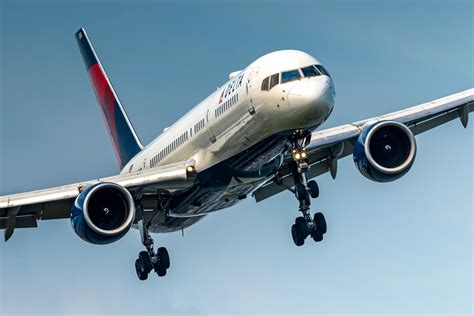
These characteristics allow the 757 to access airports that might be challenging for larger jets, opening up routes that would otherwise remain unserved.
Competition from Next-Generation Aircraft
The aviation industry is gradually shifting toward newer aircraft like the Airbus A321XLR, which promises similar range with improved fuel efficiency and modern cabin features. This raises an inevitable question: can these aircraft fully replace the Boeing 757?
In many cases, the answer is yes—but not immediately. While the A321XLR offers compelling economics, it lacks the proven track record and operational flexibility that airlines have come to rely on with the 757.
Moreover, transitioning fleets involves significant investment, training, and logistical adjustments. As a result, the 757 continues to operate as a bridge between past and future—a reliable workhorse sustaining routes until replacements are fully integrated.
A Shrinking but Influential Global Fleet
Globally, the number of passenger-configured Boeing 757s has declined significantly. Yet within the United States, the aircraft remains a critical asset. United and Delta together account for the majority of active passenger 757s, ensuring that the aircraft continues to play a prominent role in North American aviation.
Beyond passenger service, the 757 has found a second life in cargo operations. Logistics giants rely on its payload capacity and reliability to support express delivery networks, extending the aircraft’s relevance well beyond passenger travel.
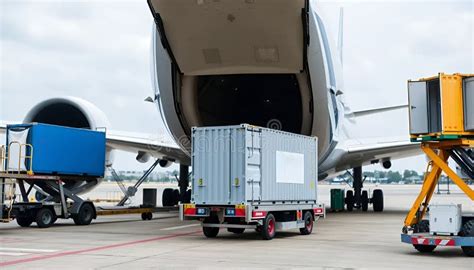
This dual role underscores the aircraft’s versatility. Few airframes transition so seamlessly between passenger and cargo missions while maintaining operational efficiency.
The Future of Transatlantic Narrowbody Flying
The Boeing 757’s legacy is not defined solely by its past achievements, but by the template it has established for future aircraft. It demonstrated that narrowbody jets could cross oceans economically, reshaping airline strategies and passenger expectations alike.
As newer aircraft gradually take over, the principles pioneered by the 757—efficiency, flexibility, and route innovation—will continue to guide airline decision-making. The concept of connecting secondary cities across continents is no longer experimental; it is now an essential component of global aviation.
Yet even as its retirement approaches, the Boeing 757 remains deeply embedded in transatlantic networks. Its presence is a reminder that in aviation, the right aircraft is not always the newest—it is the one that best fits the mission.
Conclusion: The Enduring Relevance of a Classic Jet
The Boeing 757 stands as one of the most strategically important aircraft ever built for transatlantic travel. Its ability to bridge continents while serving underserved markets has made it indispensable for decades.
In 2026, it continues to connect cities that would otherwise remain isolated from nonstop transatlantic service. Whether linking Newark to Porto or Minneapolis to Reykjavik, the 757 proves that innovation is not always about new technology—it is about enduring capability.
As the aviation industry evolves, the Boeing 757’s influence will persist, shaping the next generation of aircraft and the networks they enable. For now, it remains a quiet but powerful force across the Atlantic, carrying passengers efficiently between continents—one long, narrow route at a time.