The debate over cockpit noise between the Boeing 737 and the Airbus A320 has persisted for decades, fueled by pilot anecdotes, engineering realities, and the subtle psychological perception of sound in confined environments. While measurable differences in decibel levels may not always be dramatic—especially at cruising altitude—the perception of noise inside the cockpit tells a far more nuanced story. It is a story shaped by design philosophy, aerodynamic evolution, and the legacy constraints of one of aviation’s longest-running aircraft families.
Understanding why the 737 is often described as louder requires peeling back layers of engineering decisions—some dating back to the dawn of the jet age. The answer is not a single factor but rather a convergence of airflow behavior, cockpit architecture, system design, and generational technological gaps.
The Legacy Effect: How 1960s Engineering Still Shapes Modern Noise
The roots of the Boeing 737 stretch back to the 1960s, with design DNA inherited from earlier aircraft like the Boeing 707 and Boeing 727. This lineage is not just historical trivia—it is central to understanding cockpit acoustics.
Unlike the A320, which was designed from a clean sheet in the 1980s, the 737 evolved incrementally. Its fuselage cross-section, cockpit layout, and even nose geometry were refined rather than reinvented. This continuity brought operational advantages but also locked in certain aerodynamic characteristics that influence noise.
Older design philosophies did not prioritize cockpit acoustic comfort to the same degree seen in later aircraft. Instead, emphasis was placed on structural robustness, simplicity, and compatibility with existing airport infrastructure. As a result, the 737’s cockpit is a product of its time—functional, proven, but not optimized for modern noise expectations.
Aerodynamic Reality: Why Nose Shape Matters More Than You Think
At first glance, the nose of an aircraft seems like a purely aesthetic or aerodynamic feature tied to drag reduction. In reality, it plays a critical role in how air flows around the cockpit—and how that airflow translates into sound.
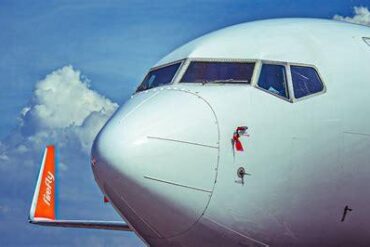
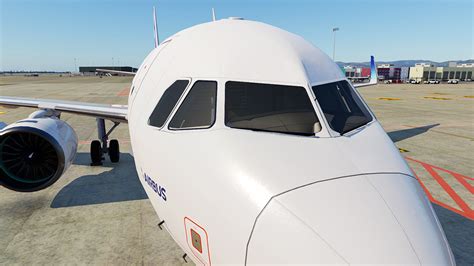
The Boeing 737 features a relatively pointed and angular nose profile, a design inherited from earlier jetliners. As air flows over this shape, it is more prone to transitioning into turbulent flow near the cockpit windows. This turbulence generates pressure fluctuations that manifest as audible wind noise inside the flight deck.
By contrast, the Airbus A320 employs a rounder, blunter nose, designed with more advanced aerodynamic modeling. This smoother contour allows air to remain more stable as it passes over the cockpit, reducing the intensity of turbulence and, consequently, the noise transmitted into the cabin.
The difference is subtle but significant. Even small variations in airflow behavior can produce noticeable acoustic effects when amplified by cockpit structures and materials.
Windshield Design and Airflow Interaction
Beyond the nose itself, the geometry of cockpit windows plays a crucial role in shaping airflow. The 737’s windshield design features flatter panels and sharper transitions, which can disrupt airflow and contribute to localized turbulence.
Airbus, benefiting from later computational tools, optimized the A320’s windshield integration to create a more continuous aerodynamic surface. This reduces airflow separation points and minimizes the generation of high-frequency noise.
These differences highlight a broader truth: cockpit noise is not just about engines—it is about how air interacts with every surface forward of the wing.
The Overboard Exhaust Valve: A Hidden Source of Noise
One of the most distinctive contributors to cockpit noise in the Boeing 737 is not aerodynamic at all—it is mechanical. During takeoff and initial climb, the aircraft uses an Overboard Exhaust Valve to regulate airflow and cool the electrical equipment bay.
This system produces a noticeable rushing sound as air is expelled overboard, particularly below 5,000 feet. Pilots often describe it as a persistent background hiss or roar that is absent—or far less pronounced—in the A320.
This is a key reason why the 737 feels louder during high-workload phases of flight, even if cruise conditions are relatively comparable. The timing of the noise matters: when pilots are most focused, the acoustic environment becomes more intrusive.
Cockpit Architecture: Space, Materials, and Sound Perception
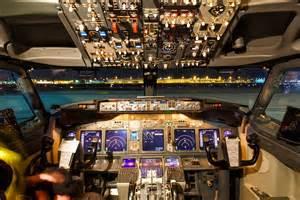
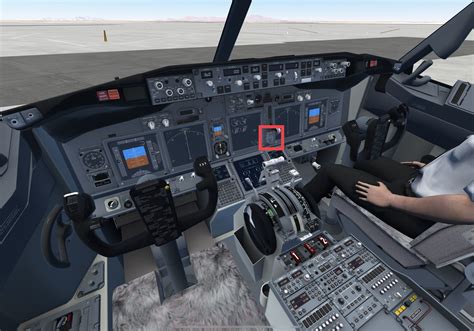
The physical layout of the cockpit significantly influences how sound is perceived. The Boeing 737 cockpit is famously compact, with a low ceiling and limited lateral space. This tighter environment can amplify sound reflections, making noise feel more intense.
In contrast, the Airbus A320 cockpit was designed with ergonomics and spatial efficiency in mind. Its wider layout and more open design allow sound to dissipate more effectively, reducing the perceived intensity.
Material choices also play a role. Advances in insulation and vibration damping in the A320 help absorb and attenuate noise before it reaches the pilots. While newer 737 variants have improved in this regard, the underlying structure imposes limitations.
Analog Systems and Acoustic Artifacts
Another often-overlooked factor is the presence of analog standby instruments in older 737 variants, particularly the Next Generation (NG) series. These instruments can produce continuous clicking or mechanical noises, adding to the overall soundscape.
While individually minor, these sounds accumulate over long flights, contributing to the perception that the cockpit is busier and noisier. The A320, with its fully digital architecture, avoids many of these artifacts.
This difference underscores how technological evolution impacts not just functionality but sensory experience.
Engine Noise: Less Important Than You Think
It is tempting to assume that engine noise is the primary driver of cockpit sound levels. However, in modern narrowbody jets, engines are mounted under the wings and are relatively well isolated from the cockpit.
Both the 737 and A320 families use high-bypass turbofan engines, which are significantly quieter than earlier jet engines. While there are differences—such as the CFM56 and LEAP-1B on the 737 versus the LEAP-1A on the A320neo—these variations have limited impact on cockpit noise compared to aerodynamic and structural factors.
In fact, at cruising altitude, both aircraft are quiet enough for normal conversation without headsets, though pilots typically use them for clarity and communication.
Modern Improvements: Has the Gap Narrowed?
The introduction of the Boeing 737 MAX marked a significant step forward in reducing noise. With improved engines, refined aerodynamics, and better insulation, the MAX offers a substantially smaller noise footprint compared to earlier 737 models.
Similarly, the Airbus A320neo incorporates next-generation engines and aerodynamic tweaks that further enhance efficiency and reduce noise.
Despite these advancements, the fundamental design differences remain. The 737 MAX still inherits the core fuselage and cockpit architecture of its predecessors, while the A320neo builds upon a more modern baseline.
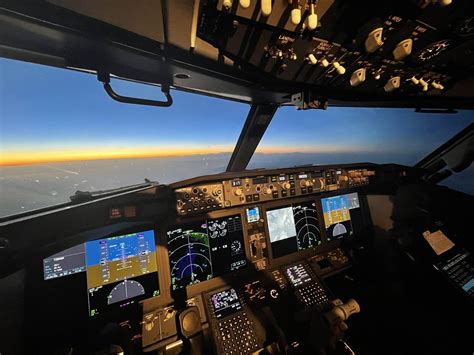
Fly-By-Wire vs. Fly-By-Cable: Subtle Acoustic Implications
One of the defining differences between the two aircraft is their control systems. The Boeing 737 uses a fly-by-cable system, with physical linkages connecting the controls to the control surfaces. This system can transmit vibrations and mechanical feedback into the cockpit.
The Airbus A320, on the other hand, employs a fly-by-wire system, where electronic signals replace physical connections. This not only improves efficiency and safety but also reduces the transmission of mechanical noise and vibration.
While not the primary factor, this distinction contributes to the overall acoustic refinement of the A320 cockpit.
Psychology of Noise: Why Perception Matters More Than Measurement
Human perception of noise is influenced by more than just decibel levels. Factors such as frequency, consistency, and context all shape how sound is experienced.
The 737’s cockpit noise tends to include more high-frequency components and intermittent mechanical sounds, which are more noticeable and potentially more fatiguing. The A320’s noise profile is generally smoother and more uniform, making it feel quieter even if objective measurements are similar.
This explains why many pilots report a clear difference, even in the absence of definitive data.
The Bottom Line: A Story of Evolution vs. Reinvention
The perceived noise difference between the Boeing 737 and Airbus A320 is not the result of a single flaw or advantage. It is the outcome of two fundamentally different design philosophies.
The 737 represents evolution—decades of incremental improvements built upon a legacy platform. The A320 embodies reinvention—a clean-sheet design optimized for modern performance and comfort.
Neither approach is inherently superior; both have produced highly successful aircraft. But when it comes to cockpit noise, the cumulative effect of aerodynamic design, system architecture, and technological generation gives the A320 a perceptual edge.
For pilots, the difference is more than academic. It shapes daily experience, influences fatigue, and subtly affects the rhythm of flight. And for aviation enthusiasts, it offers a fascinating glimpse into how engineering decisions echo across decades, shaping even the sounds heard thousands of feet above the Earth.