Understanding the Physics of Inverted Flight
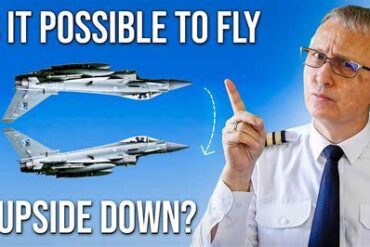
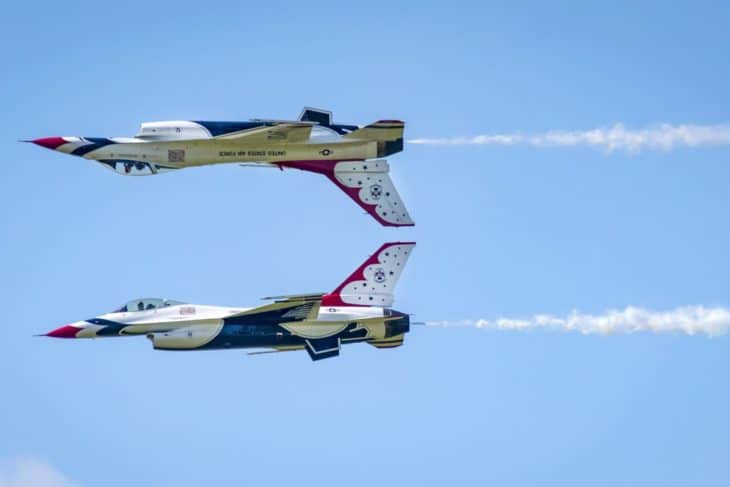
Fighter jets flying upside down may look like they’re breaking the laws of physics, but in reality, they’re following them with extraordinary precision. The maneuverability of military aircraft isn’t just about raw power—it’s about refined engineering, specialized systems, and pilot skill. The key lies in understanding how lift is generated, regardless of whether a jet is upright or inverted.
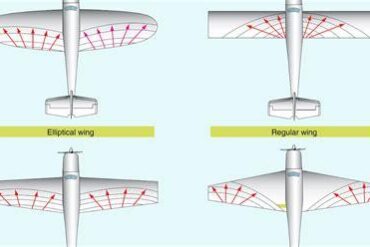
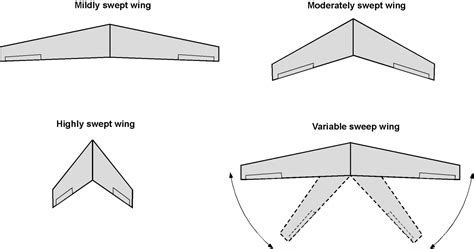
Commercial airliners are built with cambered wings—those curved on top and flatter on the bottom—to maximize lift in a single, upright direction. Fighter jets, however, are engineered for high-performance agility. Many of them use symmetrical airfoils, meaning the wing is evenly curved on both the top and bottom. This allows these jets to maintain lift whether they are right-side up or completely inverted. The balance in wing design is critical: it removes the dependence on gravity-oriented airflow and instead allows lift to be generated based solely on angle of attack and velocity.
The Role of the Angle of Attack in Inverted Flight
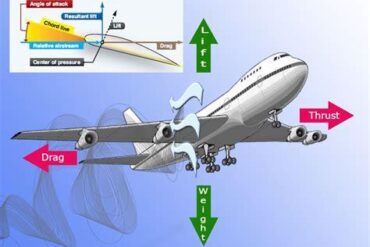
Not all fighter jets rely purely on symmetrical wings. When the design incorporates non-symmetrical wings—or when additional lift is needed in inverted positions—pilots use the angle of attack to control flight dynamics. This involves adjusting the wing’s orientation relative to oncoming air. By tilting the leading edge of the wing upward, even in an upside-down position, pilots can redirect airflow in a way that maintains lift.
This principle is especially important during aerobatic maneuvers like loops and rolls, where the aircraft transitions through multiple orientations. Skilled pilots manipulate this angle intuitively, ensuring that lift remains sufficient at every moment of the flight path. However, pushing the angle too high risks a stall, so the balance between control and performance becomes a delicate art.
Engineering Systems That Support Inverted Flight
Fighter jets are not just physically inverted during upside-down flight; their internal systems must also be engineered to function flawlessly in such conditions. Unlike commercial aircraft, which rely on gravity-fed oil and fuel systems, fighter jets employ dry-sump lubrication systems and pressurized fuel pumps. These technologies ensure consistent engine operation, regardless of orientation.
Without these enhancements, inverted flight would lead to catastrophic engine failure within seconds. Pressurized systems prevent oil from pooling away from vital components and ensure that fuel continues to feed into the combustion chamber uninterrupted. This resilience is crucial in combat and aerobatic scenarios where even a second of lost power can have fatal consequences.
Physiological Limits: Why Inverted Flight Is Brief
Despite the advanced design and capability of fighter jets, prolonged inverted flight is rare. Human physiology sets strict limits on how long a pilot can endure upside-down conditions. When inverted, the pilot experiences negative G-forces that push blood toward the brain and eyes, rather than away. While that might sound beneficial, it can quickly become dangerous. Excess blood pressure in the cranial region can cause blurred vision, headaches, or even hemorrhaging.
To counteract this, pilots are trained to pull back on the control stick during inverted flight, creating slight positive Gs to mitigate the effects. G-suits, which squeeze the legs to push blood toward the heart and brain during positive G-force maneuvers, offer no help under negative Gs. As a result, inverted flight is usually confined to short, transitional moments—such as during a barrel roll or loop.
Inverted Flight in Combat and Demonstration
Flying upside down isn’t just a flashy trick for airshows. In combat, it can provide tactical advantages, such as rapid course reversal, terrain masking, or surprising the enemy with unpredictable motion. However, it’s rarely used as a sustained tactic due to both mechanical strain and human endurance limits.
In air demonstrations, elite pilots showcase this capability to underline the extreme agility and control their aircraft provide. They flip jets upside down with split-second accuracy, creating crowd-thrilling performances that highlight not only the aircraft’s engineering but also the pilot’s stamina, timing, and discipline.
Conclusion: A Delicate Dance of Technology and Biology
The ability of fighter jets to fly upside down is a testament to modern aeronautical engineering. Through symmetrical wing design, mastery of angle of attack, and robust internal systems, these aircraft challenge our expectations of flight. However, it is not limitless. The aircraft may be capable, but the human body remains the final frontier in pushing the boundaries of aerial performance. As long as pilots must remain inside the cockpit, the duration and application of inverted flight will always be measured not just in mechanical precision, but in human tolerance.