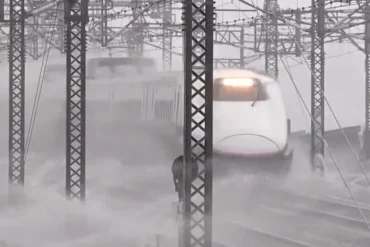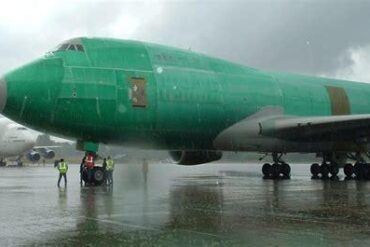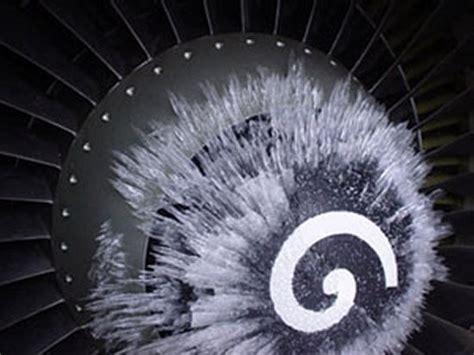
Winter aviation looks dramatic from the terminal window. A widebody lines up on a snow-dusted runway, throttles surge, and a white vortex swirls into the nacelles. To the untrained eye, it appears as if the engines are swallowing a blizzard whole. The intuitive fear is simple: how can a machine that relies on carefully balanced airflow survive ingesting frozen precipitation by the ton?
The short answer is that modern turbofan engines are engineered to ingest massive quantities of snow without structural damage. The long answer is far more interesting, because it reveals how thermodynamics, centrifugal force, combustion stability, and digital engine control systems work together in a hostile environment. Snow ingestion is not just a winter curiosity. It is a design case, a certification requirement, and in rare scenarios, a genuine operational hazard.
A high-bypass turbofan on a modern airliner can ingest more than 2,000 pounds of air per second at takeoff thrust. In heavy snowfall, that airflow carries a measurable mass of frozen water. The question is not whether snow enters the engine. It does. The real question is what happens next inside a machine where internal temperatures can exceed 1,500°C and components spin at tens of thousands of revolutions per minute.
The Physics of Snow Ingestion in a High-Bypass Turbofan
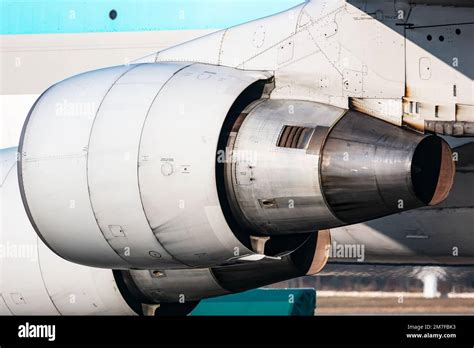
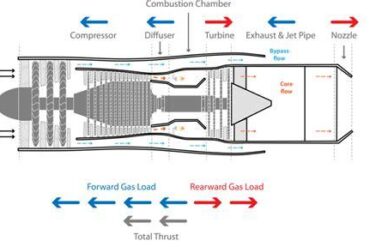
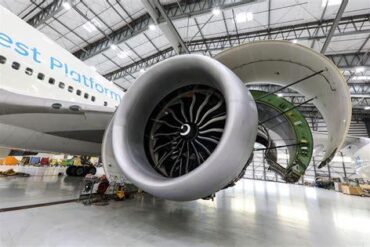
A modern commercial jet engine is not a simple tube with a flame inside. It is a layered airflow management system. The large front fan divides incoming air into two streams: the bypass flow and the core flow. In a high-bypass engine such as the CFM LEAP-1A or Rolls-Royce Trent 900, most of the air never enters the combustion chamber at all. It flows around the core through the bypass duct, generating thrust efficiently.
When snow enters the intake, it first encounters the spinning fan blades. Here, centrifugal force does much of the heavy lifting. Snow and slush particles are denser than air. As the fan accelerates the incoming flow, these particles are flung outward toward the outer annulus of the engine. That outer region feeds the bypass duct.
This separation effect is not accidental. It is a core feature of turbofan design. By routing the bulk of moisture away from the sensitive compressor and combustor, the engine protects its internal flame from disruption. In practical terms, snow ingestion at takeoff power is usually a non-event. The snow is centrifuged outward, melted by residual heat, or expelled through the bypass stream.
Certification standards demand proof. Before entering service, engines are subjected to ingestion testing in controlled facilities. Hundreds of gallons of water and significant volumes of slush are blasted into the intake at operational power settings. The engine must maintain stable combustion, avoid compressor stall, and show no unacceptable vibration. Snow is not an afterthought. It is a certification scenario.
Why Snow Usually Melts Before It Matters
Inside the engine core, temperatures rise rapidly as air passes through multiple compressor stages. Even before fuel is introduced, compression alone increases air temperature significantly. Once combustion begins, the thermal environment becomes extreme.
Snow’s defining property is its 0°C melting point. Compared to volcanic ash or sand, it is thermodynamically fragile. As snow approaches the hotter compressor stages or the combustor inlet, it melts almost instantly. That meltwater then vaporizes. When water transitions to steam, it expands by roughly 1,600 times its liquid volume. This rapid phase change is not destructive in this context. It becomes part of the working mass flow through the turbine.
The key concept here is mass flow rate. Jet engines produce thrust by accelerating mass. If additional mass enters the core and vaporizes without destabilizing the flame, it can temporarily alter internal pressure and temperature relationships. Under the right conditions, this can create a subtle performance effect rather than a failure.
However, stability is everything. The combustor must maintain a continuous flame. Too much water, too quickly, can cool the flame zone and cause a flameout. Too little, and it simply passes through as harmless vapor. The balance is delicate but heavily monitored.
Modern engines use Full Authority Digital Engine Control (FADEC) systems to constantly adjust fuel flow, variable stator vanes, and bleed air settings. These systems react in real time to airflow disturbances. In snowy conditions, FADEC helps preserve flame stability and surge margin, the buffer between normal operation and compressor stall.
Can Snow Actually Improve Engine Performance?
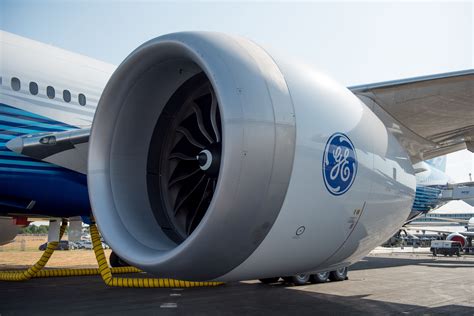
Cold air is denser than warm air. Density increases the amount of oxygen entering the engine for a given volume, which improves combustion efficiency. This is why aircraft often demonstrate shorter takeoff rolls in cold weather. Snow frequently accompanies cold air masses, so improved performance is often attributed to snow when the true driver is temperature.
That said, there is an intriguing historical precedent. In the 1950s and 1960s, early turbojets such as those on the Boeing 707 and Douglas DC-8 used water injection systems. Distilled water was sprayed into the intake or directly into the combustion chamber during takeoff. The water vapor increased mass flow and reduced turbine inlet temperatures, allowing higher thrust without exceeding thermal limits.
Snow ingestion during winter takeoff is not the same as engineered water injection, but the physics overlap. When snow melts and vaporizes in a controlled manner, it can slightly cool turbine components while increasing effective mass flow. The result can be a marginal, incidental thrust benefit. Pilots operating from airports like Denver International or Anchorage sometimes report robust climb performance in very cold, snowy conditions. Most of that gain comes from air density, but moisture can play a secondary role.
This effect has limits. Excessive water ingestion can quench the flame. Modern engine philosophy prioritizes flame stability over incidental thrust gains. The goal is consistent, predictable performance, not opportunistic boosts.
When Snow Becomes a Problem: Low Power and Accumulation
Snow’s benign reputation changes under certain conditions. The most vulnerable phase is low power operation, particularly descent or approach. At low thrust settings, internal temperatures are lower and centrifugal forces are reduced. If a large slug of wet snow or slush is ingested, the engine may lack sufficient thermal energy to vaporize it quickly.
In this scenario, water can accumulate in the compressor before evaporating. Rapid changes in airflow distribution may trigger a compressor stall or surge. A surge is a violent airflow reversal within the compressor, often accompanied by loud bangs and momentary power loss. Modern engines are highly resistant to such events, but the risk is not theoretical.
For this reason, winter operating procedures often include continuous ignition during descent in snowy or icy conditions. Continuous ignition ensures that if the flame is disturbed, it relights immediately. It is a defensive layer in a multi-layered safety system.
Another ground-based risk arises when engines are shut down during heavy snowfall. Snow can accumulate in the intake. If not cleared, it can compact and freeze. Upon startup, that mass may be ingested as a solid plug, potentially causing temporary imbalance or elevated vibration. Ground crews routinely inspect and clear engine inlets in severe winter weather precisely to avoid this scenario.
Snow vs. Hail vs. Birds vs. Volcanic Ash
Not all ingestion events are equal. Snow is among the least destructive materials an engine can ingest. Its softness and low melting point make it fundamentally different from other foreign objects.
A bird strike involves high-mass organic material impacting rotating fan blades at high velocity. Even though certification standards require engines to survive certain bird ingestion scenarios, damage can be structural. Blades can bend or fracture.
Hail is more problematic than snow because it is solid ice with higher density and impact strength. Large hailstones can blunt leading edges or cause localized deformation.
Volcanic ash represents a far greater hazard. Composed of microscopic shards of rock and glass, ash does not melt at the same temperatures as snow. Instead, it can melt into a viscous glass inside the core and then resolidify on turbine blades, choking airflow and leading to engine shutdown. The aviation industry’s experience with ash clouds has reshaped global airspace management.
In comparison, snow’s low melting point and soft structure make it the best-case ingestion scenario. It transforms from solid to liquid to vapor within seconds, leaving no abrasive residue.
The High-Altitude Threat: Ice Crystal Icing

While ground-level snow is usually manageable, a subtler hazard exists at cruise altitude. Ice crystal icing occurs in high-altitude convective cloud systems containing extremely small, dry ice crystals. These crystals are so light that they pass through the fan and deep into the compressor core before melting.
Unlike wet snow near the surface, these crystals may not melt immediately upon entry. They can travel through multiple compressor stages before reaching a region warm enough to create a thin film of water. That water can then refreeze on cooler surfaces or during rapid pressure changes.
Over time, ice can accumulate internally on compressor components. When chunks break free, they can disrupt airflow, triggering compressor stalls or engine rollback. Several high-profile incidents led to increased awareness and research into this phenomenon. Safety authorities issued alerts emphasizing that even visually clear high-altitude air can contain sufficient ice crystals to threaten engine stability.
Manufacturers responded with design updates, revised operating procedures, and improved detection algorithms within FADEC systems. The lesson was clear: not all frozen water behaves the same way inside an engine.
How Certification Standards Address Snow Ingestion
Engine certification under international standards requires demonstration of safe operation in water and slush ingestion scenarios. Test facilities simulate extreme precipitation by injecting controlled volumes of water and semi-frozen mixtures into operating engines. Engineers monitor parameters such as turbine inlet temperature, compressor pressure ratio, vibration levels, and exhaust gas temperature.
The engine must maintain stable combustion and recover gracefully from any temporary disturbances. Surge margins must remain within acceptable limits. Post-test inspections verify that no unacceptable erosion, deformation, or internal damage has occurred.
These tests are conservative. They represent worst-case operational envelopes rather than typical airline conditions. As a result, the everyday winter departure from a snow-covered runway occurs well within certified tolerances.
The Role of Operational Discipline in Winter Flying
Technology alone does not guarantee safety. Operational procedures complement engineering safeguards. Pilots engage engine anti-ice systems to heat inlet components and prevent ice accretion. They monitor engine parameters closely during takeoff and descent in heavy precipitation. Continuous ignition is used when conditions warrant.
Ground crews de-ice wings to prevent aerodynamic contamination, but they also inspect engine inlets. Snow removal from intakes before startup is standard practice after heavy accumulation. These routines may appear mundane, yet they close the loop between design assumptions and real-world conditions.
Winter aviation is therefore a choreography between aerodynamics, thermodynamics, digital control logic, and human procedure. Snow ingestion sits at the intersection of all four.
The Final Verdict: Can Snow Ingestion Damage Aircraft Engines?
In ordinary ground-level winter operations, snow ingestion does not damage modern aircraft engines. High-bypass turbofans are explicitly designed and certified to handle large volumes of snow, slush, and water. Centrifugal separation, extreme internal temperatures, and digital engine control systems ensure that most snow is either diverted or vaporized harmlessly.
Damage becomes possible only under specific circumstances: severe low-power ingestion, unremoved intake accumulation before startup, or high-altitude ice crystal icing within convective systems. Even in these edge cases, multiple layers of design mitigation and operational procedure exist to reduce risk.
The image of a jet engine swallowing a blizzard suggests vulnerability. The reality is resilience. Beneath the nacelle, a controlled thermodynamic system converts a frozen intruder into steam and thrust in milliseconds. Snow may blanket the runway, obscure the horizon, and swirl around the fuselage, but inside the engine core, physics remains firmly in command.