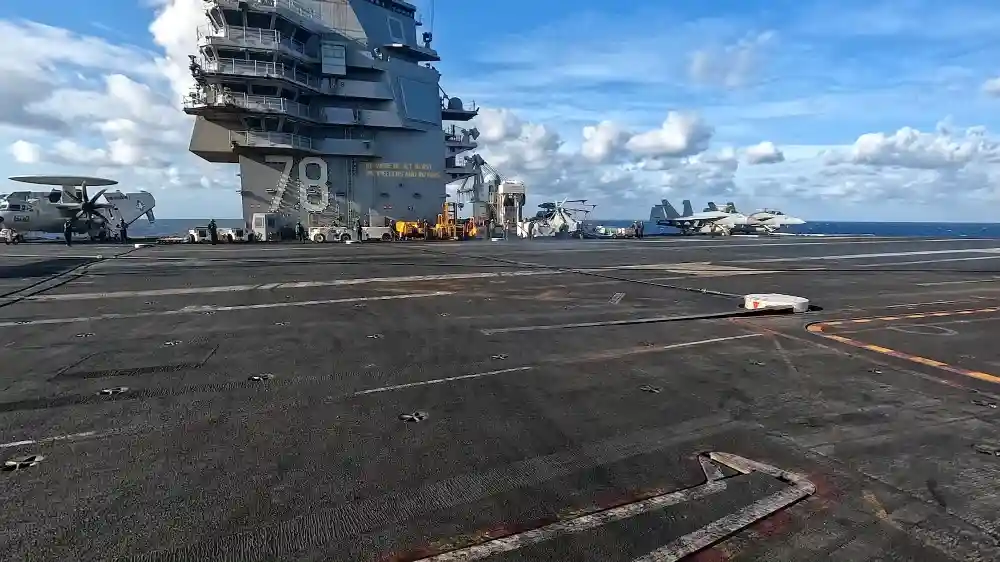
Modern aircraft carriers are among the most complex machines ever built, combining the functions of a military base, an airport, a command center, and a warship into a single floating structure. At the center of this immense system is the flight deck, a carefully engineered operational surface where fighter jets launch and land within seconds while surrounded by fuel crews, weapons teams, radar operators, and deck handlers. Every movement onboard is synchronized with extraordinary precision because even the smallest mistake on a carrier deck can become catastrophic.
Unlike conventional airports with miles of runway space, aircraft carriers operate in confined environments surrounded by rough seas, powerful winds, and combat threats. Naval aviators must launch heavily armed aircraft from decks barely long enough for safe takeoff while also recovering jets at extremely high speeds. To make this possible, carriers rely on advanced launch catapults, arresting gear systems, angled deck designs, and highly trained crews who coordinate operations almost like a choreographed industrial ballet.
The modern carrier flight deck evolved dramatically during the Cold War as naval aircraft became heavier, faster, and more technologically advanced. Earlier straight-deck carriers struggled with landing accidents because incoming aircraft risked crashing into parked jets if they failed to stop in time. The introduction of the angled or skewed flight deck transformed naval aviation by creating a safer recovery area and enabling simultaneous launch and landing operations. Today, this design remains one of the defining features of large supercarriers operated by the United States and other naval powers.
The Engineering Behind Aircraft Carrier Flight Deck Design
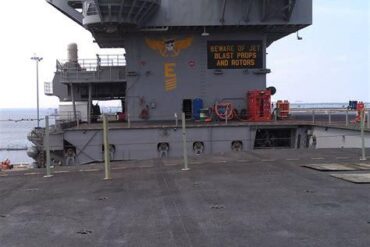
An aircraft carrier’s flight deck is not simply a flat runway placed on a ship. It is a reinforced operational surface designed to withstand enormous stress from high-impact landings, jet blast temperatures, heavy aircraft weight, and constant exposure to corrosive seawater. The deck itself contains multiple operational zones, each dedicated to specific phases of aircraft movement.
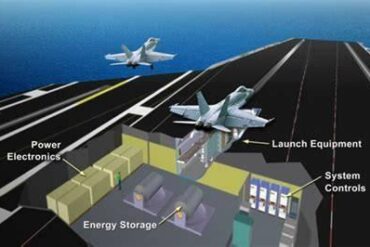
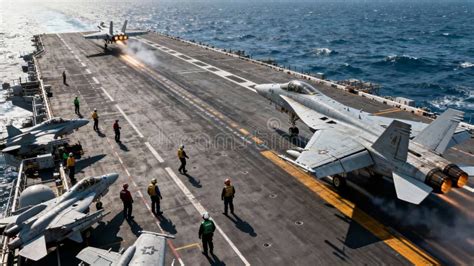
The bow section typically houses the catapult launch systems. On larger carriers, steam or electromagnetic catapults accelerate aircraft from zero to nearly 150 mph in under three seconds. This explosive acceleration allows fully loaded fighter jets to become airborne despite the limited runway length available at sea.
The angled landing area positioned toward the aft section of the carrier serves a completely different purpose. Incoming aircraft approach at roughly 160 mph while descending toward arresting wires stretched across the deck. The angled layout ensures that if a pilot misses all arresting wires, the aircraft can immediately power up and take off again without colliding with parked jets or deck equipment.
Beneath the flight deck lies an equally important hidden network of operational centers. These include aircraft maintenance bays, fuel storage systems, weapons elevators, navigation rooms, radar coordination facilities, and the carrier’s Primary Flight Control center. From this elevated command station, flight operations officers oversee every aircraft launch and recovery in real time.
How Aircraft Launch Systems Catapult Jets Into the Air
Launching a combat aircraft from a carrier deck is one of the most violent controlled procedures in aviation. Before launch, the carrier turns directly into the wind while increasing speed. This creates additional airflow over the deck, helping aircraft generate lift more quickly.
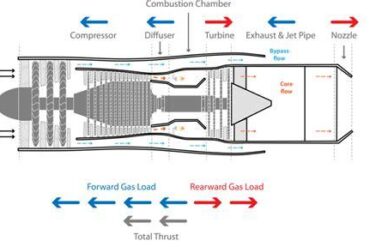
Deck crews then connect the aircraft’s nose landing gear to the catapult shuttle. A holdback bar secures the aircraft in place while the pilot pushes the engines to maximum thrust. At this moment, the fighter jet is producing full power while remaining physically restrained against immense forward force.
Once cleared for launch, the catapult system releases tremendous energy almost instantly. Steam catapults use pressurized steam pistons to hurl the aircraft forward, while newer electromagnetic systems rely on linear motors for smoother acceleration. Within seconds, the aircraft reaches takeoff velocity and leaves the carrier deck with only a tiny margin for error.
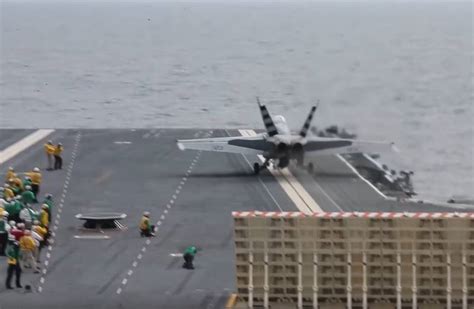
The launch sequence requires flawless coordination between pilots and deck crews identified by color-coded uniforms. Each crew member performs a specialized role involving aircraft positioning, fuel handling, weapons loading, maintenance inspections, or launch authorization. Communication is often conducted through hand signals because roaring jet engines make verbal communication nearly impossible on deck.
The Dangerous Precision of Carrier Landings
Landing on an aircraft carrier is widely considered one of the most difficult maneuvers in military aviation. Pilots must descend rapidly toward a moving deck that pitches with ocean waves while maintaining exact speed and alignment. Unlike traditional runways, there is no opportunity for gradual braking after touchdown.
Carrier-based aircraft use a reinforced tail hook mounted beneath the fuselage. During landing, this hook attempts to catch one of several arresting wires stretched across the deck surface. The moment the hook grabs a wire, hydraulic or electromagnetic arresting systems absorb the aircraft’s kinetic energy and bring it to a stop in only a few hundred feet.
Landing Signal Officers, commonly known as LSOs, guide approaching aircraft using specialized optical landing systems and radio instructions. These officers monitor glide slope, descent rate, aircraft alignment, and engine response continuously throughout the landing approach.
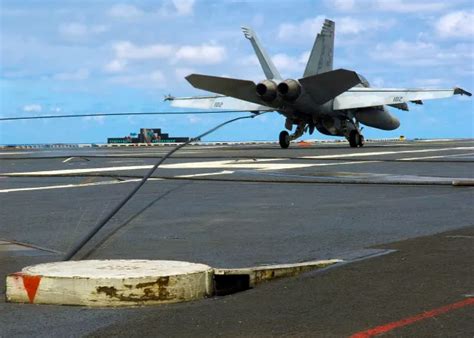
If the aircraft fails to catch any arresting wire, the pilot immediately applies maximum power and executes a go-around maneuver. The angled deck design becomes critically important during these moments because it provides a safe escape path away from parked aircraft and deck personnel.
Why Aircraft Carrier Flight Deck Operations Require Perfect Coordination
Aircraft carrier operations function like a continuously moving industrial machine where every crew member depends on precise timing. Fuel crews, ordnance handlers, aircraft directors, radar controllers, engineers, and bridge officers all operate simultaneously within an extremely hazardous environment filled with jet exhaust, spinning propellers, explosive weapons, and moving machinery.
Even minor operational delays can disrupt the launch and recovery cycle of an entire carrier air wing. For this reason, every aircraft movement onboard is tracked carefully from maintenance preparation to launch status and eventual recovery. Operational efficiency directly affects the carrier’s combat effectiveness, especially during high-tempo military missions where rapid sortie generation becomes essential.
The flight deck ultimately represents the beating heart of the aircraft carrier itself — a place where engineering, aviation, naval strategy, and human coordination merge into one of the most demanding operational environments ever created.