Airline route networks are constantly evolving. Behind every new destination announcement, increased frequency, or cancelled service is a complex decision-making process involving financial analysis, passenger behavior, aircraft availability, and long-term network strategy. While travelers often see a route disappearing from a booking website as a simple schedule change, airlines view route cuts as major strategic decisions that can reshape their operations for years.
Every season brings a new challenge for airlines. Summer vacation demand fades, business travel patterns shift, fuel prices fluctuate, and aircraft requirements change across global networks. As a result, airlines must repeatedly evaluate whether each route still deserves valuable aircraft capacity. The decision is not simply based on whether planes are full. A flight can operate with strong passenger numbers and still lose money, while another route with fewer passengers may remain valuable because it supports a larger network.
Understanding how airlines decide which routes to cut each season reveals the complicated economics behind modern aviation. Airlines must balance immediate profitability with long-term market opportunities, making route planning one of the most important parts of airline management.
Why Airlines Rarely Cancel Routes Immediately
Removing a route is usually considered the final step after other adjustments have failed. Airlines invest significant resources when launching a new service, including marketing campaigns, airport agreements, crew planning, and customer awareness. Once passengers become familiar with a route, eliminating it can weaken the airline’s presence in that market.
A cancelled route can also create strategic disadvantages. Competitors may quickly take over the available demand, gain valuable airport slots, and establish stronger relationships with local travelers. For this reason, airlines typically attempt several alternatives before completely abandoning a service.
One of the most common solutions is reducing flight frequency. Instead of operating seven flights per week, an airline may reduce the schedule to three or four weekly flights. This allows the carrier to maintain market presence while matching capacity with actual passenger demand.
Another option is changing the aircraft assigned to the route. A larger aircraft may be replaced with a smaller model, reducing operating costs while keeping the service available. For example, an airline might replace a widebody aircraft with a narrowbody jet if international demand weakens but remains sufficient.
Only when these adjustments fail does an airline usually decide that the route no longer provides enough value. The decision often comes after months of analysis rather than a sudden reaction to poor booking numbers.
Passenger Demand Is The First Warning Sign For Weak Routes
The most obvious factor affecting route decisions is passenger demand. Airlines create routes because they believe enough travelers want to move between two destinations. However, travel patterns can change dramatically over time.
A route that was successful several years earlier may lose its appeal because customer preferences shift, economic conditions change, or alternative transportation options become available. Business travel demand may decline, tourism trends may move toward different destinations, or another airline may offer a more attractive schedule.
Seasonal demand is especially important. Many routes perform strongly during peak travel periods but struggle during quieter months. A European leisure route, for example, may be highly profitable during summer holidays but generate weak returns during winter.
Airlines analyze booking trends, passenger volumes, and future demand forecasts before deciding whether a route should continue. They are not only asking how many people are flying today but also whether enough passengers are likely to travel in future seasons.
However, passenger numbers alone do not determine success. A flight with a lower occupancy rate may still be profitable if passengers are paying higher fares. Meanwhile, a nearly full aircraft may lose money if ticket prices are heavily discounted.
The Profitability Test: Revenue Versus Operating Costs
At the center of every route decision is one simple question: Does this route create enough financial value for the airline?
Operating an aircraft requires enormous investment. Airlines must pay for fuel, aircraft leasing or ownership costs, maintenance, airport fees, navigation charges, crew salaries, insurance, and many other expenses. Every route must generate enough revenue to justify using limited aircraft capacity.
A key measurement used by airlines is the relationship between Revenue per Available Seat Mile (RASM) and Cost per Available Seat Mile (CASM).
RASM measures how much revenue an airline generates from each available seat mile. It considers both ticket revenue and additional income sources such as baggage fees and onboard services. CASM measures the cost required to operate each available seat mile.
When RASM remains higher than CASM, a route generally has a stronger financial foundation. When operating costs rise above revenue potential, airlines must reconsider whether continuing the service makes sense.
This explains why airlines do not simply look at aircraft occupancy. A flight with 90% of seats filled is not automatically successful. If those passengers purchased low-cost tickets, the revenue may not cover expenses. Meanwhile, a flight operating at 70% capacity could perform well if passengers generate stronger revenue.
The financial contribution of a route is ultimately what matters. Airlines are businesses that must constantly decide whether each aircraft is producing the highest possible return.
Why Network Airlines Judge Routes Differently From Low-Cost Carriers
Not every airline evaluates routes using the same strategy. A major difference exists between traditional network airlines and low-cost carriers.
Large network airlines operate hub-and-spoke systems. Their routes are designed not only to connect two cities but also to feed passengers into larger international networks. A smaller regional flight may appear weak when viewed independently, yet it may provide valuable connections to profitable long-haul flights.
For example, a short domestic route connecting a smaller city with an airline’s major hub might not generate significant direct revenue. However, if passengers use that flight to connect onto international services, the route may have strategic importance.
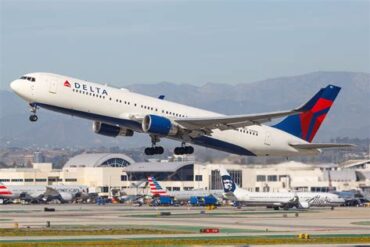
Airlines such as Delta Air Lines, United Airlines, and American Airlines often consider the broader network impact before cutting a route. A service may survive because it strengthens the overall operation rather than because it performs exceptionally on its own.
Low-cost carriers typically have a different approach. Their point-to-point business models mean individual routes often need to demonstrate stronger standalone performance. If demand decreases or costs increase, the airline can usually move aircraft to another market with better potential.
This difference explains why one airline may cancel a route while another continues operating the same city pair successfully.
Seasonal Routes Face Unique Challenges
Seasonal routes are among the most difficult services for airlines to evaluate. These flights are often created around specific travel patterns, such as summer vacations, winter holidays, or major events.
A route may disappear from an airline’s schedule after a season without being considered a failure. Some services are designed from the beginning to operate only during certain months.
For example, an airline may operate additional flights to a beach destination during summer and remove them during colder months when demand declines. The disappearance of the route does not necessarily represent a permanent cancellation.
Before bringing back a seasonal route, airlines examine several factors. They analyze previous passenger performance, revenue results, competitor activity, and future demand forecasts. If the aircraft could earn more money elsewhere, the airline may decide not to restore the service.
Aircraft availability is another major factor. Seasonal demand changes across the global aviation industry, meaning airlines must constantly reposition aircraft where they can generate the highest returns.
Aircraft Availability And Operational Problems Can Force Route Changes
Even profitable routes can face reductions because airlines do not have unlimited resources. Aircraft shortages, maintenance requirements, delayed deliveries, and unexpected operational problems can all influence network decisions.
A new aircraft delivery delay can force an airline to reduce planned routes. A maintenance issue affecting multiple aircraft can create temporary capacity shortages. In these situations, airlines must prioritize their strongest-performing markets.
Fuel prices and labor costs also play important roles. A route that was profitable when fuel prices were lower may become less attractive when operating expenses increase.
Competition can also change the equation. If another airline introduces better schedules, lower fares, or improved service, an existing route may lose its advantage. Airlines constantly monitor competitors to determine whether their aircraft would perform better in another market.
Airport restrictions can also influence decisions. Valuable airport slots, especially at busy airports, may be reassigned if another route offers stronger financial returns.
The Final Decision: Where Can The Aircraft Earn More Money?
Ultimately, route cuts are not only about whether a flight is profitable. Airlines are making a larger strategic calculation: Is this the best possible use of our aircraft and resources?
Every aircraft represents an opportunity cost. A plane operating on a weak route cannot be used on another service that may generate higher revenue. This is why airlines constantly compare route performance across their entire network.
A route may have loyal passengers, strong brand recognition, and years of history, but those factors cannot always overcome poor economics. Aviation is a highly competitive industry where small differences in profitability can influence major decisions.
Before eliminating a route, airlines usually attempt to improve performance through schedule changes, aircraft swaps, and frequency adjustments. If these measures fail and another opportunity provides better returns, the route may finally disappear.
The next time an airline removes a destination from its schedule, the decision is rarely random. Behind every cancellation is a detailed evaluation of demand, profitability, operational constraints, and future opportunities. Seasonal route cuts are not simply about flying fewer aircraft — they are about ensuring every aircraft is placed where it creates the greatest value.
In the aviation industry, every flight represents a choice. Airlines succeed by making those choices carefully.