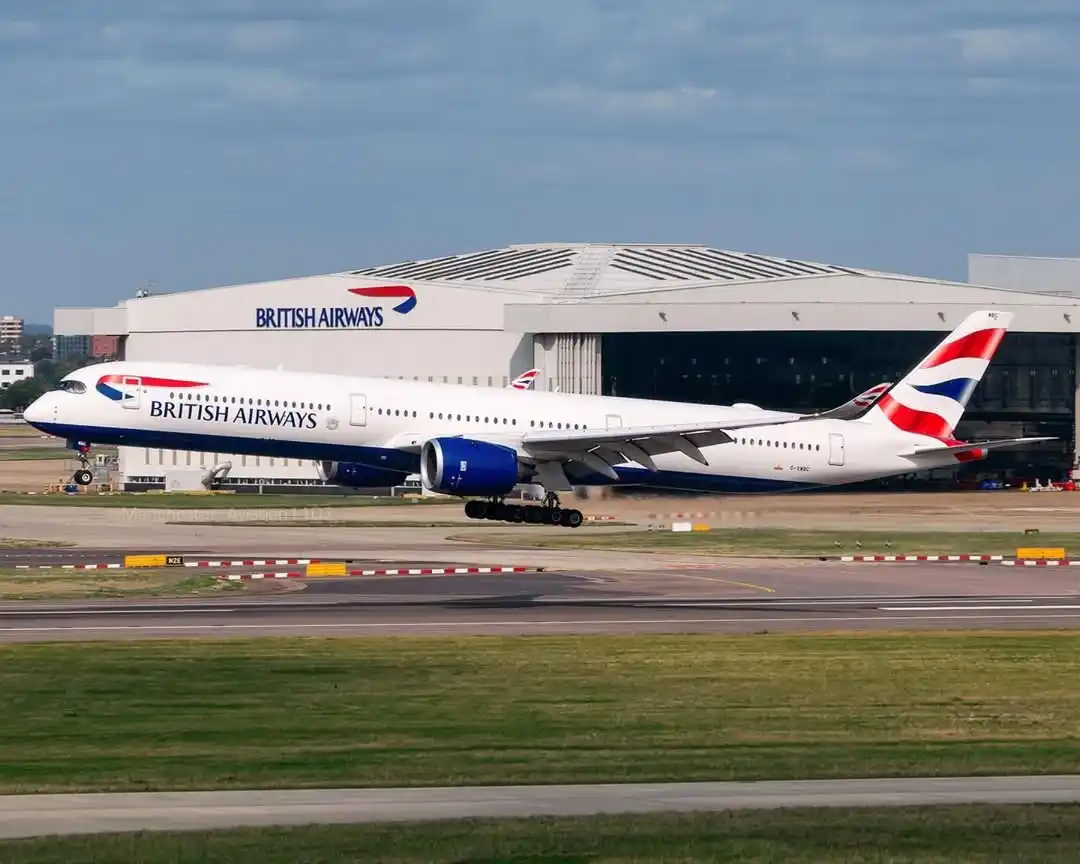
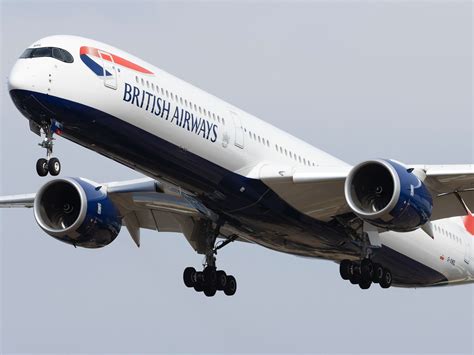
British Airways’ Airbus A350-1000 fleet has quietly become one of the most strategically important assets in the airline’s long-haul operation. Designed for ultra-long range, high-capacity missions, the type has increasingly taken over roles once dominated by the Boeing 747-400, while offering significantly better fuel efficiency, lower noise footprints, and a modern passenger experience. By 2026, the A350 will be firmly embedded at the heart of British Airways’ global network, operating 19 carefully selected routes from its premium hub at London Heathrow.
The airline currently operates 18 Airbus A350-1000s, each configured with 331 seats across three cabins, striking a balance between business-heavy premium demand and strong economy capacity. With an average age of just 4.4 years, the A350 fleet stands among British Airways’ youngest widebody assets, surpassed only by its newest Boeing 787-10s and narrowbody Airbus neo-family aircraft. From an operational perspective, this youth translates into higher dispatch reliability and lower maintenance downtime—critical factors when deploying aircraft on long, thin intercontinental sectors.
Delivered between July 2019 and February 2024, the A350s now represent roughly 14% of BA’s widebody fleet, yet they shoulder a disproportionate share of its most demanding routes. Every A350 flight departs from Heathrow, reinforcing the airport’s role as the airline’s sole base for modern twin-aisle operations. While the overall daily volume—around 13 departures per day—has remained relatively stable year over year, the geographic focus of those flights has shifted noticeably for 2026.
The Strategic Role of the Airbus A350 in British Airways’ Fleet
What sets the Airbus A350 apart within British Airways’ lineup is its ability to combine range, payload, and passenger comfort in a single platform. With lower operating costs per seat than older widebodies, the aircraft allows BA to serve long-haul markets that demand consistency rather than sheer frequency. This makes it particularly valuable on routes where premium demand fluctuates seasonally but overall capacity must remain high.
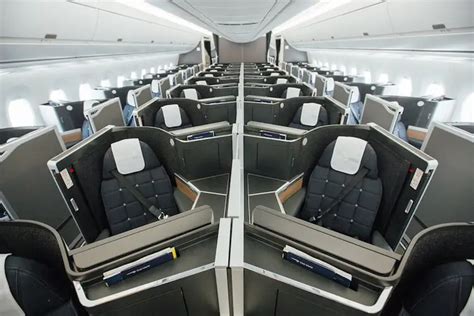
The A350’s cabin design also plays a subtle but important role. Quieter interiors, improved humidity, and larger windows enhance passenger comfort on sectors exceeding 10 or even 12 hours, making the aircraft well-suited to BA’s longest services to Asia, Africa, and the western United States.
Global Distribution of BA’s A350 Routes in 2026
By 2026, North America dominates A350 operations, accounting for roughly 50% of all flights. This reflects both the depth of transatlantic demand and the aircraft’s suitability for long stage lengths paired with strong cargo potential. Africa emerges as the second-largest market, representing 21% of routes, followed closely by Asia at 20%. South America accounts for a smaller but still significant share, while the Caribbean appears for the first time in the A350’s operational history.
This diversified footprint underscores the aircraft’s flexibility. From dense business routes to emerging long-haul leisure markets, the A350 has become British Airways’ go-to solution for network optimization rather than a niche aircraft type.
North America: The Backbone of A350 Utilization
Across the Atlantic, the Airbus A350 supports some of British Airways’ most competitive routes. Cities such as Austin, Denver, Las Vegas, Nashville, Phoenix, Philadelphia, and Vancouver see regular A350 service, often seasonally adjusted to align with demand. For 2026, one of the most notable developments is the aircraft’s first-ever deployment to Dallas/Fort Worth, the world’s busiest oneworld hub.
Although the route will revert to the A380 during the peak summer season, the A350’s winter presence signals BA’s intent to right-size capacity while preserving premium connectivity. In contrast, San Diego, which previously saw A350 service, drops off the roster entirely, highlighting how carefully BA fine-tunes aircraft assignments year to year.
Africa and Asia: Long-Haul Strength Meets Network Depth
Africa has quietly become a stronghold for British Airways’ A350 fleet. Routes to Accra, Cape Town, and Nairobi benefit from the aircraft’s ability to operate long sectors with consistent performance, even in challenging climatic conditions. In fact, the A350 is now BA’s most-used aircraft type on African services, reflecting both demand growth and operational efficiency.
Asia tells a similar story. Destinations such as Delhi, Mumbai, Hong Kong, and Tokyo Haneda rely on the A350 during peak seasons, particularly in winter when demand patterns shift. These routes demand high reliability and strong cargo capacity, both of which the A350 delivers with ease.
South America and the Caribbean: A Changing Deployment Strategy
South America sees a more selective approach in 2026. While São Paulo Guarulhos remains a core A350 destination, Buenos Aires and Rio de Janeiro Galeão are removed from the schedule. This marks a strategic recalibration rather than a retreat, as BA continues to serve Argentina via one-stop routings while optimizing fleet usage elsewhere.
The most eye-catching development is the A350’s debut in the Caribbean, with service to Barbados beginning July 18. This move replaces the smaller Boeing 777-200ER and introduces significantly more business and economy seating, albeit at the cost of first class. The change reflects evolving passenger preferences, where premium economy and business demand increasingly outweigh ultra-luxury offerings on leisure-heavy routes.
Toronto’s Weekly A350 Service: An Operational Curiosity
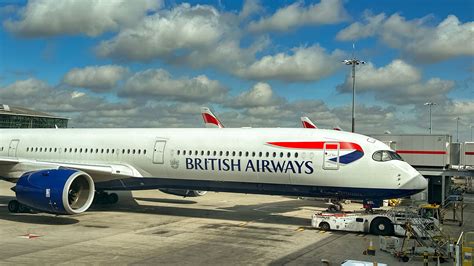
One of the more unusual aspects of the 2026 schedule is the weekly A350 service to Toronto Pearson. Operating only on Sundays, this deployment stands out in an industry where widebody types typically maintain daily frequencies once introduced. The limited use likely reflects crew scheduling constraints and fleet balancing, especially given BA’s extensive use of multiple aircraft types on the Toronto route.
With up to four different widebody variants serving the city simultaneously, the A350’s role is more symbolic than transformational. Yet it still highlights the aircraft’s adaptability within a complex, high-frequency market.
What the 2026 A350 Network Reveals About British Airways’ Strategy
Taken as a whole, British Airways’ 2026 Airbus A350 route map reveals a carrier focused on precision rather than expansion. The aircraft is deployed where its strengths—range, efficiency, and passenger comfort—deliver measurable returns. From North America’s competitive skies to Africa’s growing demand and the Caribbean’s evolving leisure market, the A350 is shaping BA’s long-haul future with quiet confidence.
As fleet renewal continues and network priorities evolve, the Airbus A350-1000 stands not merely as a replacement for older aircraft, but as a cornerstone of British Airways’ next-generation global strategy.