Airlines do not assign aircraft to routes by chance. Every departure, every gate pushback, every silhouette gliding above the clouds represents a highly calculated strategy—a balance of demand, cost, fuel efficiency, scheduling resilience, and aircraft capability. In practice, this process determines profitability, operational efficiency, brand experience, and even customer loyalty, making fleet deployment one of the aviation industry’s most complex behind-the-scenes decisions.
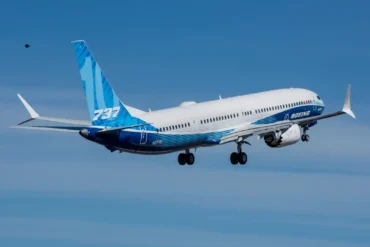
Long before passengers see a boarding pass or step into a cabin, internal route and fleet departments are conducting detailed analyses that resemble long-term chess rather than short-term logistics. Each jet is a market-shaping asset. Airlines strategically determine where an aircraft performs best based on route feasibility, expected revenue, seasonal forecasts, available infrastructure, and network economics. Broad-body aircraft such as the Boeing 787 or Airbus A350 thrive on long-haul transcontinental corridors, while A320neos and 737 MAX aircraft dominate high-frequency short-haul networks. The magic lies in aligning the right metal with the right market at the right time.
Understanding Economics: The Core Of Fleet Deployment Logic
Airlines begin with financial modelling—not instinct. They forecast passenger numbers, connecting flow strength, fare structures, seasonal travel swings, and potential cargo contribution. A larger aircraft reduces unit cost per seat, but this efficiency is worthless if demand falls short. Conversely, a smaller jet maintains higher yields but risks capacity constraints during peak travel weeks. Choosing incorrectly can mean empty seats or missed revenue.
The ultimate objective is not merely filling seats—it is filling them profitably. Airlines push to maintain an equilibrium where each flight maximizes revenue potential without inflating operational cost. When analysts project strong premium-cabin demand, high-business connectivity, or heavy corporate contracts, aircraft with lie-flat seating and advanced in-flight entertainment systems become ideal candidates. On tourist-heavy routes, density-optimized economy layouts win.
Each aircraft also carries a unique CASM (Cost Per Available Seat Mile) number, influenced by fuel burn, maintenance cycles, leasing cost, and utilization rate. A fuel-efficient modern jet may outperform an older aircraft even with higher leasing cost, simply because lower fuel consumption amplifies long-term savings. Over hundreds of daily flights and thousands of annual rotations, these percentage differences shape entire financial years.
Fleet Strategy And Procurement: Planning A Decade In Advance
Aircraft orders echo through decades. Carriers commit billions of dollars into fleets with service lives stretching 20–25 years. Decisions today determine what passengers fly ten years from now. A purchase represents a bet—on market growth, future route performance, fuel-price volatility, and evolving passenger expectations.
Procurement teams evaluate new models based on operating economics and fleet commonality. A uniform fleet reduces training requirements for pilots and crew, simplifies maintenance, and speeds aircraft swaps during disruptions. However, operational flexibility sometimes requires diversification. Widebodies open intercontinental corridors, while single-aisles enhance frequency and regional coverage. The balancing act is continuous and unforgiving.
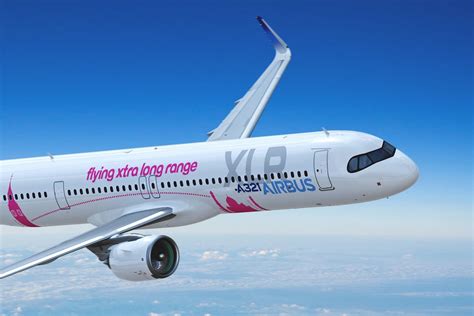
An Airbus A321XLR unlocks long-thin routes like Boston–Dublin or Sydney–Bali where a widebody would overflow capacity, while a Boeing 777-300ER remains unmatched on trunk corridors like London–Dubai or New York–Hong Kong. The aircraft does not just fly the route—it enables the route to exist.
Route Feasibility: Physics Comes First
Before demand is even considered, an aircraft must prove it can fly the mission reliably. Airlines test payload limits, wind allowances, reserve fuel margins, and diversion requirements. Long-haul operations face ETOPS rules that dictate how far a twin-engine aircraft can operate from an alternate airport. Runway length, elevation, and temperature further narrow choices.
For example, operating a fully loaded widebody out of Mexico City—a high-altitude airport surrounded by mountainous terrain—requires exceptional engine thrust performance, often forcing payload-restricted departures. In contrast, shorter runways such as those at London City Airport eliminate widebody options entirely, making Embraer jets and A220s the only logical tools.
Even seasonal weather alters feasibility. Strong winter headwinds on transpacific sectors can force additional fuel load, reducing available passenger seats. A route perfect in summer may no longer be profitable in January.
Revenue Architecture: Cabin Configuration Shapes Market Fit
After verifying physical feasibility, planners move to the heart of fleet deployment—revenue potential. Demand forecasting tools simulate how corporate travelers, holidaymakers, and connecting passengers behave across seasons. This determines aircraft size, frequency, and cabin mix.
A premium-rich Hong Kong–London route justifies lie-flat business seating and first-class suites, possibly aboard a Boeing 777 or Airbus A380. Meanwhile, a holiday-heavy Sydney–Bali run thrives on high-density A320neo flights. The revenue curve shifts based on product quality too: Wi-Fi capability, IFE screens, premium economy availability, and even galley layout for inflight catering.

Cargo adds another dimension. Belly freight margins on transoceanic flights can justify widebodies even when passenger demand is modest. Pharmaceuticals, perishables, e-commerce, and high-value electronics significantly influence aircraft assignment. A Boeing 777-300ER or Airbus A350 with strong lower-hold volume becomes more attractive than a smaller 787 when freight contracts dominate revenue.
Network Optimization: The Art Of Daily Fleet Rotation
Selecting an aircraft for one route is easy. The challenge is assigning hundreds of jets across thousands of flights without breaking operational rhythm. Fleet rotation works like a 24-hour puzzle, where misplacement of one aircraft at one airport cascades into delays worldwide.
Analysts prioritize aircraft that allow short turnaround times, maximize block hours, and maintain robustness against disruption. Every minute saved on the ground adds long-term flying capacity. A jet that completes two long-haul rotations per day generates more revenue than one stuck on the tarmac waiting for crew clearance.
Maintenance cycles deepen the complexity. Airlines keep fleets rotating near hubs with specialized mechanics, spare engines, and component inventories. Stranding a rare subfleet far from home base complicates repairs and compromises schedule integrity. Crew qualifications and union contract limitations further dictate where and how an aircraft can be deployed, sometimes forcing substitutions purely due to manpower logic.
When Airlines Swap Aircraft: The Real-Time Adjustment Game
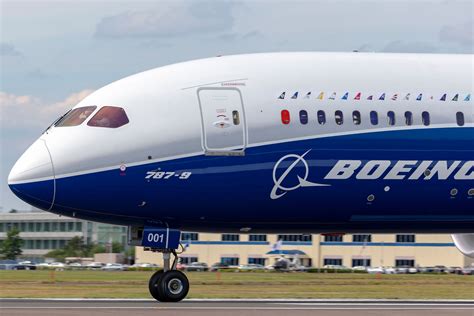
Deployment plans rarely survive contact with real-world conditions. Aircraft type changes occur constantly—sometimes before passengers even check in. A Boeing 787 may replace an A330 due to maintenance issues. A high-demand holiday period may prompt an upgrade to a 777. Conversely, low off-season bookings might shrink a route down to an A321.
Drivers of equipment swaps include:
- Seasonal travel trends shifting demand capacity
- New aircraft deliveries replacing older jets
- Fuel price fluctuations altering economics
- Competitor entry forcing yield protection through smaller aircraft
- Airspace and ATC disruption limiting flight performance
- Emissions, noise, and regulatory policy changes
This flexibility protects the schedule but creates passenger-experience variation—some find themselves upgraded to lie-flat business unexpectedly, while others lose in-seat entertainment if swapped to a density-configured 737. These shifts are not designed to surprise travelers—they are survival tactics for thin-margin airlines.
Why Airlines Rarely Get It Perfect The First Time
Even the best data models cannot fully predict demand elasticity, route maturity, or competitor intervention. Airlines frequently adjust deployment after launch, scaling frequency or altering aircraft size based on real booking behavior. A new Toronto–Rome route may start with a Boeing 787 before upgrading to a 777 once load factors stabilize. A Sydney–Queenstown seasonal ski route may operate on A320neos each winter, only to be suspended during warm months.
Fleet deployment is a perpetual feedback loop, where projection meets reality and strategy evolves with every flight.
The Bottom Line
Choosing which aircraft flies where is a multidimensional decision shaped by economics, infrastructure, regulations, weather, fleet commonality, and passenger preference. It is not simply scheduling—it is macro-economic engineering mixed with micro-level operational survival. Airlines play a constant game of adjustment, chasing efficiency and resilience across a network where margins are razor thin and competition is relentless.
Aircraft deployment determines profitability, brand reputation, and route longevity. It shapes entire networks and, ultimately, the passenger experience. The jet you board tomorrow is the product of analytic chess—one where numbers beat intuition, physics sets the rules, and timing decides everything.
The next time you walk down a jet bridge, remember: that aircraft was not chosen for convenience. It was chosen because it was the only one that made sense—financially, operationally, and strategically, in a world where every seat-mile counts.