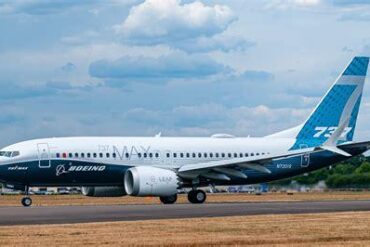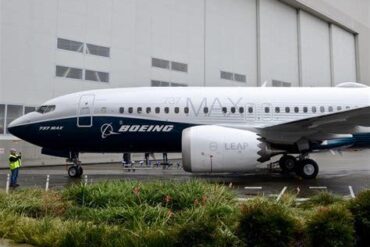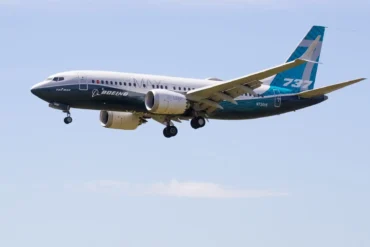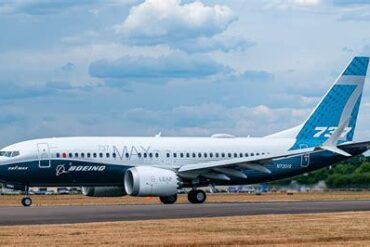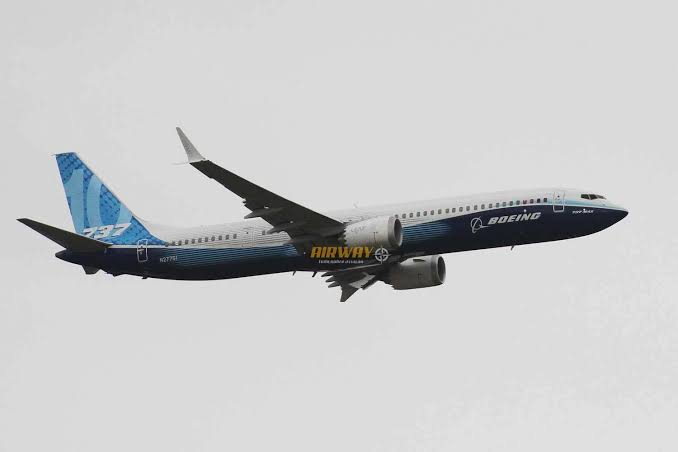
The Boeing 737 MAX 10 has moved to the brink of regulatory approval. On Friday morning, the final type certification board meeting (TCBM) concluded successfully, according to three people with knowledge of the proceedings cited by The Air Current. With that review complete, Boeing is expected to submit a project statement of completion (PSOC) to the FAA, clearing the way for the agency to formally issue the type certificate — a milestone that could arrive as early as next week. For an aircraft originally slated to enter service in 2020, the moment represents the close of a certification saga stretching across five years of technical setbacks, regulatory scrutiny, and redesign work.
Yet the aircraft arriving at the finish line carries a software problem that several of its largest customers would rather not fly. Versions U14 and U14.1 of the 737 MAX’s flight management computer (FMC) contain a glitch that, under certain go-around conditions, can cause the autopilot to abandon its programmed vertical navigation (VNAV) path. When the fault triggers, the system drops into a different mode and hands altitude and speed restrictions back to the pilots to manage manually. The FAA examined the behavior and concluded this month that it does not constitute a safety concern, because crews retain control and receive clear indications of what the system is doing. Regulators therefore declined to mandate a fix before certification, issuing instead a non-mandatory Special Airworthiness Information Bulletin (SAIB) covering affected 737 MAX and 737 Next Generation software builds.
FAA Certification Milestone Follows Years of 737 MAX 10 Delays
The path to this point has been anything but smooth. The 737 MAX 10, the longest-fuselage member of the family, completed its final certification flight in July after a test campaign encompassing 976 flights and more than 2,060 flight hours. Certification was already running years behind schedule — the variant was supposed to enter service in 2020 — and the recently disclosed FMC issue layered additional delay onto an already strained timeline. The board meeting and the forthcoming PSOC represent the last procedural steps before the FAA signs the type certificate, the document that opens the door to deliveries.
The disclosure history of the software fault has drawn attention of its own. Boeing learned of the problem from WestJet following a test flight in November 2024, yet did not inform 737 operators for almost two years. That gap sits uncomfortably alongside Boeing’s post-grounding commitments to transparency, and it helps explain why airlines have responded to the FAA’s risk determination with skepticism rather than relief.
U14 FMC Software Triggers Autopilot VNAV Loss During Go-Arounds
The technical profile of the defect matters for understanding airline resistance. VNAV is the autopilot function that flies a programmed vertical profile, honoring crossing restrictions and altitude constraints that keep departures, approaches, and missed-approach procedures predictable. In a go-around — the maneuver flown when an approach cannot be completed — the aircraft transitions from descent to climb with little margin for error. Under specific conditions in U14 and U14.1, the autopilot can exit VNAV and select another mode instead of following the climb profile. Pilots must then fly the aircraft manually, tracking altitude and speed restrictions themselves while the workload of a missed approach is already at its peak. The FAA’s judgment that the behavior is manageable is defensible on paper, but crews generally prefer not to discover mode changes at the busiest moment of a flight.
Airlines Reject U14 Deliveries as U13 Remains Preferred
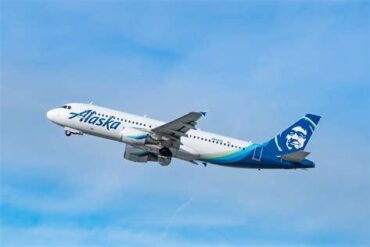
The deeper reason carriers are pushing back predates the go-around issue. U14 arrived with a cluster of separate problems, and U.S. airlines have avoided it for years, choosing instead to stay on U13 — the software version that debuted when the first 737 MAX was certified in 2017. Alaska Airlines, American Airlines, Southwest Airlines, and United Airlines have each confirmed that no in-service MAX in their fleets runs U14 or U14.1. One source characterized the industry’s view to The Air Current bluntly: U13 is “the lesser of the two evils.” United went further, telling Simple Flying last month that it is “not taking deliveries of new aircraft” fitted with either affected version.
The structural wrinkle is that U13 exists only for the MAX 8 and MAX 9. The MAX 7 and MAX 10 depend on the newer software, which means the two newest variants cannot be delivered into the comfortable status quo their operators have curated. The MAX 7 was certified in August with U14 installed, and the MAX 10 flew its entire certification test program on U14.1 — making the aircraft’s approval inseparable from the code airlines distrust.
Boeing Software Fix and Pilot Guidance Face Schedule Pressure
Boeing has acknowledged the problem and is working to compress its remedies. The company initially planned a permanent software update for 2028, with revised pilot guidance following in November. Both timelines are now being pulled forward, and Boeing says it is developing a procedure with airlines that would let pilots re-engage VNAV if the failure occurs in flight. The negotiation matters because carriers are effectively being asked to accept aircraft whose main computer runs code they have spent years avoiding, with the promise of a durable fix arriving on a schedule that has already slipped once.
MAX 10 Deliveries Ramp Toward Spring 2027 Launch
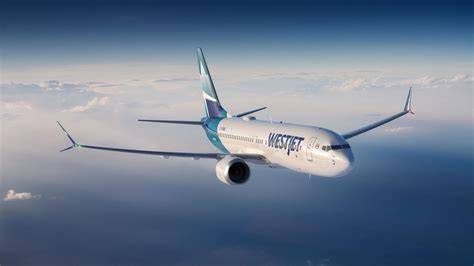
Commercial momentum remains real, even if delivery plans hinge on software resolution and on Transport Canada’s parallel certification work. WestJet will serve as launch customer and intends to operate the type’s first passenger flights in early 2027. Alaska Airlines expects its first airframe in spring 2027 and hopes to begin passenger service by mid-May. Ryanair anticipates receiving its first 15 examples that same spring. United is the largest customer with a firm order for 167 aircraft, followed by Ryanair at 150 firm orders plus 150 options; United CEO Scott Kirby said in August that the carrier expects its first MAX 10 around July 2027.
Those dates now depend less on engineering than on commercial trust. A certificate can be signed next week, but an airline still has to agree to take the airplane — and on that count, Boeing’s newest narrowbody may arrive certified, capable, and momentarily unwanted.