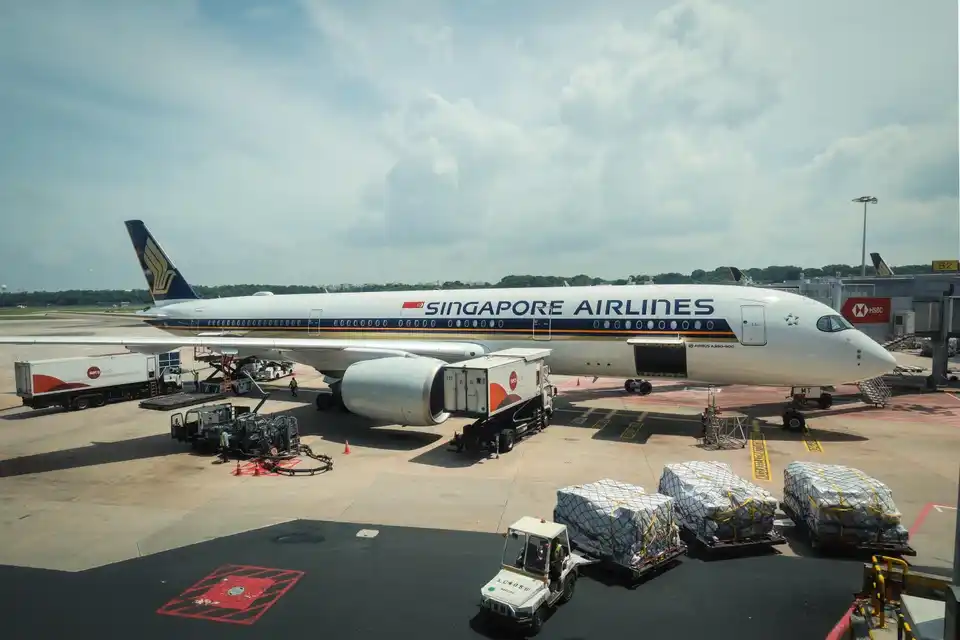
Singapore Airlines flight SQ31 climbing out of San Francisco International Airport on Wednesday afternoon carried 253 seats of passengers bound for Singapore Changi Airport, a 16-hour-and-25-minute journey across the Pacific and the Arctic. Roughly three hours into that crossing, the cabin descended into chaos. A single disruptive traveler began screaming, kicking seats, and attempting to force his way toward an emergency exit, forcing the pilots of the Airbus A350-900 to abandon the transpacific sector and turn the aircraft back toward California. The jet landed at SFO at 8:32 PM local time, having spent just under eight hours in the air on a round trip that returned every passenger to the city they had left.
The Onboard Disturbance That Ended a Transpacific Crossing
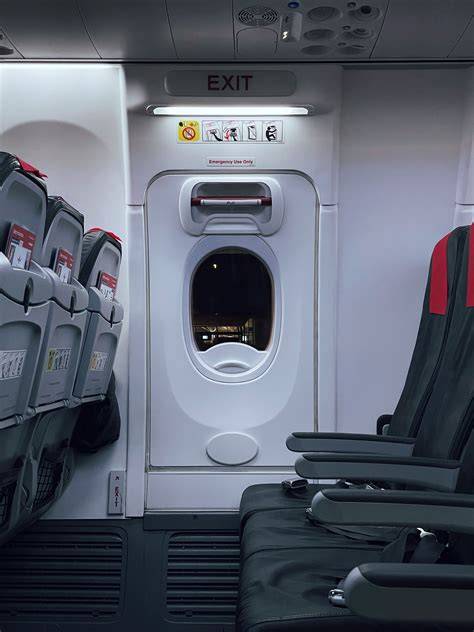
Tracking data shows the flight departed its gate at 12:49 PM local time, an hour and four minutes behind its 11:45 AM schedule, before the disturbance pulled it further off plan. A Reddit user who described sitting a few rows from the man reported that he “started screaming, kicking seats, and even tried to get to the emergency exit” in the third hour of the flight. Crew members restrained him, but the traveler kept yelling and kicking, leaving the cabin tense and the flight deck with a decision no captain takes lightly on a route with no practical alternates.
Why the Crew Chose to Return to San Francisco Instead of Diverting Elsewhere
Singapore Airlines confirmed the sequence in a statement: the customer “became unruly and injured himself in the process,” and the pilots assessed the situation before deciding to return to San Francisco. Returning to the departure airport made operational sense. A transpacific diversion to an Alaskan or Canadian field would have stranded a widebody twinjet, its crew, and several hundred passengers in a location without the airline’s ground infrastructure, maintenance support, or onward connections. SFO offered immigration processing, law enforcement on arrival, and the airline’s own station team. The injured passenger also required medical attention, which the return to the Bay Area made straightforward. The aircraft touched down nearly eight hours after departure with the disruptive traveler in custody of the crew and the cabin secured.
FBI and Local Police Board the A350 at SFO
Upon arrival, FBI agents and local police officers boarded the aircraft and arrested the passenger. The Reddit user expressed uncertainty about the man’s condition, saying they were “not sure if he was having a psychotic break or having a bad trip,” though the outcome was unambiguous for him. Federal involvement follows the standard pattern for interference with a flight crew, an offense that can carry substantial prison time. For the remaining passengers, the arrest marked the end of the incident but not the end of their ordeal; the aircraft now sat on the ground in San Francisco with a flight crew whose duty limits had been consumed by the abortive crossing.
Duty Time Limits Force Singapore Airlines to Source a Replacement Crew
Those who operated the initial departure no longer had enough hours left in their working day to attempt the transpacific route a second time, an unavoidable consequence of spending eight hours in the air without reaching Singapore. The Straits Times reported that Singapore Airlines sourced a fresh crew, and the A350 departed again at 11:49 PM under the new designation SQ9031, roughly three hours and seventeen minutes after the first landing. The replacement flight took 16 hours and four minutes to reach Singapore, touching down at 6:53 AM on Friday against a planned 7:10 PM Thursday arrival, a delay of nearly twelve hours. Singapore Airlines said it was “rebooking connecting flights” for passengers whose onward itineraries collapsed under the disruption.
The Airbus A350-900 Involved and Singapore Airlines’ Long-Haul Fleet
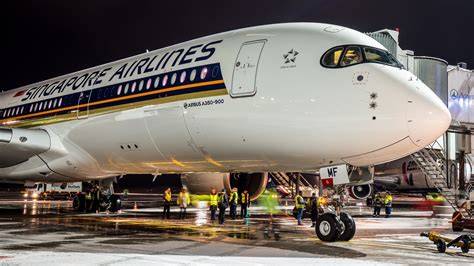
The aircraft operating SQ31 was registered 9V-SJC, a widebody twinjet 4.36 years old that first flew on June 7, 2022, and joined Singapore Airlines three weeks later. Its cabin holds 42 business class, 24 premium economy, and 187 economy class seats, a three-class layout deployed across the carrier’s standard A350-900 fleet of 58 units averaging 7.4 years old, below the airline’s fleet-wide mean of 9.2. Singapore Airlines also flies seven modified A350-900ULR jets on its nonstop services to Newark and New York-JFK, aircraft configured for extreme range rather than the three-class configuration used on the San Francisco route.
What the Turnaround Reveals About Long-Haul Cabin Security
The incident underscores how quickly a single passenger can alter the economics and logistics of an ultra-long-haul operation. An unruly traveler consumed roughly eight hours of crew duty time, three hours of aircraft ground time, a full replacement crew, and nearly twelve hours of passenger delay, all triggered within the first quarter of a scheduled sixteen-hour crossing. Singapore Airlines returned the aircraft to service on the same transpacific pairing once the replacement crew completed the sector, absorbing the disruption within its daily rotation rather than removing the jet from the schedule. For passengers, the lesson is stark: on a route with no viable diversion points, the fastest path to safety is often the return to where the flight began.