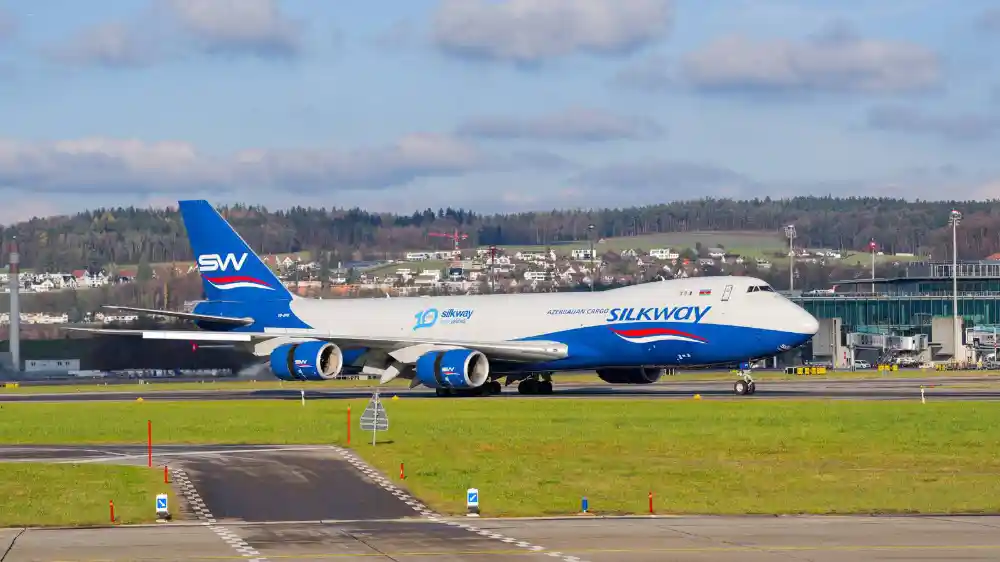
A Silk Way West Airlines Boeing 747-8F freighter landed safely at Dallas/Fort Worth International Airport (DFW) after declaring an emergency when the aircraft unexpectedly arrived in the Dallas area instead of its planned destination of Houston. The incident involved flight 7L5722, operated by aircraft VQ-BVB, which departed Felipe Ángeles International Airport (NLU) in Mexico City and ended with a priority landing after the crew reported having only around 6,000 pounds of fuel remaining, equivalent to approximately 30 minutes of flight endurance.
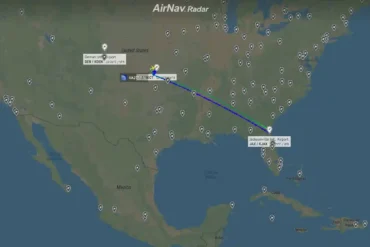
The aircraft was originally scheduled to fly to Houston George Bush Intercontinental Airport (IAH), a regular destination for Silk Way West’s cargo operations. However, tracking data showed that the Boeing 747 continued north beyond Houston and entered the Dallas terminal area, creating a significant mismatch between the flight’s expected arrival and its actual position.
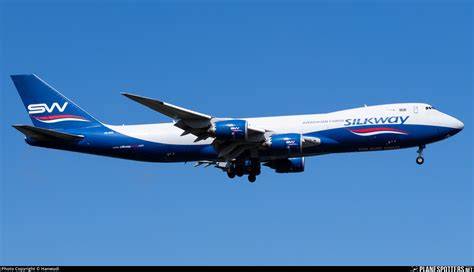
A Houston-Bound 747-8F Unexpectedly Arrives Over Dallas
Flight 7L5722 departed Mexico City at approximately 7:29 AM local time. According to flight tracking records, the aircraft should have continued toward Houston, following a route previously operated by Silk Way West on similar services.
Instead, the aircraft proceeded toward the Dallas region. Flight tracking platforms displayed multiple destination records for the same flight, including Houston, Dallas Love Field, and finally Dallas/Fort Worth International Airport after the emergency diversion. The data suggests that a destination change occurred somewhere during the flight, although the exact reason remains unclear.
Several possibilities could explain the unusual situation. The destination may have been incorrectly entered into a flight plan system, a routing amendment may have introduced confusion, or there could have been a communication issue between dispatch, air traffic control, and the flight crew. At this stage, available information does not confirm whether the problem originated from the aircraft, airline operations, or external flight-data systems.
What stands out is that the aircraft reached the Dallas area while the crew apparently still expected to complete an arrival into Houston.
Fuel Becomes The Critical Factor As Crew Declares Pan-Pan
While operating in the Dallas terminal area, the Boeing 747-8F crew declared a Pan-Pan urgency call, reporting that the aircraft was experiencing a serious fuel situation. A Pan-Pan call indicates an urgent condition that requires priority assistance but does not necessarily mean the aircraft is facing immediate danger.
The crew reportedly advised controllers that they had approximately 6,000 pounds of fuel remaining and requested immediate vectors toward Houston Intercontinental Airport’s Runway 26R. However, Dallas-area controllers quickly recognized that Houston was hundreds of miles away and that continuing toward Houston was not a realistic option with the available fuel.
The controller responded by questioning the aircraft’s position and fuel status, explaining that the aircraft was not close to Houston. The crew repeated its request for the shortest possible route, but the situation required a safer alternative.
At that point, controllers treated the situation as an emergency and directed the aircraft to Dallas/Fort Worth International Airport, which was significantly closer and better equipped to handle a widebody aircraft experiencing a fuel-related emergency.
Why DFW Was The Right Choice For The Emergency Landing
The decision to divert the Silk Way West 747-8F to DFW was based on both geography and airport capability. Dallas/Fort Worth offers extensive infrastructure designed to support large commercial aircraft, including multiple long runways and dedicated emergency response facilities.
The aircraft landed on DFW Runway 18R, which provides a long runway suitable for a fully loaded 747-8 freighter. The airport’s aircraft rescue and firefighting teams were also positioned to respond immediately after the emergency declaration.
A Boeing 747-8F is among the largest cargo aircraft in commercial service, with a wingspan of nearly 225 feet and a maximum takeoff weight exceeding 975,000 pounds. Handling such an aircraft during a low-fuel situation requires careful coordination between pilots, controllers, airport operations, and emergency crews.
The aircraft touched down safely at approximately 10:51 AM local time and was met by emergency vehicles as a precaution. No injuries or damage were reported.
Investigators Will Need More Data To Explain The Destination Error
The most unusual aspect of the incident is not the emergency landing itself, but how a Houston-bound aircraft ended up preparing for an arrival in Dallas.
Flight tracking information showed that the aircraft’s destination information appeared to change during the flight. However, tracking platforms alone cannot reveal whether the change came from the airline’s dispatch system, air traffic control instructions, cockpit inputs, or a technical data issue.
Another possibility is that the crew accepted a clearance or routing associated with Dallas without realizing it conflicted with the intended Houston operation. Determining the exact cause will require additional information, including the original flight plan, air traffic control recordings, cockpit communications, and operational records.
The apparent disconnect between the aircraft’s location and the crew’s Houston request became the key concern. By the time the crew requested Houston’s Runway 26R, the aircraft was already positioned over North Texas, making the requested destination impractical given the remaining fuel.
Silk Way West Boeing 747 Completes Its Journey After Diversion
Following the emergency landing, the Boeing 747-8F remained at DFW before later continuing its journey. The aircraft eventually departed and completed the short flight to Houston, confirming that Houston had remained the intended final destination.
The event highlights the importance of accurate flight planning, clear communication, and rapid decision-making during commercial aviation operations. Modern air transport relies on multiple interconnected systems, and even a small discrepancy involving flight data or routing information can create significant operational challenges.
For cargo operators flying large aircraft such as the Boeing 747-8F, maintaining sufficient fuel margins and quickly resolving navigation or communication problems remains essential. In this case, the coordination between the flight crew and Dallas controllers ensured that a potentially serious fuel emergency ended with a safe landing.