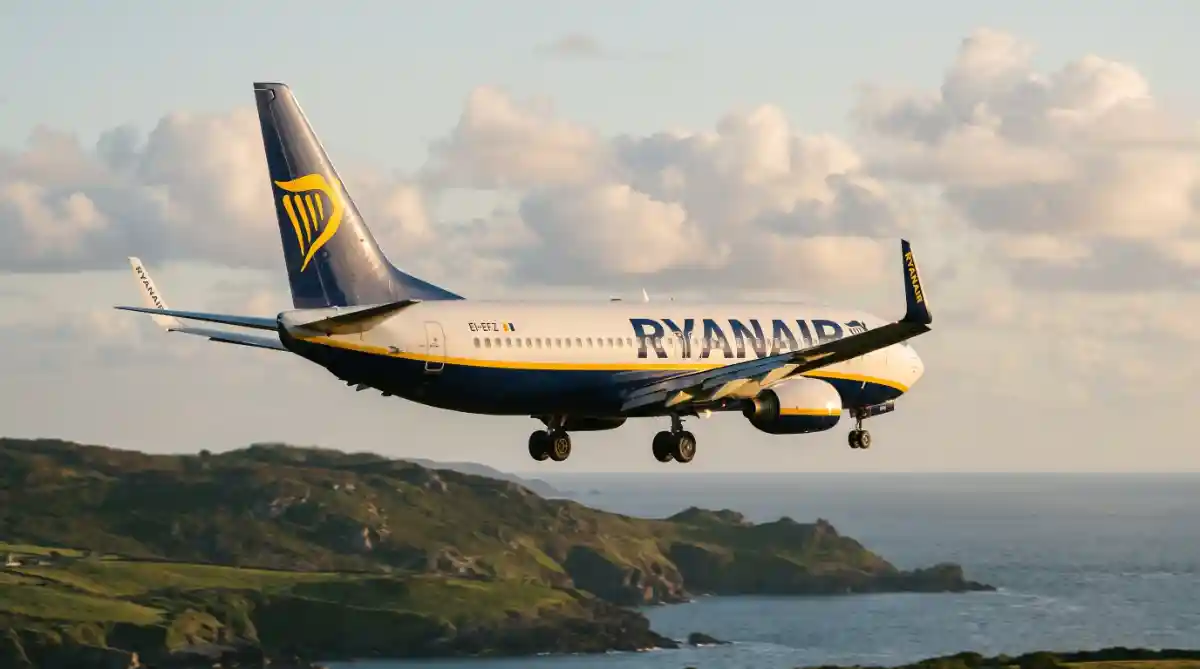
A Ryanair Boeing 737-800 was forced to divert to Brest Bretagne Airport (BES) after declaring a fuel emergency when an unrelated emergency involving an Iberia-operated regional jet shut down the only runway at Nantes-Atlantique Airport (NTE). The incident unfolded on the evening of July 6, creating a chain reaction that disrupted flights across western France while highlighting how quickly operational challenges can escalate at airports with a single commercial runway.
Flight FR5448 had departed Sevilla Airport (SVQ) at 5:35 PM for what had been an entirely routine journey to Nantes. The approach remained uneventful until the aircraft reached final approach to Runway 21, shortly after 7:00 PM, when air traffic controllers instructed the crew to abandon the landing. The unexpected maneuver came after an Iberia regional aircraft suffered an emergency that left the runway unavailable, instantly removing any possibility of an immediate arrival for inbound traffic.
Rather than completing its landing, the 737-800, registered EI-EBK, climbed away from the airport and entered a holding pattern while controllers assessed how long the runway closure would last. Initially climbing to approximately 7,000 feet, the aircraft was subsequently instructed to maintain a holding pattern at 4,000 feet. As the minutes passed, it became increasingly clear that the obstruction would not be removed quickly enough for the Ryanair flight to land safely with its remaining fuel reserves.
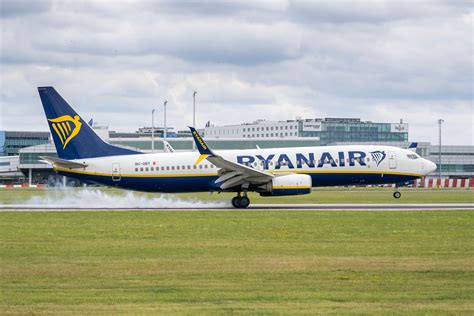
Ryanair Crew Declares Fuel Emergency During Diversion
Once it became evident that Nantes would remain closed, the situation shifted from a routine delay to a fuel management exercise requiring immediate action. The captain declared a fuel emergency, switched the aircraft’s transponder to squawk 7700, and coordinated with air traffic control for an expedited diversion. Controllers responded by providing priority handling and direct vectoring toward Brest Bretagne Airport, approximately 150 miles northwest of Nantes.
The aircraft climbed to around 20,000 feet before proceeding directly to Brest, where emergency services were prepared for its arrival. Flight tracking data showed the aircraft landed safely shortly after 8:00 PM, approximately 2 hours and 40 minutes after departing Seville. Although the emergency declaration reflected critically reduced fuel margins, the diversion concluded without injury or additional complications.
The aircraft involved has served Ryanair for more than 17 years, having entered the airline’s fleet in 2009. Despite its age, there is no indication that the aircraft itself contributed to the diversion, with the emergency resulting entirely from circumstances at the destination airport.
Iberia Emergency Triggered The Nantes Runway Closure
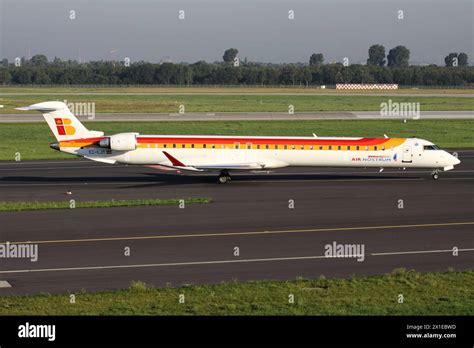
The sequence of events began with Iberia flight IB1222, operated by Air Nostrum using a Bombardier CRJ1000 on a scheduled service from Nantes to Madrid. During takeoff, the regional jet reportedly experienced an engine failure at full thrust after a tire burst generated foreign object debris that damaged one of the engines.
Despite successfully becoming airborne, the crew shut down the affected engine and immediately returned to Nantes for an emergency landing. While the landing itself was completed safely, debris scattered across the runway prevented further aircraft movements. Because Nantes operates with only one commercial runway, arriving aircraft had no alternative landing surface while airport teams inspected and cleared the airfield.
Following the landing, the damaged CRJ taxied to a parking stand, allowing emergency personnel and maintenance crews to evaluate the aircraft. Passengers were safely disembarked before being provided hotel accommodation while airport operations worked to restore normal service.
Single-Runway Airports Face Unique Operational Challenges
The Ryanair diversion illustrates one of the greatest operational vulnerabilities associated with single-runway airports. Unlike larger international hubs equipped with parallel runways, airports such as Nantes cannot continue normal arrivals and departures when their sole runway becomes blocked.
Even relatively brief closures can rapidly affect multiple flights. Aircraft already airborne must either hold while awaiting clearance or divert to alternate airports before fuel reserves reach legally required minimum levels. Airline dispatchers, pilots, and air traffic controllers continuously monitor fuel calculations during such events, balancing operational flexibility against strict aviation safety regulations.
Declaring a fuel emergency does not necessarily indicate that an aircraft is moments from running out of fuel. Instead, it informs controllers that the flight can no longer safely accept further delays and requires immediate priority to ensure regulatory fuel reserves are preserved.
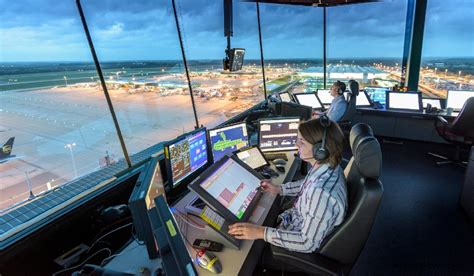
Widespread Disruptions Across Western France
The runway closure extended well beyond the Ryanair diversion. Airport operations remained suspended until approximately 10:30 PM, when a complete runway inspection confirmed that debris had been removed safely. Normal traffic resumed around 11:00 PM, roughly four hours after the emergency landing.
The disruption affected numerous airlines operating into Nantes. Flights arriving from London, Geneva, Nice, Toulouse, Lyon, and Porto were either diverted or canceled, while several departures were also canceled. Additional services arriving from Berlin, Montpellier, Lyon, and Amsterdam experienced lengthy delays as aircraft and crews fell out of schedule.
Although emergency response procedures functioned as intended, the event demonstrated how one unexpected technical failure can ripple across an airport’s entire operation, affecting passengers hundreds of miles away.
Another Difficult Week For Nantes Airport
The July 6 incident followed another unusual emergency only days earlier. On July 3, a DHL Airbus A321 freighter departing Nantes for Leipzig experienced a landing gear malfunction shortly after takeoff. The crew discovered the landing gear had become jammed in the extended position, preventing normal retraction.
The cargo aircraft remained airborne for more than 90 minutes, allowing pilots to troubleshoot the malfunction while burning fuel before attempting a precautionary landing. During the incident, the French Air Force dispatched a fighter aircraft to conduct a visual inspection of the freighter. The Airbus eventually landed safely back at Nantes without injuries, allowing airport operations to resume after inspections were completed.
Two significant aviation emergencies within just a few days placed Nantes under an unusual operational spotlight. While both events ended safely, they underscored the effectiveness of coordinated decision-making between flight crews, emergency responders, airport personnel, and air traffic controllers. In the case of Ryanair flight FR5448, that coordination ensured a fuel emergency concluded with a safe landing, demonstrating once again that aviation safety depends as much on preparation and communication as it does on aircraft technology.