Rising regional tensions triggered a swift aviation security response after Azerbaijan temporarily shut portions of its southern airspace following a reported drone incursion originating from Iranian territory. The incident unfolded over the Nakhchivan Autonomous Republic, a strategically sensitive exclave separated from mainland Azerbaijan, where multiple unmanned aerial vehicles reportedly crossed the border and descended near Nakhchivan International Airport.
Authorities moved quickly to issue a Notice to Airmen (NOTAM) restricting flights in the affected airspace while emergency services and military personnel secured the area. The measure was designed to prevent civilian aircraft from entering a potentially hazardous zone while investigators assessed the impact site and the broader security implications.
The episode immediately drew attention from aviation regulators and airlines across the region. Azerbaijan sits along several important East-West air corridors linking Europe, Central Asia, and the Middle East, meaning even localized disruptions can ripple across international flight networks.
Drone Incursion Triggers Aviation Safety Response
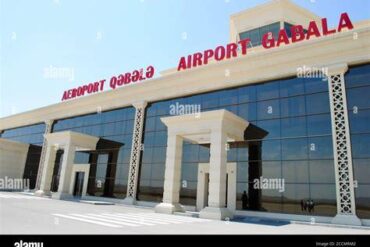
Officials reported that several drones entered Azerbaijani territory over the Nakhchivan region, prompting emergency protocols within the country’s aviation and defense sectors. One drone reportedly impacted the terminal area of Nakhchivan International Airport, while another came down nearby within the airport perimeter.
The incident caused structural damage near the airport complex and left several civilians injured, according to preliminary reports. Emergency response teams quickly arrived at the scene, securing the area and evaluating whether the airport infrastructure or navigation systems had been compromised.
Civil aviation authorities responded by implementing temporary flight restrictions across southern Azerbaijani airspace, directing airlines to avoid the affected zone until safety inspections could confirm that normal operations could resume. Even short-term closures require careful coordination between airlines, air traffic controllers, and neighboring airspace authorities, particularly when the region already faces elevated geopolitical tension.
At an emergency meeting of Azerbaijan’s Security Council, President Ilham Aliyev condemned the incident and signaled that the government was preparing a response.
He stated that Azerbaijan would “not tolerate this unprovoked act of terror and aggression,” emphasizing that the country’s armed forces had been instructed to prepare appropriate retaliatory measures.
Strategic Importance of Nakhchivan International Airport
The location of the incident amplifies its significance. Nakhchivan International Airport functions as the primary aviation gateway for the Nakhchivan Autonomous Republic, an Azerbaijani territory separated from the mainland by Armenia and bordered by Iran and Turkey. Because of this geographic isolation, air transport plays a critical role in maintaining economic and social connectivity with the rest of Azerbaijan.
The airport features two parallel runways measuring approximately 10,827 feet (3,300 meters), capable of accommodating narrow-body commercial aircraft as well as government and military aircraft. This infrastructure allows the facility to support both civilian passenger services and limited defense operations.
Passenger demand highlights its importance. Historically, the airport has handled over half a million passengers annually, reflecting its central role in regional mobility. The domestic air corridor between Baku and Nakhchivan remains one of the busiest routes in the country.
During the first half of 2025, aviation data indicates that more than 339,000 passengers traveled between the two cities across roughly 1,700 flights, demonstrating the scale of reliance on air travel for residents and businesses in the exclave.
Azerbaijan’s Expanding Role in Regional Aviation
Beyond domestic connectivity, Azerbaijan has increasingly positioned itself as a transit hub between Europe and Asia. The country’s primary gateway, Heydar Aliyev International Airport in Baku, has experienced steady growth in both passenger numbers and airline partnerships.
In 2024, the airport handled approximately 7.5 million passengers and more than 59,000 aircraft movements, connecting travelers to around 80 destinations served by 40 airlines. These routes stretch across Europe, Central Asia, the Middle East, and parts of East Asia, reflecting Azerbaijan’s rising importance within global aviation networks.
This expanding aviation footprint means that any security incident affecting the country’s airspace quickly draws international attention. Airlines rely on predictable routing structures to maintain schedules, fuel planning, and crew logistics. Even localized disruptions can introduce operational delays or costly diversions.
Growing Pressure on Alternative Flight Corridors
The drone incursion occurred during a period when regional airspace management is already under intense pressure. Ongoing geopolitical tensions involving Iran have prompted periodic restrictions and warnings affecting routes that traditionally cross Iranian airspace.
As a result, airlines operating long-haul services between Europe and Asia have increasingly diverted flights toward alternative corridors. These routes often pass through the South Caucasus region, including Azerbaijan, Georgia, and Armenia.
With more aircraft using these paths, traffic density across these corridors has risen significantly. Aviation authorities must coordinate closely to manage capacity while ensuring safety standards remain uncompromised.
Air traffic controllers monitor aircraft spacing, reroute flights around temporary restrictions, and communicate with neighboring control centers to maintain smooth operations. Even a brief disruption—such as the closure near Nakhchivan—can force airlines to adjust flight paths or delay departures until the airspace reopens.
Regional Security Concerns and Aviation Stability
The drone incident highlights how geopolitical tensions increasingly intersect with global aviation infrastructure. Airports, airways, and navigation facilities represent critical components of international transportation systems, and security threats in one area can influence operations thousands of miles away.
For Azerbaijan, maintaining secure and predictable airspace has become particularly important as more airlines depend on the country’s corridors to bypass unstable regions. Ensuring that air routes remain safe protects not only domestic aviation but also the broader network linking Europe, Asia, and the Middle East.
While the airspace restriction near Nakhchivan was temporary, the event underscores the delicate balance between regional security dynamics and the uninterrupted flow of global air travel. As airlines continue adapting to shifting geopolitical realities, aviation authorities across the region face the ongoing challenge of safeguarding both passengers and the skies they cross.