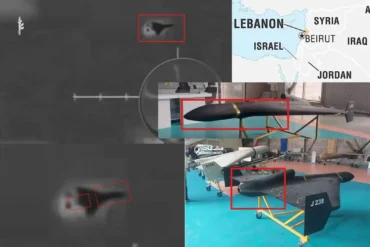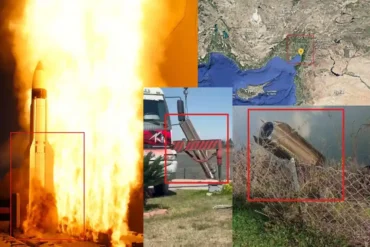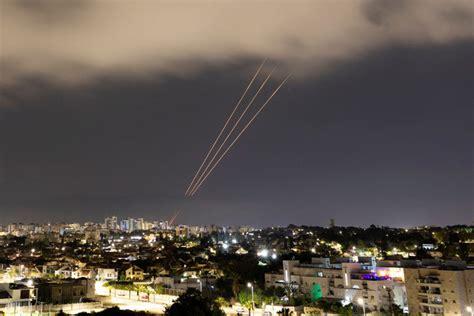
In the early hours of Friday morning, a dramatic escalation unfolded in the skies over the Middle East as the Israel Defense Forces (IDF) successfully intercepted more than 100 Iranian combat drones aimed at Israeli territory. The unprecedented aerial confrontation, which took place beyond Israel’s borders, marks one of the most significant drone warfare engagements in recent regional history, setting the stage for a possible broader military conflict between Jerusalem and Tehran.
The intercepted unmanned aerial vehicles (UAVs), reportedly launched by Iran in retaliation for a massive Israeli air campaign earlier the same day, triggered air-raid sirens across the region. Sirens were heard as far away as Jordan, where local defense forces also engaged incoming UAVs. According to Israeli military sources, drones were brought down in multiple locations, including over Saudi Arabia and undisclosed areas en route to Israel.
חיל האוויר ממשיך לפעול ליירוט כלי טיס בלתי מאוישים ששוגרו מאיראן לעבר מדינת ישראל pic.twitter.com/WLLUaUAtTb
— צבא ההגנה לישראל (@idfonline) June 13, 2025
Israel’s Rapid Military Response and Strategic Defense Network
Brigadier General Effie Defrin, spokesperson for the IDF, confirmed the scale of the attack, stating that “Iran launched over 100 UAVs at Israel” and emphasized that “the IDF is on high alert—we have been preparing for this operation for a long time.” In response, the Home Front Command issued emergency directives across the country, urging civilians to remain in protected spaces while defense operations were ongoing. By late morning, the shelter-in-place order was lifted, though public gatherings remained banned as a precautionary measure.
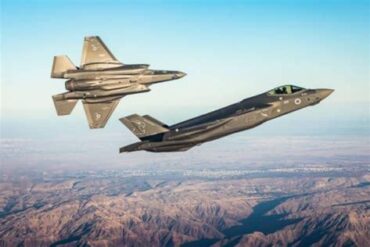
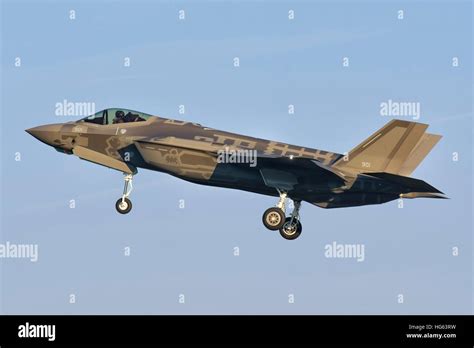
This large-scale UAV attack appears to have been a retaliatory move following an Israeli preemptive strike, codenamed “Rising Lion,” launched earlier on Friday. The strike involved over 200 Israeli Air Force jets, which targeted dozens of strategic Iranian locations, including military and nuclear facilities. The IDF characterized the operation as a “precise, combined offensive” based on “high-quality intelligence”, aimed at neutralizing Tehran’s capabilities to project aggression across the region.
Preemptive Strike on Iran’s Military and Nuclear Infrastructure
The Israeli air assault was described by officials as a preventive measure to disrupt what Jerusalem saw as an imminent threat. According to senior Israeli defense sources, the IDF acted on credible intelligence indicating a large-scale Iranian military buildup targeting Israel. The airstrikes reportedly inflicted significant damage on Iranian military command centers, drone production facilities, and elements tied to the Islamic Revolutionary Guard Corps’ Quds Force.
Prime Minister Benjamin Netanyahu, addressing the nation, declared that Operation Rising Lion would “continue for as many days as it takes to remove this threat.” He reinforced Israel’s determination to eliminate what he called “the Iranian threat to Israel’s very survival.”
Iranian Retaliation and Regional Shockwaves
The Iranian response was swift and blunt. Supreme Leader Ayatollah Ali Khamenei delivered a fiery address, accusing Israel of crossing a red line and warning that the “Zionist regime sealed for itself a bitter and painful destiny.” Acknowledging the loss of Iranian military leaders and nuclear scientists in the Israeli operation, Khamenei vowed revenge, asserting that their work would continue without interruption.
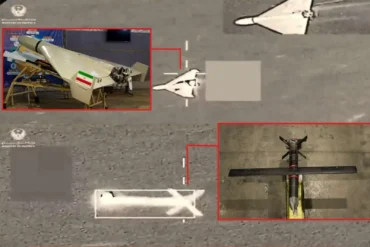
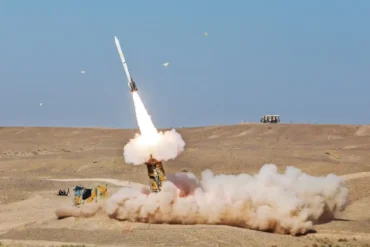
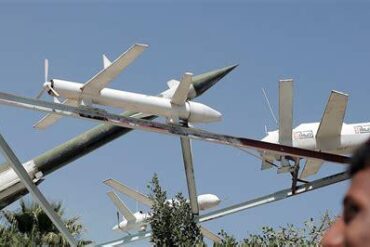
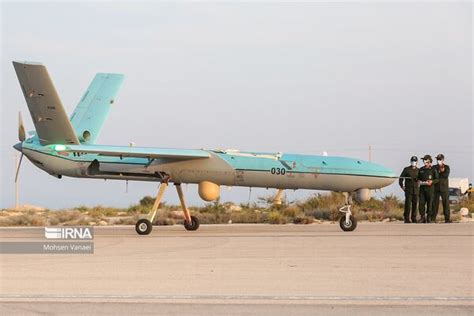
While exact numbers remain unconfirmed, Iranian state media claimed that the majority of the drones launched were domestically manufactured and part of Iran’s expanding UAV fleet. The models likely included the Shahed-129 and other long-range drones capable of traversing hundreds of kilometers. Despite these capabilities, the coordinated defense by Israel and regional allies proved successful in neutralizing the airborne threat before it could reach Israeli territory.
International Airspace and Strategic Implications
The incident highlights the increasingly international nature of Middle Eastern military confrontations. Reports from Jordanian media confirmed that UAVs crossed through Jordanian airspace, setting off alarms and prompting countermeasures by Amman’s air defense units. Unconfirmed sources suggest that Saudi Arabian forces also played a role in intercepting the drones, although Riyadh has yet to release an official statement.
This level of multinational air defense coordination underscores a quiet but emerging alignment among Sunni Arab states and Israel, driven by a shared concern over Iranian aggression. It also reflects a broader regional consensus that Iran’s expanding drone and missile capabilities pose a significant threat, not just to Israel but to stability across the Middle East.
Operational Fallout and Civilian Disruption
As the drone interception unfolded, life in Israel ground to a halt. The Ben-Gurion International Airport near Tel Aviv was evacuated, with all flights suspended indefinitely. Israeli airlines began repositioning aircraft to overseas locations as a precautionary measure. Across the country, educational institutions, public events, and non-essential workplaces were closed under emergency directives issued by the government.

The Home Front Command’s restrictions were seen as a calculated move to ensure civilian safety while giving the IDF freedom to operate its complex air defense systems, which include Iron Dome, David’s Sling, and Arrow-3 missile interception platforms. These systems have now proven themselves not just in intercepting short-range threats but in coordinated defense against a massive swarm of hostile drones.
Strategic Calculations and the Path Ahead
The events of June 13, 2025, have pushed Israel and Iran closer to direct military confrontation than at any point in recent years. While proxy conflicts in Syria, Iraq, and Lebanon have long served as battlegrounds between the two powers, this latest round of hostilities has moved the fight to open skies and direct engagement.
For Israel, the success in intercepting over 100 drones signals a significant victory for its multilayered defense doctrine, but it also raises concerns about the sheer volume and persistence of Iran’s aerial capabilities. Analysts warn that Tehran’s ability to launch coordinated UAV attacks over long distances could overwhelm even the most advanced defense networks if scaled up.
In Iran, the attacks have likely deepened the resolve of hardliners, who see military resistance as a national imperative. With the deaths of key military and nuclear figures, Tehran may feel compelled to escalate further, either through missile attacks or via its regional proxies such as Hezbollah and the Houthis.
Global Reactions and Diplomatic Tremors
The international community has responded with a mix of concern and condemnation. While U.S. officials reportedly supported Israel’s right to defend itself, there have been behind-the-scenes efforts in Washington and European capitals to de-escalate the situation. Russia and China, key Iranian allies, have issued calls for restraint while avoiding direct criticism of Tehran.
Meanwhile, the United Nations Security Council is expected to convene in an emergency session to address the crisis, though meaningful action remains unlikely given geopolitical divides among its members. What is clear, however, is that the drone attack and Israel’s preemptive air campaign have shattered any illusions of detente in the region.
Conclusion: A Tense Horizon
The interception of more than 100 Iranian drones by the IDF is not just a military milestone—it is a harbinger of a new era of drone-centric warfare in the Middle East. As Israel prepares for further retaliatory waves, and Iran signals its intent to press forward, the region sits on a knife’s edge. The balance of power may soon be tested not just through diplomacy or proxy engagements but in direct, sustained confrontations that challenge the resilience of both militaries—and the civilians caught in between.