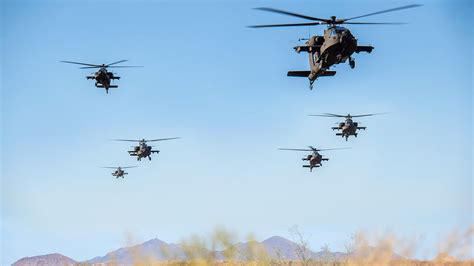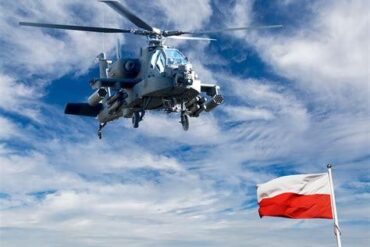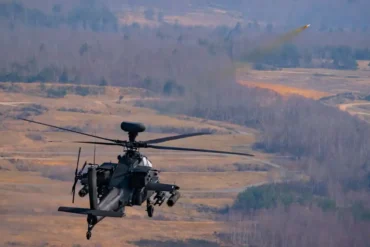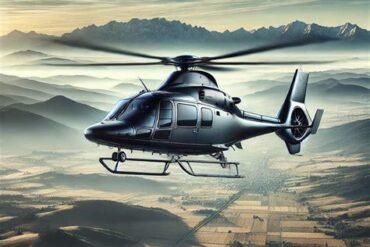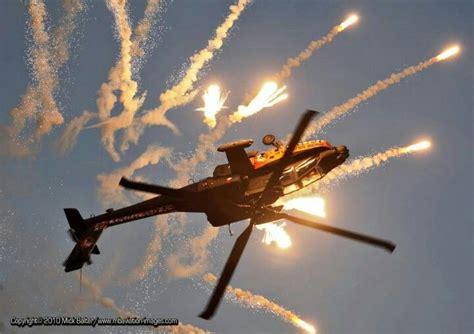
The AH-64 Apache has long stood as an icon of aerial military dominance. Developed by Hughes Helicopters (later acquired by McDonnell Douglas, now Boeing Defense), this heavily armed attack helicopter is the centerpiece of many global defense forces—most notably the United States Army. With its sleek design, twin-turbine engines, and highly advanced avionics, the Apache appears capable of nearly any aerial feat. But when it comes to defying one of aviation’s fundamental rules—flying upside down—can this helicopter perform the impossible?
Understanding Helicopter Flight Dynamics
Helicopters generate lift not through fixed wings but via rotating blades, which must remain precisely balanced and angled to maintain stability. In normal flight, the rotor disc produces lift perpendicular to its rotation. Any tilt in the disc can change the direction of this lift, allowing the helicopter to pitch, roll, or yaw.
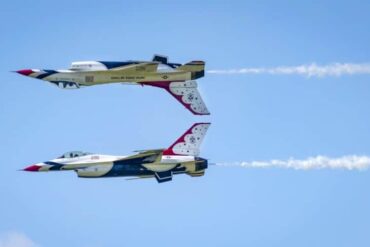
However, inverting a helicopter presents unique challenges. Unlike airplanes, which can utilize symmetrical airfoils and maintain lift even when inverted, helicopters depend on the direction of rotor blade rotation to maintain consistent airflow and balance. A complete flip would essentially reverse this airflow dynamic.
The Limits of Aerobatics: What the Apache Can Actually Do
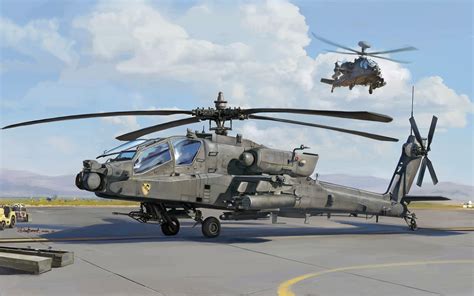
Despite its robust frame and incredible agility, the Apache is still subject to the immutable laws of physics. Helicopters like the Apache aren’t designed to fly upside-down for extended periods. That said, they can perform brief inverted maneuvers during complex aerial routines such as:
- Loops
- Barrel rolls
- Immelmann turns (a half-loop followed by a half-roll)
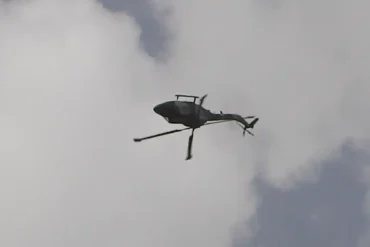
These maneuvers rely on forward momentum and precise rotor control to maintain altitude momentarily while the aircraft is inverted. However, these are not sustainable flight positions. The aircraft must immediately recover to normal orientation to avoid catastrophic loss of control.
Why Sustained Inverted Flight Isn’t Possible
To understand why a helicopter like the Apache cannot sustain inverted flight, one must consider the following key limitations:
- Rotor Blade Pitch: Helicopter rotors have a limited pitch range. When flipped upside down, the necessary angle to produce lift against gravity cannot be achieved.
- Gravity and Airframe Stress: Unlike fixed-wing aircraft, helicopters aren’t designed to distribute weight evenly while inverted. In an upside-down position, the full weight of the airframe pushes against components not engineered to bear it.
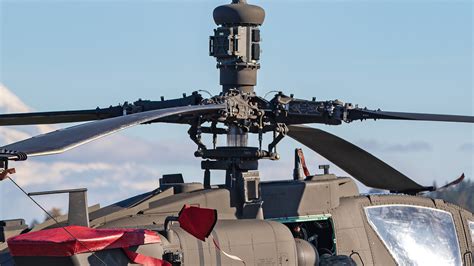
- Mechanical Vulnerabilities: The rotor mast, transmission system, and even fuel and oil flow systems are all gravity-dependent. Sustained inversion would likely cause system failures.
Thus, even though an experienced pilot might flip the Apache during a controlled stunt, inverted flight is momentary, not functional.
Famous Stunts and Combat Exhibitions
Apache helicopters have often starred in airshows and military demonstrations, displaying maneuvers that push the limits of rotary-wing physics. Some of the most skilled Apache pilots from the U.S. Army’s demonstration teams have performed rolls and inverted dips lasting up to two to three seconds, enough to awe onlookers while staying within the aircraft’s tolerances.
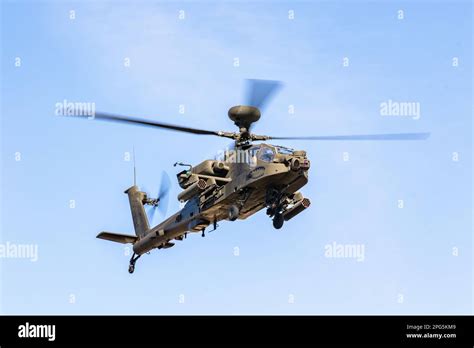
In real combat scenarios, however, these stunts are rarely used. The Apache’s strengths lie in precision attacks, hovering capabilities, and low-altitude maneuvering, not in high-risk aerobatics. Combat effectiveness is prioritized over spectacle.
The Physics Behind the Flip
During an aerial loop or roll, momentum plays a crucial role. As the Apache approaches the top of a loop, the rotor system still generates lift in the direction of the helicopter’s belly due to its speed and rotor dynamics. For that brief moment at the top of the loop, the aircraft is effectively inverted, with gravity pulling down and the rotors still pushing opposite to the weight force.
But this is where limitations arise. The lift must fight both gravity and momentum. If the helicopter remains upside-down too long, the rotor system’s downward lift fails, and the aircraft would enter uncontrolled descent or even rotor stall, where airflow disrupts the aerodynamic effectiveness of the blades.
Comparing with Other Helicopters: Is Apache Unique?
While the Apache is not alone in its ability to momentarily invert, it’s certainly among the elite few helicopters that can do so with any semblance of control. Comparably agile helicopters include:
- Eurocopter Tiger
- Bell AH-1Z Viper
- Westland Lynx
These models, like the Apache, are designed with military-grade stability and maneuverability, allowing for limited aerobatics. But again, none are built for sustained inverted flight.
Pilot Skill: The Human Factor
A highly skilled Apache pilot, trained in combat maneuvers and airshow demonstrations, is essential for attempting inverted maneuvers. These maneuvers are not part of standard flight training, and performing them improperly could result in complete airframe loss. In demonstrations, pilots often rehearse on simulators and undergo rigorous risk assessments before attempting even short periods of inversion.
The U.S. Army and other militaries employing Apache units treat such stunts as high-risk, low-utility actions. There’s no combat doctrine that encourages helicopters to fly upside-down—it’s pure aerobatic artistry, reserved for demonstrations, not warfare.
Engineering Priorities: Combat Utility Over Acrobatics
The Apache’s design emphasizes survivability, lethality, and precision—not aerial theatrics. Features such as:
- Tandem seating for pilot and gunner
- 30mm M230 chain gun
- Hellfire missile launch capabilities
- Advanced FLIR and night vision sensors
…all contribute to its battlefield superiority. None of these are enhanced by or dependent on the ability to perform upside-down flight. In fact, most combat situations call for steady, controlled hovering, low-altitude flight paths, and tactical retreating angles rather than inverted stunts.
Conclusion: A Momentary Defiance of Physics
So, can an Apache helicopter fly upside down? The answer lies in nuance. No, it cannot sustain inverted flight like a fixed-wing aircraft. However, yes—it can momentarily flip into an upside-down position during a stunt or aerobatic loop, provided the pilot has the skill and the moment is brief. This is not a combat tactic, nor is it a design feature, but rather a byproduct of the helicopter’s incredible engineering and a testament to what skilled aviators can achieve.
The Apache remains one of the most formidable tools in modern aerial warfare—not because it can defy gravity indefinitely, but because it uses the laws of physics to its maximum advantage.