In the high-stakes theater of aerial warfare, firepower remains a decisive factor. While stealth and speed dominate conversations around fifth-generation fighters, the brutal reality of combat often comes down to how much destruction an aircraft can deliver. These “flying bomb trucks” bring payload capacity, versatility, and lethality to the forefront. From legacy platforms modernized for saturation strikes to futuristic stealth jets with internal weapons bays, the most heavily armed fighters reflect the relentless evolution of military aviation.
The Dominance of Payload in Aerial Combat
Fighter jets with enormous payloads serve both strategic and tactical purposes. Whether delivering precision-guided munitions in contested zones or launching air superiority missiles from safe distances, these aircraft offer nations a significant edge. In this breakdown of the top 10 most heavily armed operational fighter jets, we analyze not just raw tonnage, but the kind of weapons, deployment roles, and mission versatility that define their combat effectiveness.
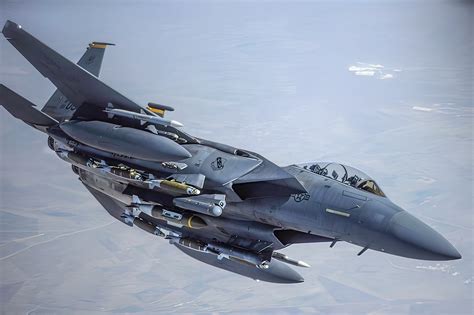
1. Boeing F-15EX Eagle II — The Payload King
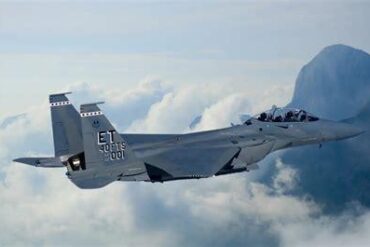
The F-15EX Eagle II is the undisputed titan of firepower. Carrying an astonishing 29,500 lbs (13,381 kg) across 23 hardpoints, it revives the cold-war-era F-15 platform with a modern twist. Rather than stealth, this twin-engine brute emphasizes raw loadout and interoperability. Its capacity to carry AIM-9X, AIM-120 AMRAAM, and long-range strike munitions like the AGM-158 JASSM makes it a perfect complement to stealthier fighters like the F-35. Its open mission systems (OMS) architecture allows rapid integration of new sensors, electronic warfare pods, or hypersonic weapons.
More than a weapons truck, the F-15EX represents a mobile arsenal, capable of swarming adversaries with overwhelming saturation in both air-to-air and air-to-ground roles.
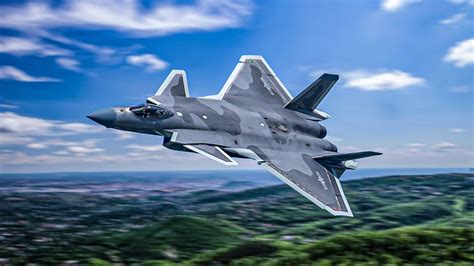
2. Chengdu J-20 Mighty Dragon — China’s Stealth Juggernaut
China’s Chengdu J-20 is built for stealth and long-range dominance. With an estimated 24,000 lbs (10,886 kg) payload and a hybrid design focusing on internal bays and external hardpoints, the J-20 integrates advanced PL-series missiles like the PL-15 and speculative PL-21 beyond-visual-range air-to-air missiles.
What makes the J-20 unique is its role as a battlefield manager. Its powerful radar and datalinks are believed to coordinate drones and support aircraft in wide-ranging engagements, especially across the Western Pacific. Though untested in major conflicts, its strategic positioning and evolving weapons suite suggest a growing menace.
3. Sukhoi Su-57 Felon — Stealth Meets Firepower
Russia’s Su-57 Felon combines stealth characteristics with versatile payload capacity, boasting 22,000 lbs (9,979 kg) across 12 hardpoints. While stealth is partially compromised by its engine design, the Felon compensates with agility, sensor fusion, and internal missile bays that reduce radar signature.
The Su-57 carries a mix of R-77M, Kh-series air-to-surface missiles, and cluster munitions like the Drill. Its ability to deploy anti-ship, anti-radiation, and precision-guided bombs underscores its multirole flexibility. Designed for frontline dominance, it acts as a platform to challenge NATO air superiority.
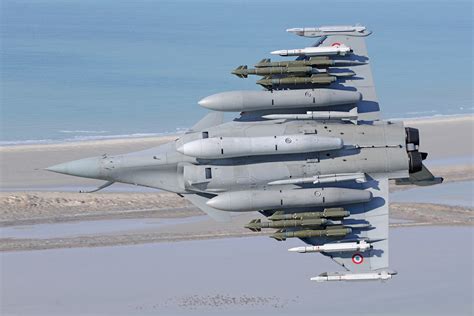
4. Dassault Rafale — France’s Nuclear-Ready Workhorse
With a 20,900 lbs (9,500 kg) payload and 14 hardpoints, the Dassault Rafale remains a potent multirole aircraft. Its strength lies in adaptability—carrying out air-to-air combat, deep strike missions, and nuclear deterrence roles within a single sortie.
Equipped with MBDA Meteor, Storm Shadow, and the ASMP-A nuclear cruise missile, the Rafale supports France’s independent deterrent posture. Its sensor fusion, low radar cross-section, and high-endurance make it formidable even without fifth-generation stealth classification.
5. Eurofighter Typhoon — Evolution of the Dogfighter
Initially conceived as a pure air-superiority fighter, the Eurofighter Typhoon has evolved into a fearsome strike aircraft. Capable of delivering 20,000 lbs (9,000 kg) of ordnance via 13 hardpoints, it now routinely carries Storm Shadow, Brimstone, and Taurus missiles alongside its Meteor and IRIS-T missiles.
Recent Tranche 4 and 5 upgrades have added electronic warfare, deep strike, and future compatibility with hypersonic weapons. Though it lacks stealth, the Typhoon’s speed, altitude envelope, and situational awareness ensure it remains a lethal player in high-intensity combat zones.
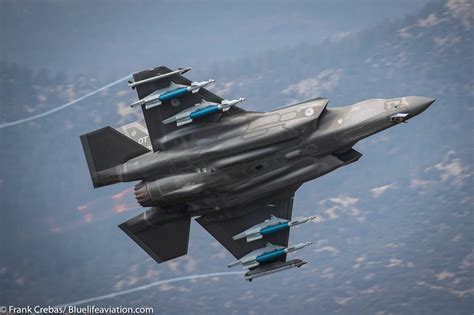
6. Lockheed Martin F-35 Lightning II — The Networked Predator
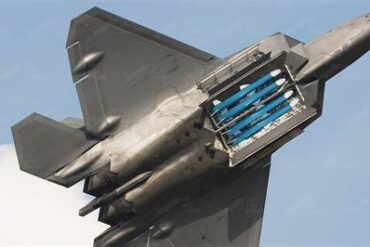
The F-35 Lightning II shifts the paradigm from brute force to precision and integration. It carries up to 18,000 lbs (8,200 kg)—5,700 lbs internally and the rest on external hardpoints. Its weapons suite includes AMRAAMs, AARGM-ER, JASSM, and even the B61 nuclear bomb.
More than its weapons, the F-35’s value lies in data. It functions as a sensor node, relaying real-time battlefield intelligence to allies, drones, and surface platforms. This makes its weapons more effective and its presence a force multiplier, especially in joint operations.
7. Mitsubishi F-2 — Japan’s Maritime Guardian
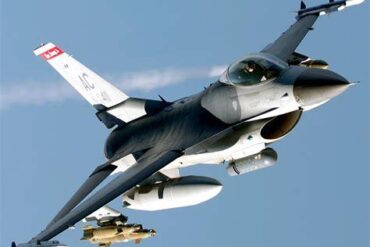
Derived from the F-16, the Mitsubishi F-2 offers impressive firepower with 17,824 lbs (8,085 kg) and 11 hardpoints. Featuring composite materials, a larger wing surface, and the J/APG-1 AESA radar, it is fine-tuned for maritime defense and anti-ship missions.
Armed with ASM-series missiles, guided bombs, and indigenous AAMs, it plays a critical role in securing Japan’s maritime approaches. Despite lacking stealth, its payload versatility and avionics provide regional deterrence capability.
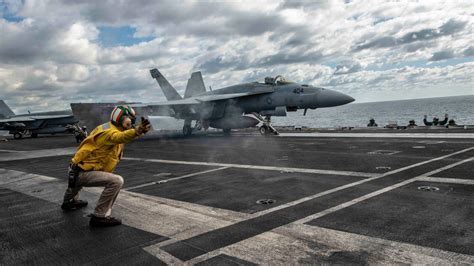
8. Boeing F/A-18E/F Super Hornet — Naval Backbone
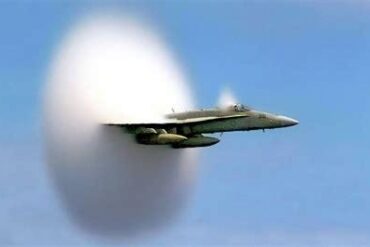
The F/A-18E/F Super Hornet is a carrier-optimized strike fighter capable of deploying 17,750 lbs (8,050 kg). With 11 hardpoints, it supports AMRAAMs, Harpoons, JASSM, JDAMs, and even naval mines.
Recent Block III upgrades equip it with stealth enhancements, conformal fuel tanks, and open architecture for rapid weapons integration. As a carrier-based asset, it thrives in launch-and-recover cycles and also serves as a manned-unmanned command node for drones like the MQ-25.
9. Sukhoi Su-30 — The Versatile Flanker
An export success, the Su-30 maintains a payload of 17,673 lbs (8,016 kg) spread over 12 hardpoints. It serves across Asia and Africa as a multirole platform, capable of engaging in air-to-air, strike, and maritime patrol missions.
With twin seats, long-range endurance, and compatibility with diverse weapons—from R-27 to KAB-series bombs and Kh-59 cruise missiles—the Su-30 adapts easily to mission requirements. In vast airspaces like India or Algeria, its flexibility and endurance shine.
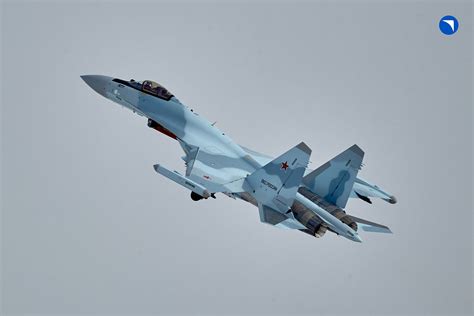
10. Sukhoi Su-35S — Agile and Armed to the Teeth
The Su-35S, while not stealthy, is Russia’s most advanced fourth-gen fighter. With 17,632 lbs (8,000 kg) of ordnance and 12 hardpoints, it delivers a wide array of air-to-air, anti-ship, and precision-guided munitions.
It features thrust-vectoring engines, digital avionics, and an AESA-style radar, making it extremely agile and situationally aware. In Syria, the Su-35S demonstrated its strike capabilities under real combat conditions.
Beyond the Top 10: Other Notable Heavy Hitters
Several older platforms still offer heavy payloads, though they no longer define the bleeding edge:
- Mikoyan MiG-31: With a 20,000 lbs payload and Mach 2.8 speed, it remains a lethal interceptor.
- Panavia Tornado IDS: Carries up to 19,800 lbs, optimized for low-level penetration and strike missions.
- F-4 Phantom II: Though largely retired, still fields up to 18,650 lbs in nations like Iran and Turkey.
These aircraft underline how sheer payload can continue to extend an airframe’s relevance even decades after its introduction.
Conclusion: Firepower Still Reigns
While modern warfare emphasizes stealth, networking, and precision, heavy payloads remain irreplaceable. Whether ensuring deep strike capability, saturating enemy defenses, or launching swarms of long-range missiles, these top-tier fighters define air dominance not by appearance, but by destructive potential. As threats evolve and conflicts become more complex, the ability to deliver decisive, overwhelming force remains at the core of air superiority.