Saudi Arabia has formally ordered four C-27J Maritime Patrol Aircraft (MPA) from Leonardo, marking a significant expansion of the kingdom’s airborne maritime security architecture across the Red Sea and the Persian Gulf. The agreement, confirmed on 16 February 2026 in Rome, reflects Riyadh’s sharpened focus on persistent surveillance and rapid-response capabilities at two of the world’s most strategically sensitive maritime corridors: the Bab el-Mandeb Strait and the Strait of Hormuz.
The decision arrives at a moment when regional sea lanes face a complex mix of missile strikes, drone incursions, fast-attack craft maneuvers, and irregular maritime threats. Commercial shipping routes linking Europe and Asia have repeatedly felt the strain of instability, and the economic consequences ripple far beyond the Middle East. By introducing an armed, multi-mission patrol aircraft into its order of battle, Saudi Arabia is not merely increasing surveillance coverage—it is reshaping the balance between observation and direct intervention.
The four aircraft will be delivered to the Royal Saudi Naval Forces (RSNF) beginning in 2029. With this procurement, Saudi Arabia becomes the 21st operator of the C-27J family, a platform that has accumulated over 290,000 flight hours globally. The order follows Riyadh’s 2025 acquisition of two C-27J aircraft configured for firefighting, cargo, and medical evacuation roles, but this new contract represents the first time the kingdom has opted for the fully integrated, armed maritime patrol configuration.
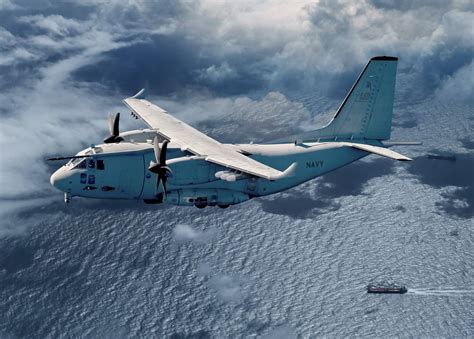
C-27J Spartan Next Generation: A Tactical Transport Turned Maritime Sentinel
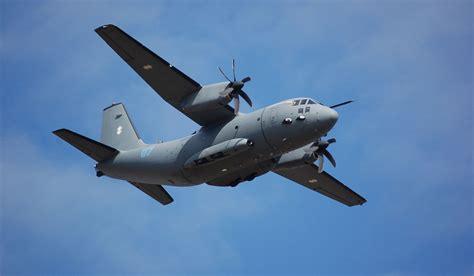
At its core, the C-27J Spartan Next Generation is a twin-engine turboprop tactical airlifter. Powered by two Rolls-Royce AE2100-D2A engines driving six-blade composite propellers, the aircraft reaches a cruise speed of approximately 325 knots and operates at altitudes up to 30,000 feet. Its high-strength cargo floor and wide fuselage cross-section allow it to transport up to 60 troops or more than 11 tonnes of payload.
These structural characteristics are not incidental advantages; they form the backbone of the aircraft’s maritime adaptation. The C-27J’s short take-off and landing (STOL) capability allows operations from semi-prepared airstrips, including sand and austere coastal runways. For Saudi Arabia, whose coastline spans thousands of kilometers across both western and eastern seaboards, this flexibility enables forward basing closer to operational hotspots.
Endurance in maritime patrol configuration exceeds nine hours and can be extended through aerial refueling. That endurance translates into persistent presence over critical sea lanes—an attribute that deters hostile activity simply by ensuring that suspicious behavior is likely to be observed, tracked, and, if necessary, confronted.
Integrated Maritime Patrol Suite and Sensor Fusion
The transformation from transport aircraft to maritime patrol platform is driven by Leonardo’s Airborne Tactical Observation and Surveillance (ATOS) system. ATOS functions as a mission-management architecture that fuses data from multiple onboard sensors into a coherent operational picture.
The C-27J MPA can be equipped with:
- An Active Electronically Scanned Array (AESA) surface-search radar capable of detecting and classifying small vessels amid cluttered maritime environments.
- An electro-optical/infrared (EO/IR) turret for visual identification and day-night tracking.
- An Automatic Identification System (AIS) receiver to monitor legitimate vessel traffic.
- Electronic Support Measures (ESM) to intercept and analyze electromagnetic emissions from ships or coastal installations.
- A magnetic anomaly detector (MAD) and acoustic processing systems for anti-submarine warfare (ASW) missions.
Up to five operator consoles in the cabin allow dedicated mission crews to manage sensor feeds, communications, and weapons employment simultaneously. Secure satellite communications provide beyond-line-of-sight data transmission, enabling real-time coordination with naval command centers and surface combatants. The aircraft becomes not just a sensor platform, but a node within a networked maritime battlespace.
From Surveillance to Strike: A Fully Armed Maritime Platform
The Saudi configuration is notable for its integrated weapon systems. The aircraft can carry approximately 3.6 tonnes of armament distributed across six underwing hardpoints. This payload may include lightweight torpedoes, anti-ship missiles, and depth charges, allowing the C-27J to move beyond detection and into direct engagement.
This evolution from surveillance-only patrol to armed response capability reflects a shift in doctrine. Maritime patrol aircraft traditionally acted as scouts, relaying targeting data to surface vessels or submarines. By contrast, the Saudi C-27J MPA can prosecute targets independently if required. In contested environments—where response time determines outcomes—this autonomy matters.
The platform’s sonobuoy launchers and ordnance dispensers enable rapid deployment of acoustic sensors and countermeasures. Against a submarine threat in the southern Red Sea or Gulf approaches, the aircraft can establish a search pattern, deploy buoys, analyze returns, and coordinate with naval units in a tightly integrated ASW operation.
Red Sea Operations: Securing the Bab el-Mandeb
The Red Sea theater has grown increasingly volatile since late 2023, with missile and drone attacks targeting commercial vessels near the Bab el-Mandeb Strait. This narrow passage connects the Red Sea to the Gulf of Aden and forms a critical artery for trade between Europe and Asia via the Suez Canal.
In such an environment, persistent airborne maritime domain awareness becomes essential. The C-27J MPA’s radar and EO/IR systems can track small craft exhibiting suspicious behavior, such as loitering near shipping lanes or approaching tankers at high speed. The ability to monitor vast expanses of water from altitude provides a vantage point surface vessels cannot replicate.
In addition to deterrence, the aircraft enhances search and rescue (SAR) capacity. Following an attack or maritime accident, the C-27J can deploy life rafts, mark positions with flares, and coordinate naval rescue assets. The same cabin that houses mission consoles can revert to medical evacuation configuration if required, underscoring the aircraft’s adaptability.
Persian Gulf and Strait of Hormuz: High-Density Threat Environment
On Saudi Arabia’s eastern flank, the operational calculus differs but remains equally demanding. The Persian Gulf is characterized by narrow waterways, dense commercial traffic, and overlapping military patrol zones. The Strait of Hormuz, through which a substantial portion of the world’s energy exports transit, remains a focal point of geopolitical tension.
In this confined environment, the C-27J’s AESA radar can differentiate between legitimate shipping and anomalous movements. Electronic support measures add another layer of situational awareness, detecting radar activations or communications patterns that might signal impending activity. Fast-attack craft and unmanned surface vehicles—difficult to track with surface-based sensors alone—become more visible when observed from altitude.
Armed with anti-ship munitions, the aircraft contributes to a layered defense architecture protecting offshore infrastructure and strategic convoys. In combination with surface combatants, helicopters, and land-based air assets, the C-27J strengthens the kingdom’s capacity to respond proportionally and swiftly to emerging threats.
Modular Design and Peacetime Utility
A distinctive advantage of the C-27J MPA lies in its modularity. Much of the mission equipment is palletized and removable. By extracting consoles and certain sensors, the aircraft reverts to its baseline transport configuration.
This dual-use design ensures that the fleet remains relevant during peacetime. The aircraft can deliver supplies to remote coastal outposts, conduct humanitarian assistance during floods or cyclones, or support firefighting operations. The transition from relief missions to high-intensity maritime patrol does not require a new airframe—only reconfiguration.
For a country with expansive coastlines and remote facilities, this flexibility optimizes fleet efficiency. Instead of maintaining separate aircraft for transport, surveillance, and strike roles, Saudi Arabia consolidates capabilities within a single adaptable platform.
Operational Heritage and International Credibility
The C-27J lineage traces back to the Italian G.222 transport aircraft. Since entering service in the mid-2000s, the Spartan has been adopted by multiple air forces, including Italy, Australia, and the United States. The U.S. Coast Guard operates the HC-27J variant for surveillance, interdiction, and disaster response missions.
Global operational experience—from Afghanistan’s austere runways to South American mountain ranges—has demonstrated the platform’s durability and adaptability. More than 117 aircraft had been produced by 2022, and the fleet’s cumulative flight hours provide a robust data foundation for maintenance planning and mission-system integration.
For Saudi Arabia, this established track record reduces integration risk. The maritime patrol configuration builds on a mature airframe rather than a developmental prototype, accelerating the pathway from delivery to operational readiness.
Strategic Autonomy and Regional Significance
Beyond hardware specifications, the procurement signals a broader strategic intent. By acquiring an armed maritime patrol capability under national control, Saudi Arabia enhances its operational autonomy. The kingdom reduces reliance on coalition aircraft or commercial satellite feeds for maritime situational awareness.
The integration of surveillance, strike, and transport functions within a single aircraft aligns with Riyadh’s emphasis on flexible deterrence. In an era where maritime threats range from state-sponsored missile systems to non-state actors employing drones and small boats, versatility is strategic currency.
The procurement also supports Saudi ambitions to expand its domestic defense industrial base. Over time, local maintenance, repair, and overhaul (MRO) capabilities for the C-27J fleet could stimulate technical expertise and workforce development within the kingdom.
A Networked Maritime Future
The introduction of four armed C-27J Maritime Patrol Aircraft represents more than a fleet addition; it marks the evolution of Saudi maritime air power into a networked, multi-role component. Built on a proven tactical transport foundation and enhanced by advanced sensors and weapons integration, the aircraft serve as airborne extensions of naval command authority.
As the Red Sea and Persian Gulf remain central to global trade and energy flows, persistent maritime security becomes indispensable. The C-27J MPA offers Saudi Arabia a platform capable of observing, deterring, and, if necessary, engaging threats across two of the world’s most critical waterways.
The success of this capability will depend on integration—linking the aircraft with surface combatants, helicopters, unmanned systems, and allied networks. Yet the direction is unmistakable: Riyadh is investing in a maritime air architecture designed not only to watch the sea, but to shape events upon it.