In an era where airspace is saturated with sensors, algorithms, and long-range missiles, the B-2 Spirit bomber continues to operate with an almost unsettling freedom. Decades after its first flight, the aircraft remains a strategic paradox: visible in plain sight on the runway, yet functionally invisible once airborne. The reason lies not in a single breakthrough, but in a carefully layered philosophy of stealth that attacks every link in an enemy’s detection and engagement chain at once.
The B-2 was never designed to win a fair fight. It was designed to prevent a fight from ever properly starting. By denying radar operators reliable data, confusing infrared sensors, and quietly harvesting electronic intelligence, the bomber turns the world’s most advanced air defense systems into expensive guessing machines. This is stealth not as a gimmick, but as an operational doctrine refined over decades of testing, combat deployments, and constant modernization.
Even as the B-21 Raider approaches operational service, the B-2 Spirit remains a benchmark. Adversaries field new “counter-stealth” radars and hypersonic interceptors, yet none have demonstrated a credible, repeatable method of tracking and killing the aircraft. Understanding why requires peeling back the layers of its design, from geometry and materials to electronic warfare and networked combat integration.
Stealth as a System, Not a Feature
The defining mistake made by many analyses of stealth aircraft is treating invisibility as a single technology. The B-2 Spirit avoids detection because its designers understood early that stealth is a system problem, not a materials problem. Radar, infrared sensors, electronic intelligence receivers, and human operators form an integrated kill chain. Breaking just one link is not enough. The B-2 targets all of them simultaneously.
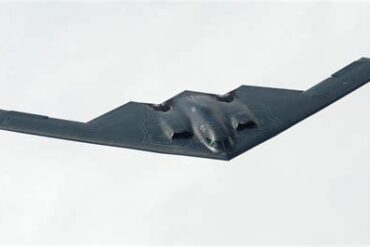
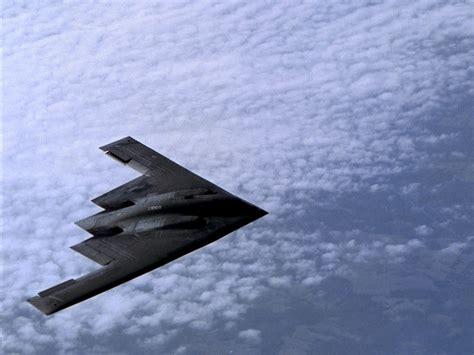
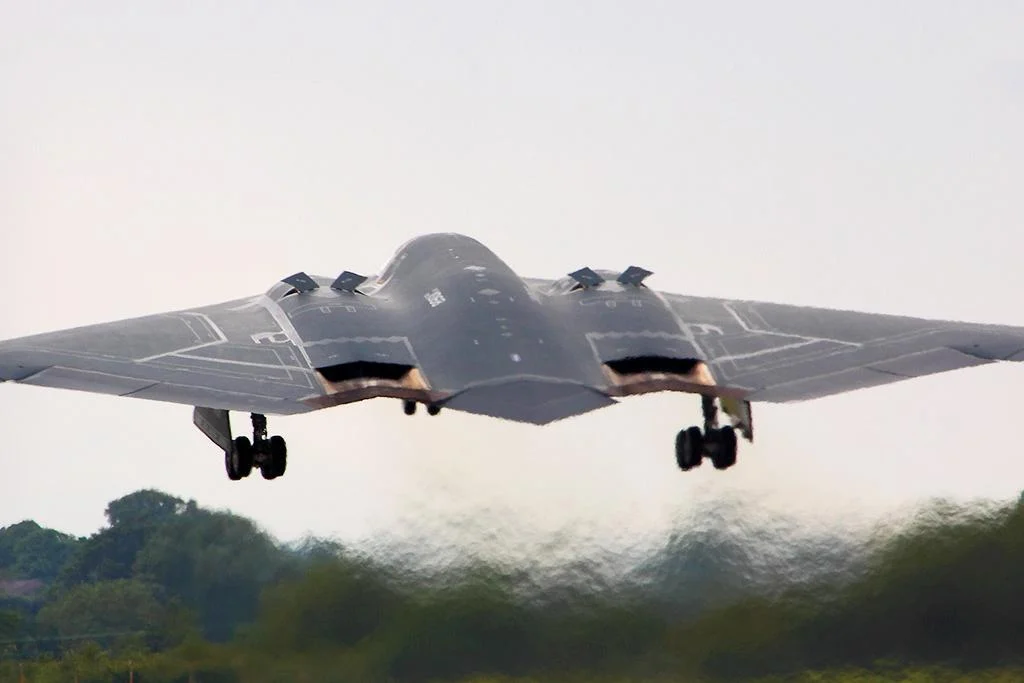
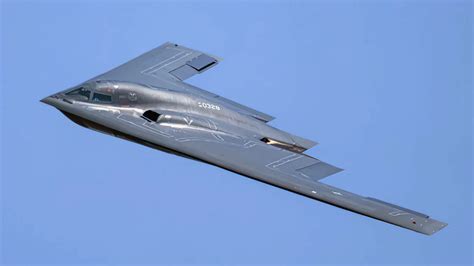
At the most basic level, the bomber’s flying-wing shape eliminates the vertical surfaces that dominate radar reflections on conventional aircraft. There is no tail, no exposed engine face, and no right angles to act as mirrors for radio waves. Instead, the aircraft presents continuous curvature, guiding reflected energy away from the source rather than back toward it.
This geometry works in concert with materials and electronics. The aircraft’s mission computers constantly balance emissions, route planning, and sensor management to ensure the bomber remains not merely hard to see, but actively confusing to track. Stealth, in this sense, becomes dynamic rather than static.
The Flying Wing Geometry That Breaks Radar Physics
Radar systems depend on predictable reflections. Emit a pulse, wait for the echo, measure distance and speed. The B-2 Spirit disrupts this logic at the level of physics. Its leading and trailing edges are aligned so that incoming radar energy is scattered into narrow, controlled lobes rather than reflected back to the transmitter.
This approach does not make the aircraft magically invisible. Instead, it reduces the radar cross section to such a tiny, unstable signal that it blends into background noise. On a radar screen, the return might resemble atmospheric clutter, wildlife, or momentary interference rather than a 170-foot-wide bomber carrying precision weapons.
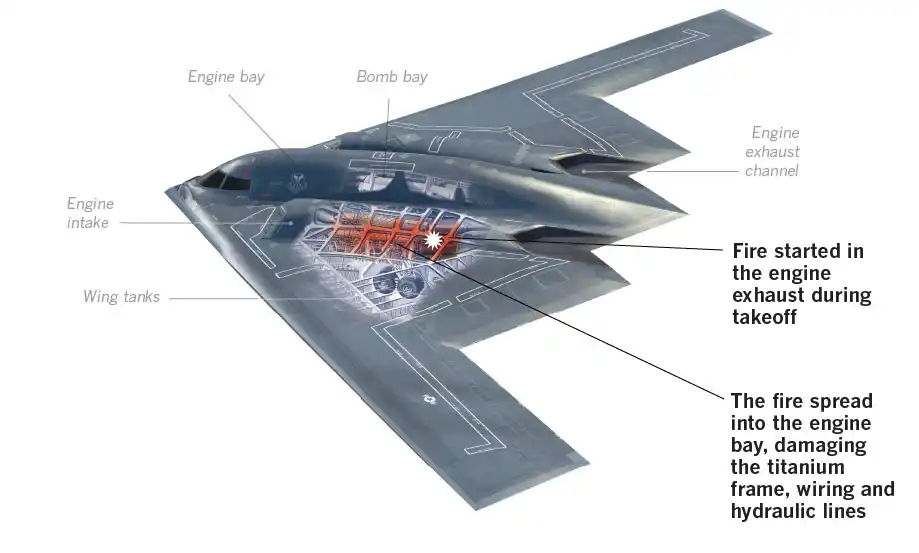
Critical components that would otherwise betray the aircraft are buried deep within the wing. The engine intakes are serpentine and serrated, hiding the rotating compressor blades that act like powerful radar reflectors. Exhaust outlets are flattened and shielded by the wing itself, denying ground-based sensors a direct line of sight.
Radar-Absorbent Materials That Eat Radio Waves
Shape alone cannot defeat modern radar, especially multi-band systems designed to exploit different wavelengths. This is where the B-2’s radar-absorbent material, or RAM, becomes essential. The bomber’s skin is not a simple coating but a complex, multi-layered structure engineered to convert electromagnetic energy into heat.
Tiny, polymer-isolated iron particles embedded in the surface oscillate when struck by radar waves. This motion dissipates energy rather than reflecting it. Beneath that, additional layers with varying electrical properties force incoming waves to bounce internally until they cancel each other out through destructive interference.
Even minor imperfections can compromise this effect. As a result, every seam, fastener, and access panel on the B-2 is sealed with conductive caulking and specialized tapes. The goal is not cosmetic smoothness but electrical continuity. To enemy radar, the aircraft appears less like a machine and more like a carefully shaped absence.
Managing Heat in an Infrared-Hungry Sky
Modern air defenses do not rely on radar alone. Infrared Search and Track systems, or IRSTs, passively scan the sky for heat signatures. The B-2 Spirit counters this threat through aggressive thermal management that begins with its engines.
The General Electric F118 engines lack afterburners, eliminating the massive heat spikes common to high-performance jets. Exhaust gases are expelled over the top of the wing, where the aircraft’s own structure shields them from sensors below. Before the exhaust ever leaves the airframe, it is mixed with cooler ambient air through V-shaped troughs lined with heat-resistant carbon-carbon tiles.
This rapid cooling disperses the thermal signature into the surrounding atmosphere. From long range, the aircraft’s heat plume is diluted to the point where it becomes indistinguishable from environmental noise. The bomber does not outrun infrared sensors. It starves them.
Seeing Without Being Seen: Low-Probability-of-Intercept Radar
Using radar while trying to remain stealthy seems contradictory, yet the B-2 Spirit resolves this tension with an advanced active electronically scanned array radar designed for discretion. Traditional radar is obvious. It announces its presence with a strong, focused signal. The B-2’s AN/APQ-181 radar does the opposite.
By employing frequency hopping and spread-spectrum techniques, the system distributes its energy across a wide band in a pseudo-random pattern. To hostile receivers, the signal resembles background radiation rather than a coherent emission. The bomber gains situational awareness without turning itself into a beacon.
This capability allows the B-2 to navigate complex terrain, exploit radar shadows created by mountains, and operate at altitudes that maximize survivability. Radar becomes a scalpel rather than a spotlight.
Electronic Warfare as an Invisible Shield
Stealth reduces the chance of detection. Electronic warfare ensures that even if detection occurs, engagement becomes unreliable. The B-2’s electronic support measures constantly listen for hostile emissions, building a real-time map of radar coverage without transmitting anything in return.
At the heart of this system is the Defensive Management System, which fuses data from antennas embedded along the wing edges. Instead of plotting a straight line to the target, pilots see a dynamic “danger image” that highlights weak zones in enemy coverage. The bomber weaves through these gaps, exploiting the geometry of its own stealth profile.
If the situation deteriorates, the aircraft can escalate. Active countermeasures capture enemy radar pulses and rebroadcast them with subtle delays, creating false targets and phantom tracks. To an air defense operator, the sky fills with ghosts while the real bomber slips away.
Precision Jamming Instead of Brute Force Noise
Unlike dedicated jamming aircraft that flood the spectrum with power, the B-2 relies on finesse. Because its radar signature is already vanishingly small, it takes minimal energy to bury that signature beneath an enemy radar’s noise floor. This selective approach preserves stealth while disrupting targeting solutions.
Chaff and flares remain available as a last line of defense, but they are rarely the primary plan. The aircraft’s survivability is built on denial rather than evasion. Missiles cannot chase what they cannot confidently see.
Networked Stealth in Joint Operations
The modern battlefield is a network, and the B-2 Spirit has evolved accordingly. Once envisioned as a lone penetrator, the bomber now functions as a high-altitude command node within allied operations. Through Link 16 and advanced satellite communications, it exchanges data with fighters, surveillance aircraft, and command centers.
Crucially, this sharing can occur in receive-only modes deep inside hostile airspace. Other platforms identify targets and pass coordinates to the bomber, allowing it to strike without activating its own sensors. Stealth becomes collective rather than individual.
Modernization programs have expanded this integration, enabling cooperation with allied F-35 fleets and electronic attack aircraft. The result is a distributed system where detection, targeting, and engagement are separated across multiple platforms, complicating any adversary’s response.
Secure Global Reach Through Satellite Links
Long-range missions demand secure communication beyond line of sight. The B-2 uses extremely high frequency satellite constellations designed to resist jamming and survive nuclear environments. Through the Integrated Airborne Mission Transfer system, mission updates flow directly into the aircraft’s weapons and navigation computers mid-flight.
This capability allows commanders to retask the bomber in response to evolving intelligence. Targets can change, routes can shift, and threats can be avoided without compromising stealth. Flexibility becomes a weapon in itself.
Facing Advanced Air Defenses Head-On
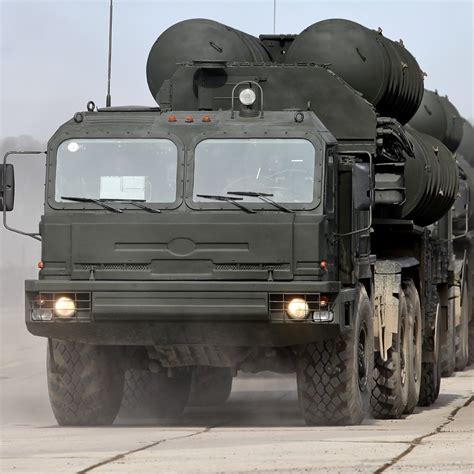
Theoretical engagements against systems like the Russian S-400 Triumf illustrate the bomber’s advantage. Long-range search radars may catch fleeting anomalies, but generating a weapons-quality track remains extraordinarily difficult. Fire-control radars operating in higher frequency bands encounter an airframe optimized specifically to absorb and deflect their signals.
Even in a hypothetical close-range detection scenario, the bomber’s electronic warfare suite would likely degrade guidance, while standoff weapons allow it to destroy the threat without entering lethal envelopes. The engagement ends before it truly begins.
Why the B-2 Remains Untouchable
The enduring effectiveness of the B-2 Spirit lies in its refusal to rely on any single trick. Geometry, materials, thermal control, electronic warfare, and networked operations reinforce one another. Remove one layer, and others remain. Attack all of them, and the cost becomes prohibitive.
As air defense technology advances, the bomber continues to evolve through upgrades and integration. Its real legacy is not just a shape or a coating, but a philosophy of dominance through denial. In a world obsessed with detection, the B-2 Spirit thrives by making certainty impossible.