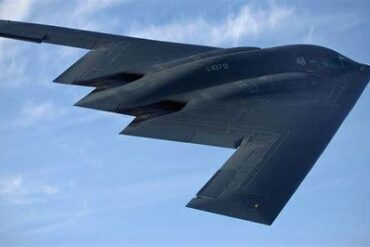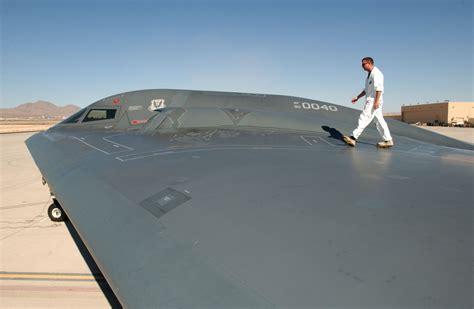
In June 2025, the B-2 Spirit Stealth Bomber reentered the global spotlight after a precision strike on Iranian nuclear facilities—a mission described as a “very successful attack” by former President Donald Trump. The deployment reinforced the aircraft’s legendary reputation while reigniting debates about its colossal cost, now estimated at over $2 billion per unit. Developed by Northrop Grumman for the U.S. Air Force, the B-2’s exorbitant price tag isn’t merely a result of defense contractor inflation—it’s a reflection of unparalleled technological sophistication, extreme operational demands, and uncompromising stealth design.
The Price of Invisibility: Understanding Stealth Engineering
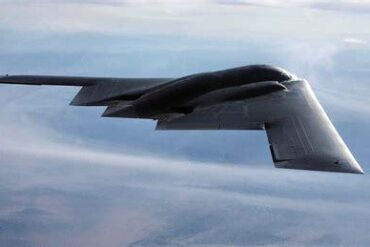
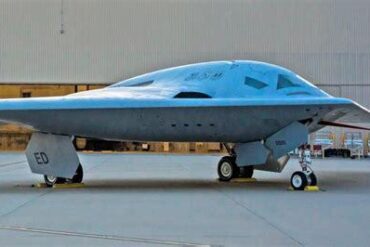
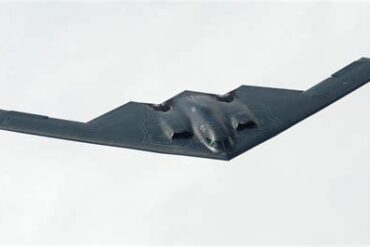
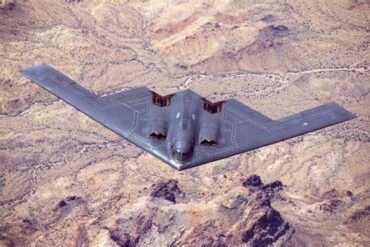
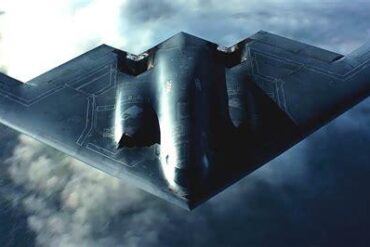
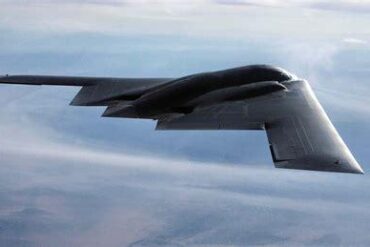
What makes the B-2 Spirit so costly starts with its stealth profile, a product of decades of classified research. It is engineered to be almost undetectable across the electromagnetic spectrum. That means reducing not just radar visibility but also infrared, acoustic, and visual signatures. Its unique flying wing design eliminates traditional vertical surfaces that reflect radar waves. The aircraft’s outer skin is covered in an advanced Radar Absorbent Material (RAM), which diffuses incoming radar beams and minimizes reflection.
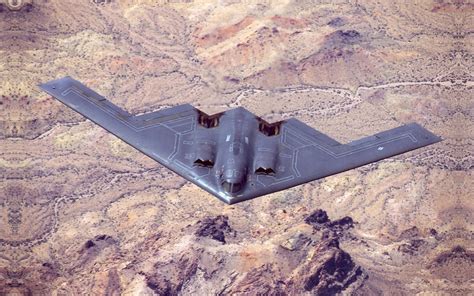
But stealth isn’t just about outer coatings. The internal systems are carefully arranged to reduce emissions and scatter heat. The engines—four General Electric F118-GE-100 non-afterburning turbofans—are buried deep within the wing to prevent detection by heat-seeking missiles. Even the engine intakes and exhaust nozzles are shrouded in serpentine ducts to suppress radar and heat signatures. Maintaining these features, especially after flight, is laborious and costly.
Long-Range Strike Capability That Redefines Global Reach
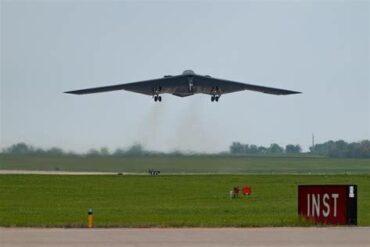
Another reason for the B-2’s immense price is its unmatched long-range operational capacity. It boasts a combat radius of approximately 6,000 nautical miles without refueling. When aerially refueled, that range extends to more than 10,000 nautical miles, allowing it to strike virtually anywhere on Earth from its home base at Whiteman Air Force Base in Missouri. This capability was most dramatically displayed during Operation Allied Force, where two B-2s flew nonstop from Missouri to Serbia and back—spending over 31 hours in the air and striking targets with pinpoint precision.
During the first eight weeks of that operation, B-2 bombers flew less than 1% of total missions but destroyed 33% of all high-value targets. In 2001, a B-2 flew a 44-hour mission during the opening phase of the war in Afghanistan, setting the record for the longest air combat mission in history. These long-duration missions demand a highly redundant and resilient avionics suite, global communication systems, onboard crew support for multi-day missions, and precision strike hardware—each pushing the cost ceiling further.
Multi-Role Payload Delivery: Versatility at a Premium
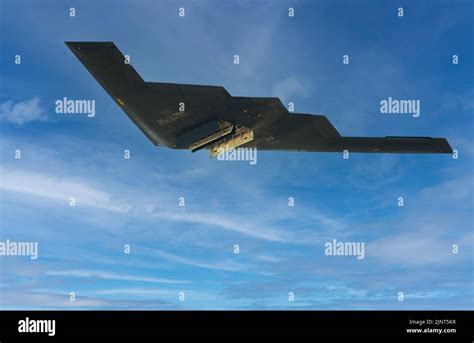
The B-2 Spirit is one of the very few aircraft capable of carrying both conventional and nuclear weapons, including the B61 and B83 nuclear bombs. It can deploy up to 40,000 pounds of ordnance, from gravity bombs to precision-guided Joint Direct Attack Munitions (JDAMs). This versatility is deeply embedded in its internal architecture. All weapons are carried in internal bays to preserve stealth. The aircraft uses an advanced bomb release system, which is synchronized with GPS targeting data for high-altitude precision strikes.
Its ability to act as both a nuclear deterrent and a strategic conventional bomber makes it a cornerstone of U.S. global power projection. The integration of such a diverse weapons suite, combined with a stealth-optimized delivery mechanism, results in significant hardware and software integration costs, continuous upgrade expenses, and unique training regimens.
Unforgiving Maintenance Regime and Environmental Sensitivity
Despite its engineering brilliance, the B-2 is notoriously demanding when it comes to post-flight maintenance. According to the U.S. General Accounting Office, each flight requires an average of 124 man-hours of maintenance, primarily to restore the bomber’s stealth coating and address sensor calibration. Any compromise in these areas can severely degrade the aircraft’s low observability, making rigorous upkeep non-negotiable.
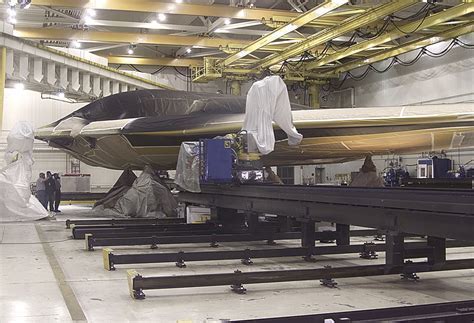
The bomber’s stealth skin is highly sensitive to moisture and temperature, demanding humidity- and temperature-controlled shelters at every deployment location. Maintenance must occur in specific environmental conditions to avoid deterioration of low-observable materials. As a result, deployment requires not just the aircraft but an entire mobile support infrastructure—from portable hangars to field radar calibration systems and maintenance tooling specialized for RAM composites.
Procurement Scale and Classified Deficiencies
Initially, the Air Force planned to procure 132 B-2 bombers, but ballooning development costs and post-Cold War budget cuts slashed that number to just 21 operational units. This limited production run has a massive impact on per-unit costs. Most military aircraft programs amortize research and development over hundreds or thousands of units. With only 21 aircraft, each B-2 bears a proportionally larger slice of R&D expenditures, estimated to surpass $23 billion.
Adding to this financial complexity are classified deficiencies. Experts have reported “dozens” of unresolved design issues—many of which are still redacted from public view. These deficiencies range from system vulnerabilities to software irregularities that require custom fixes and continuous monitoring. Since these modifications are unique to each aircraft, maintenance and upgrade programs cannot benefit from economies of scale, further escalating the price.
Technological Secrecy: The Cost of Concealment
Much of what inflates the B-2’s lifecycle cost is not hardware but secrecy itself. Its technologies—especially radar evasion, mission planning software, and threat detection systems—are heavily classified. This means limited access to development contractors, compartmentalized logistics chains, and isolated data handling environments. Parts can’t be mass-manufactured by third-party suppliers. Instead, components often require government-cleared personnel, secure facilities, and unique certification processes.
Moreover, its mission software, including navigation systems integrated with satellite and terrain-following radar, requires continuous cybersecurity vetting and encryption updates to guard against cyber warfare—a hidden but costly layer of its operational profile.
Strategic Investment or Overspending?
The debate over the B-2’s value is ongoing. Proponents argue that the B-2’s strategic advantage and ability to deter nuclear escalation justify the cost. It offers capabilities no other aircraft in the U.S. inventory can match. Skeptics, however, question the cost-effectiveness of maintaining such a small fleet with exorbitant operating expenses.
Yet, if judged by performance, the B-2 has consistently delivered. It has flown undetected through the world’s most advanced air defense systems, struck targets with surgical precision, and returned unscathed. It remains the only bomber capable of penetrating deep into heavily defended territory without fighter escort.
And in a world where hypersonic missiles, anti-access/area-denial (A2/AD) strategies, and electronic warfare are redefining the battlefield, the B-2’s ability to stay invisible and deliver devastating blows remains indispensable.
Conclusion: A Billion-Dollar Ghost with Justifiable Weight
The B-2 Spirit’s staggering price is not the product of inefficiency or excess but the sum of cutting-edge stealth, global reach, weapons versatility, and technological secrecy. It represents a weapon platform that exists at the extreme edge of military aviation engineering. Its cost reflects the pursuit of invisibility, precision, and endurance in hostile skies.
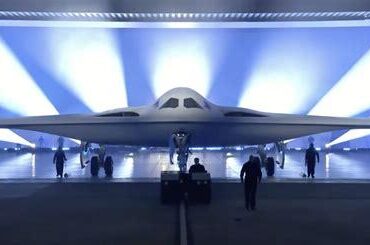
As geopolitical tensions rise and the demand for strategic deterrence grows, the B-2’s legacy will likely influence future platforms like the B-21 Raider—another stealth bomber from Northrop Grumman set to take flight in this decade. But for now, the B-2 remains the world’s most expensive, most elusive, and arguably most powerful bomber ever created.