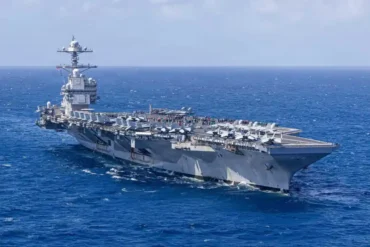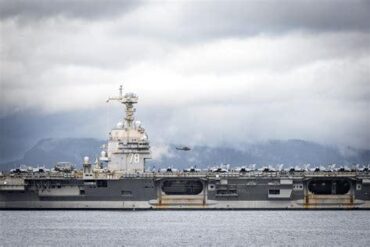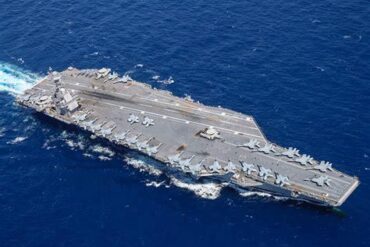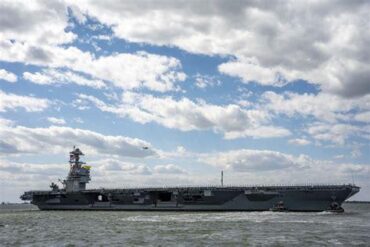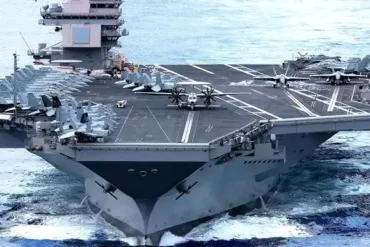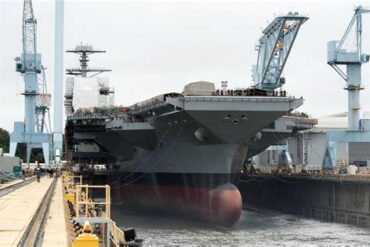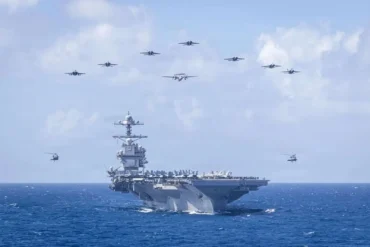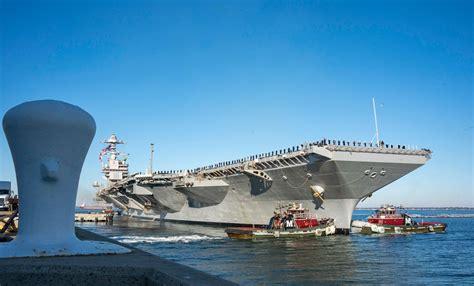
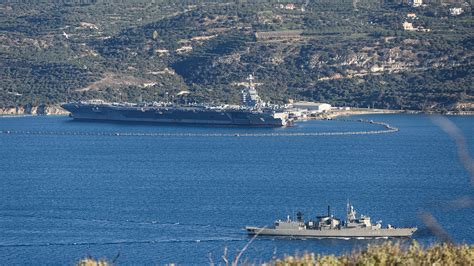
The USS Gerald R. Ford (CVN-78), the most powerful aircraft carrier ever built by the United States, has temporarily returned to port following several turbulent months of operations at sea. After sustained deployment in a strategically tense region, the nuclear-powered carrier has arrived at Souda Bay in Greece for a brief operational pause that will allow maintenance crews to conduct inspections, repairs, and resupply operations.
The visit marks a critical moment in the ship’s deployment cycle. Operating in the eastern Mediterranean and near the volatile waters of the Strait of Hormuz, the carrier has played a central role in projecting American naval power during a period of heightened regional tensions. Even with the temporary port stop, the carrier strike group remains fully engaged in ongoing military operations, demonstrating the resilience and flexibility of modern U.S. naval forces.
During the deployment, the ship faced unexpected challenges that placed additional strain on its crew and systems. One of the most serious incidents involved a significant onboard fire in the ship’s laundry compartment, which resulted in more than 200 sailors suffering smoke inhalation injuries. Although the blaze was contained without catastrophic damage, the incident highlighted the intense operational environment aboard the world’s largest warship.
Souda Bay Stopover Supports Repairs and Operational Readiness
The decision to dock at Souda Bay Naval Base on the Greek island of Crete provides an ideal opportunity for maintenance teams to conduct technical assessments while the crew recovers from the stresses of extended deployment. According to U.S. Fleet Forces Command, the carrier remains fully mission capable, and the port visit is intended primarily to ensure peak readiness for the next phase of operations.
Souda Bay has long served as a strategic logistics hub for NATO and U.S. naval forces operating in the Mediterranean. Its deep-water harbor and proximity to the Middle East make it a crucial staging area for warships requiring repairs or replenishment without returning to the continental United States.
Naval engineers are expected to examine systems affected by the onboard fire, replenish supplies, and perform preventative maintenance across the carrier’s advanced technology platforms. These routine yet essential procedures ensure that the carrier strike group maintains combat effectiveness during prolonged deployments.
The Largest and Most Advanced Warship Ever Built
At 1,106 feet in length and displacing nearly 100,000 tons, the Gerald R. Ford-class aircraft carrier represents the pinnacle of naval engineering. As the lead ship of its class, the USS Gerald R. Ford introduces several revolutionary technologies designed to increase operational efficiency and combat capability.
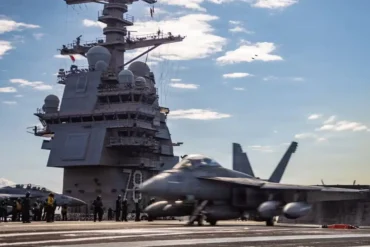
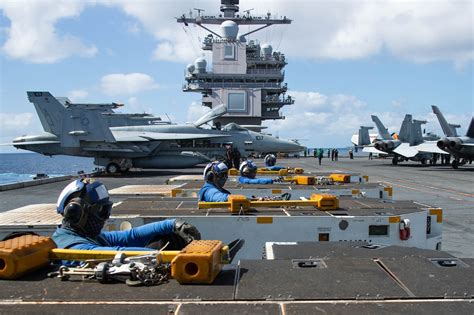
Among its most significant innovations is the Electromagnetic Aircraft Launch System (EMALS), which replaces traditional steam catapults and allows aircraft to launch more smoothly and with greater energy efficiency. The carrier also features an advanced Advanced Arresting Gear (AAG) system, enabling safer and more flexible aircraft recoveries.
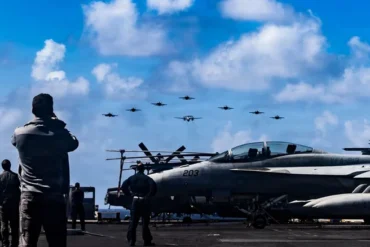
Powered by two nuclear reactors, the carrier has effectively unlimited operational range and is designed for a 50-year service life with only one major refueling overhaul. This long endurance allows the vessel to maintain persistent global presence while supporting a full air wing of advanced fighter jets, surveillance aircraft, and helicopters.
A Continued Strategic Presence in a Volatile Region
Despite the temporary stop in Greece, the Gerald R. Ford Carrier Strike Group remains a key element of U.S. deterrence strategy in the Middle East. Regional tensions involving Iran and critical shipping lanes continue to shape naval deployments across the region, making the presence of a modern supercarrier a powerful strategic signal.
Once repairs and replenishment are completed, the carrier is expected to return to operational patrols in nearby waters. Its presence ensures that the United States retains rapid response capability in one of the world’s most geopolitically sensitive maritime corridors.
For now, the massive warship rests briefly in Souda Bay—an intermission before returning to the demanding rhythm of global naval operations.