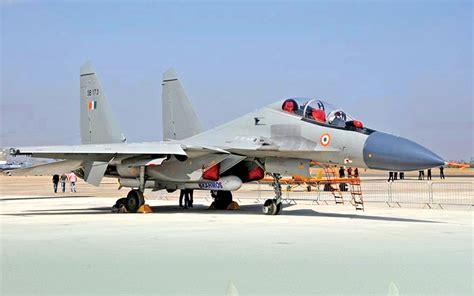
India’s relentless pursuit of aerial dominance and strategic deterrence continues to evolve as the Indian Air Force (IAF) weighs the integration of the Israeli-origin LORA missile into its fighter jet arsenal—despite already fielding the BrahMos-A, a powerful supersonic cruise missile. This development signals more than just an addition to India’s missile inventory; it reflects a shift toward greater operational flexibility, technological diversification, and strategic depth.
The move, reported in early July 2025, comes on the heels of Operation Sindoor, where India’s use of the Rampage missile demonstrated the pressing need for stand-off precision weapons capable of striking well-protected targets without exposing aircraft to high-risk airspace.
Why India Needs LORA When It Has BrahMos
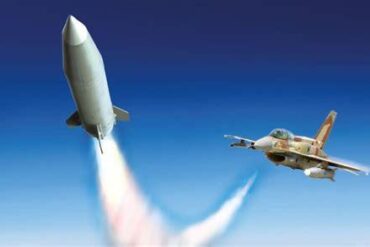
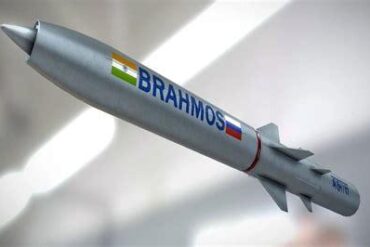
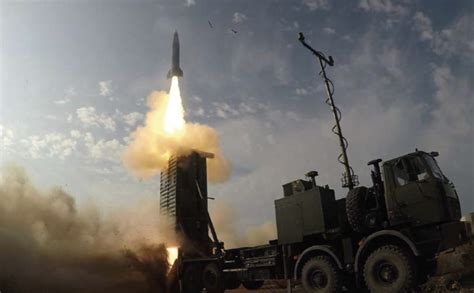
At first glance, the IAF’s interest in LORA (Long-Range Artillery) might seem redundant. After all, BrahMos-A, a supersonic cruise missile with a 300–500 km range, already provides India with formidable deep-strike capabilities. However, LORA represents a different class of weaponry. Unlike BrahMos, which follows a low-altitude cruise trajectory, LORA is a quasi-ballistic missile designed for high-altitude launches and steep-angle strikes, allowing it to bypass conventional air defence networks.
The critical difference lies in mission profile and targeting flexibility. While BrahMos is designed for speed and low observability at sub-strategic ranges, Air LORA’s ballistic flight path, lofted profile, and fire-and-forget capability make it ideal for strikes against hardened or deeply buried targets.
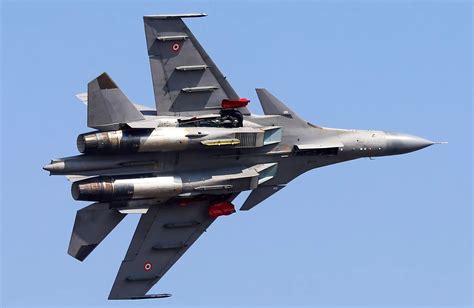
Moreover, LORA’s compatibility with Su-30 MKI, a multirole workhorse of the IAF, opens doors for air-launched deep strike operations from within Indian airspace, reducing exposure to enemy air defence and increasing mission survivability.
Air LORA: A New Category of Aerial Arsenal
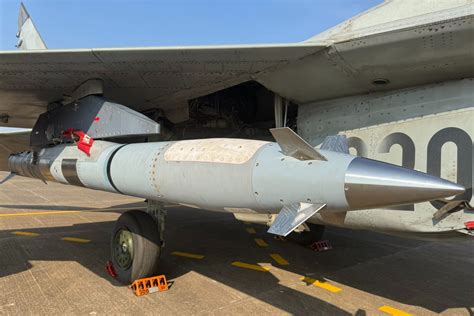
Developed by Israel Aerospace Industries (IAI), the Air LORA is a tailored derivative of the ground-launched LORA, re-engineered for aerial platforms. With a range of 400–430 kilometers, Mach 5 speed, and less than 10-meter CEP (Circular Error Probable), it is built for precision at scale.
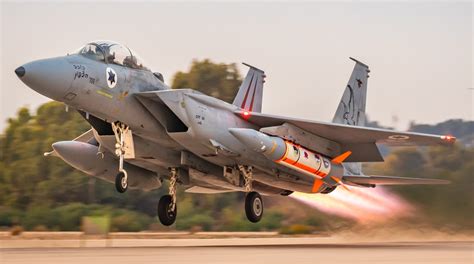
Unlike cruise missiles, LORA’s depressed quasi-ballistic trajectory makes it harder to detect and intercept. This flight profile, coupled with anti-jamming GPS/INS navigation, allows it to strike from high altitudes and long distances, increasing survivability against layered air defences.
Air LORA’s warhead options include:
- Blast-fragmentation: for soft targets and area suppression
- Deep-penetration: suitable for bunkers, command centers, and fortified infrastructure
With a total weight of 1,600 kg and length of 5.2 meters, it can be mounted on heavy-class fighters like the Su-30 MKI, which can carry up to four Air LORA missiles in a single sortie—allowing for multi-target, high-impact missions.
Complementing, Not Competing: LORA’s Role in India’s Missile Ecosystem
Rather than replacing the BrahMos, LORA aims to complement India’s existing missile triad. The IAF has access to:
- BrahMos-A: Supersonic cruise missile; 300–500 km range
- SCALP-EG: Used with Rafale; ~500 km range
- Pralay: Surface-to-surface; ~500 km range
- Rampage: Stand-off air-to-ground missile
Each system serves a specific operational need, and LORA’s introduction fills a long-standing gap in air-launched ballistic strike capability. While BrahMos is ideal for ship-busting and rapid tactical strikes, LORA’s ballistic nature makes it better suited for strategic fixed targets deep within hostile territory.
Deep Strike Without Crossing Borders
One of Air LORA’s most compelling advantages is its ability to project force without physical intrusion. Given India’s sensitive borders with Pakistan and China, the ability to launch a ballistic missile from within Indian airspace and still strike deep strategic targets is not just a tactical edge—it’s a strategic game-changer.
This stand-off capability ensures that Indian fighters can remain well within the protective umbrella of domestic air defence, reducing risk to pilots while delivering strategic messaging and deterrent value.
Technological and Industrial Advantages
Air LORA’s introduction is not just a military decision—it’s also a technological and industrial leap. In 2023, IAI and India’s Bharat Electronics Limited (BEL) signed an MoU to facilitate joint production, technology transfer, and possibly even future exports under the “Make in India” initiative.
The benefits of such collaboration include:
- Technology transfer and domestic skill development
- Increased defence manufacturing self-reliance
- Export potential to friendly nations
- Cost reductions via local assembly
If fully indigenised, India could position itself as a regional hub for ballistic missile technologies tailored for aerial platforms, thus broadening its defence industrial base.
Cost Versus Capability: Is LORA Worth It?
Priced between $1 million and $5 million per unit, depending on configuration, Air LORA is more affordable than many Western equivalents. This cost-efficiency, combined with precision, range, and survivability, makes it ideal for mass deployment in a high-intensity conflict scenario.
While BrahMos boasts extreme speed and sea-skimming capability, it comes at a premium. LORA, with its simpler seeker-less architecture, achieves a similar strategic impact with a lower logistical and financial footprint.
Operational and Integration Challenges
However, integrating a new missile system is not without obstacles. Air LORA will need to undergo extensive flight testing on Indian platforms, including stress tests for airframe compatibility, avionics synchronization, and mid-course update integration.
Other challenges include:
- Ensuring resistance to electronic warfare and spoofing
- Verifying performance in diverse terrain and atmospheric conditions
- Cost-benefit assessment relative to domestic options like BrahMos or the under-development LRLACM
Yet, analysts suggest that these hurdles are manageable, especially considering IAI’s long-standing track record in missile technology cooperation with India.
Strategic Calculus: LORA as Escalation Dominance Tool
In strategic terms, the induction of LORA offers India a flexible deterrence mechanism. Its fast reaction time, deep strike range, and ability to operate in GPS-contested environments make it a perfect tool for pre-emptive or retaliatory precision strikes.
The very knowledge that Indian jets can launch quasi-ballistic missiles from beyond contested zones could reshape adversarial air defence deployments and command infrastructure dispersion, thereby affecting strategic calculus across the subcontinent.
Will LORA Replace BrahMos? The Final Word
The short answer is no—but that’s not the point. BrahMos and LORA are not competitors; they are complementary systems tailored for different mission sets. BrahMos excels at sea denial, tactical interdiction, and anti-surface warfare, especially against mobile or seaborne targets.
LORA, on the other hand, is the strategic scalpel—ideal for crippling C4ISR nodes, airbases, logistics hubs, and hardened shelters.
Together, they offer India a layered, versatile, and deeply integrated missile doctrine—one that can evolve with future threats and maintain regional escalation dominance.
As India pushes deeper into defence indigenisation, dual-track advancements like BrahMos and LORA ensure that the nation is not just armed, but agile.
With air-launched LORA, India doesn’t just get another missile—it gains a strategic lever, a force multiplier, and a loud declaration of aerial sovereignty.