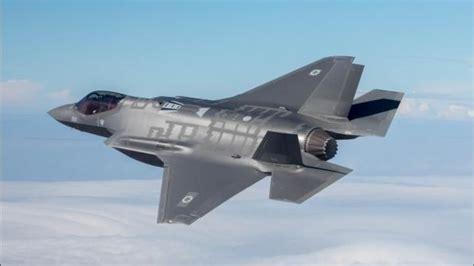
The United States Air Force (USAF) is drawing inspiration from Israel’s bold modifications to its F-35I Adir stealth fighter jets, signaling a strategic shift aimed at expanding the operational reach of its Lightning II fleet across the Indo-Pacific theater, a region of rising geopolitical friction with China. The move, part of a broader push within the Fiscal Year 2026 defense budget, seeks to integrate external fuel tanks and conformal fuel solutions into the F-35 architecture — a capability that has proven highly effective in recent Israeli military operations against Iranian targets.
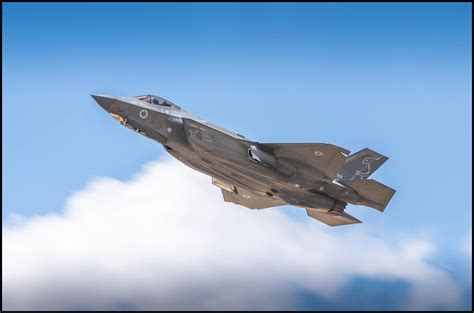
Israel’s F-35I: The Stealth Fighter That Redefined Range
In June 2025, the Israeli Air Force (IAF) conducted a daring long-range strike on Iran’s nuclear enrichment sites using its modified F-35I Adir aircraft, showcasing a major breakthrough in fifth-generation fighter logistics and endurance. These jets successfully flew over 2,000 kilometers, bypassing radar-heavy regions such as Turkey, Syria, and Iraq, to reach deeply entrenched targets within Iranian territory.
What stunned military analysts and captivated the Pentagon was not just the stealth and precision of the mission, but the enhanced range capabilities that made it feasible without mid-air refueling or exposure to enemy defenses. Israel reportedly deployed a combination of:
- Non-stealthy 425-gallon underwing drop tanks developed by Elbit Systems, which are designed to detach cleanly before entering contested airspace.
- Advanced conformal fuel tanks (CFTs) co-developed by Israel Aerospace Industries (IAI) and Lockheed Martin, capable of holding 800 gallons of fuel while maintaining the aircraft’s stealth profile and aerodynamic integrity.
These engineering advancements build upon Israel’s expertise with long-range modifications to legacy platforms such as the F-15I Ra’am and F-16I Sufa, but the integration into a fifth-generation fighter like the F-35 marks a significant leap in combat versatility and reach.
USAF’s Strategic Realignment in the Indo-Pacific
The American military’s pivot to the Indo-Pacific has created new logistical and tactical challenges. With the region’s vast maritime distances and limited basing options, traditional fighter deployment models reliant on mid-air refueling tankers are increasingly viewed as vulnerable and unsustainable.
As tensions escalate with China’s expanding influence and A2/AD (Anti-Access/Area Denial) strategies, the USAF sees range extension not merely as a tactical upgrade but as a strategic necessity. According to the 2026 budget request, the USAF is allocating resources to:
- Evaluate the feasibility of integrating external fuel tanks onto existing F-35 platforms.
- Decompose technical and aerodynamic requirements necessary for supporting long-range, stealth-preserving missions.
- Leverage Israel’s operational insights from the F-35I program to accelerate domestic adaptation.
Revisiting Abandoned Concepts: Drop Tank History on the F-35
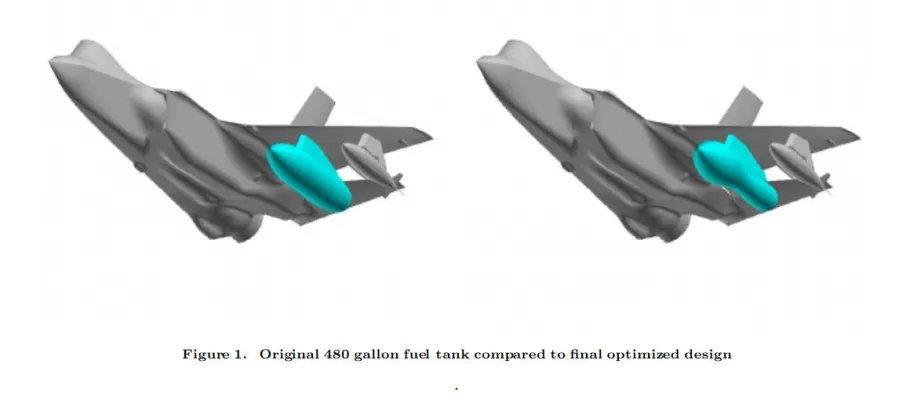
Interestingly, the concept of external drop tanks for the F-35 is not new. Between 2004 and 2007, Lockheed Martin experimented with various external fuel pod designs, including:
- A 480-gallon tank that suffered from aerodynamic instability.
- A refined 460-gallon model with better flow dynamics but eventually shelved due to logistical complications and a belief that the F-35’s superior baseline range made such tanks redundant.
Later, a proposed 600-gallon tank system would have boosted fuel capacity by 40%, but concerns over compromising stealth and increasing drag led to its cancellation. The current resurgence in interest signals a paradigm shift in U.S. tactical doctrine, prioritizing stand-off capability and endurance over doctrinal purity.
Stealth vs. Range: The Fine Balance
The fundamental challenge with range augmentation in stealth aircraft lies in preserving their radar-evasive characteristics. The F-35’s stealth capabilities derive from both:
- Shaped fuselage and wing geometry designed to deflect radar.
- Radar-absorbing materials (RAM) covering its surfaces.
Adding external structures—such as traditional drop tanks—risks increasing the aircraft’s radar cross-section (RCS), effectively nullifying its strategic advantage in contested environments. This is where conformal fuel tanks offer an elegant compromise. By tightly integrating with the aircraft’s contours, CFTs:
- Maintain stealth signatures far better than jettisonable drop tanks.
- Provide significant range extension without compromising weapon payloads.
- Preserve high-speed maneuverability and low-drag performance.
Beast Mode and Operational Flexibility
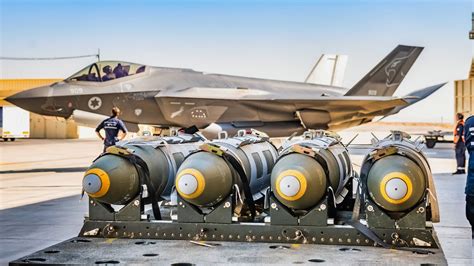
Israel’s willingness to operate the F-35I in “beast mode”, a configuration where weapons are mounted externally, further demonstrates how fifth-generation aircraft can adapt to evolving mission demands. In this setup:
- The aircraft carries externally-mounted long-range air-to-ground and air-to-air missiles, significantly enhancing firepower.
- Stealth is partially sacrificed, but for operations in low-threat or post-initial-suppression environments, the trade-off is operationally acceptable.
The fact that Israel has successfully deployed the F-35 in beast mode and recovered it intact offers valuable data for U.S. planners seeking to balance stealth, firepower, and endurance in a single versatile platform.
Hardware Meets Software: Block 4 and Beyond
The USAF’s range-extension initiative is likely to be tied into the broader Block 4 upgrade package for the F-35. This sweeping modernization program aims to improve both hardware and software across all variants (A, B, and C), and will include:
- Enhanced electronic warfare capabilities.
- Improved C4I (Command, Control, Communications, Computers, and Intelligence) systems.
- Upgraded sensor fusion and targeting systems.
- Potential modular integration pathways for new fuel and weapons systems.
Learning from Raptors: The F-22 Precedent
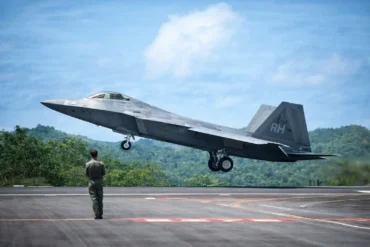
The USAF has already begun experimenting with external fuel solutions for the F-22 Raptor, incorporating stealthy underwing pods that not only extend range but also house infrared search and track (IRST) sensors. These precedents will prove invaluable as engineers seek to replicate a similar approach for the F-35 fleet.
The next-generation F/A-XX and NGAD (Next Generation Air Dominance) platforms are expected to feature over 1,000 nautical miles of combat radius, reinforcing the urgency of applying similar capabilities to existing aircraft like the F-35.
Strategic Implications in the Indo-Pacific
With the Indo-Pacific poised as the central theater for potential U.S.-China conflict, deploying fighters with extended unrefueled range offers critical operational flexibility. Mid-air refueling operations, while effective, introduce vulnerabilities:
- Tanker aircraft are non-stealthy, making them high-value targets for Chinese long-range missile systems.
- Refueling operations constrain mission planning, especially in high-threat environments.
By integrating fuel-extension technologies directly into the fighter airframes, the USAF can:
- Reduce dependency on tanker assets.
- Enable deep-strike missions into Chinese A2/AD zones.
- Increase loiter time over target areas, boosting ISR (Intelligence, Surveillance, Reconnaissance) and strike accuracy.
Conclusion: From Adir to Advantage
Israel’s modifications to its F-35I fleet have proven that range extension need not come at the cost of stealth or performance. The U.S., facing an evolving threat matrix and logistical challenges in the Indo-Pacific, is now moving quickly to adopt similar innovations. By revisiting shelved engineering concepts and tapping into the operational lessons of allies like Israel, the USAF aims to give its F-35 Lightning II fleet the “more gas” it needs to outpace Chinese military advances.
Whether through external drop tanks, stealthy conformal fuel solutions, or block-level systems integration, the future of the F-35 is set to become longer, leaner, and deadlier — exactly what the U.S. needs in a contested 21st-century battlespace.